The North Rift Economic Block (NOREB) Governors have lauded the short-term interventions put in place by the national government that have seen relative peace and calm in the volatile Kerio Valley region.
Their Chairman, Nandi Governor Stephen Sang, thanked the government for taking the interventions to stabilise the region that had seen the flare-up of conflict within the last two months, culminating in the killing of the Catholic priest, Father Alois Bett.
“The short-term interventions put in place by the government in the last two months have seen relative peace and calm in the region,” said the governor.
Speaking during a press briefing after signing a memorandum of understanding (MOU) with the Kerio Valley Development Authority (KVDA) in Eldoret, the governors, however, observed that for long-term peace and stability in the region, there was a need to deal with the underlying challenges.
“For peace and stability to reign in the Kerio Valley, there is a need to have a development marshal plan, and as an economic bloc, we are keen on working with partners and the national government to try and see the interventions at the long-term level in terms of how we can transform the economy of the Kerio Valley,” said Governor Sang.
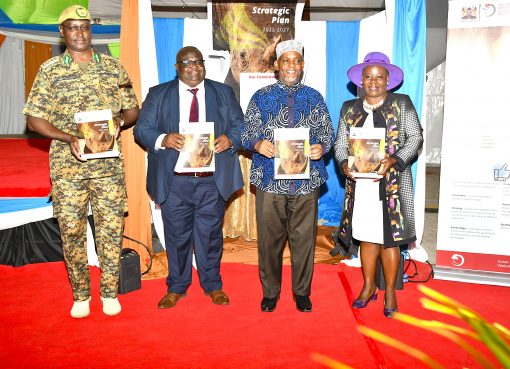
The objective of the MoU between KVDA and NOREB is to establish a sustainable exploitation of available resources with the eight counties and to jointly identify and harness opportunities for sustainable development for the benefit of the local communities.
NOREB Chief Executive Officer Dr. Godfrey Chesang signed the MoU on behalf of the economic bloc, while KVDA Managing Director Sammy Naboros signed on behalf of the regional authority.
NOREB also signed another partnership MoU with the National Council of Churches of Kenya, NCCK, with Rev. Dr. Elias Otieno Agola, Chairman of NCCK, signing on behalf of the religious group.
The governor noted that if the enormous potential in Kerio Valley was well exploited, it would not only develop the region but would also spill over to the entire nation.
“The huge agricultural potential, the mineral potential, and the mining sector that could thrive in the Kerio Valley are huge. We want to create synergy between KVDA, NCCK, NOREB, and the national government in identifying some of the long-term interventions that can sustain peace and stability in the region,” they said.
“When Kerio Valley is hurting, all the counties in the region are hurting; thus, we want to forge a working unity with stakeholders to ensure we have lasting peace and stability. We ask that the people in the Kerio Valley work and collaborate with us as an economic bloc to see to it that we silence the guns and stop the bleeding in the region and try to transform the potential of the keri valley for the benefit of the locals and the country at large,” they pleaded.
The governors said though they were aware that the national government was trying to reduce the number of regional development authorities and parastatals, their wish as NOREB was that KVDA continue to exist with an expanded mandate as an implementing agency for projects and programmes in the NOREB counties.
KVDA is one of the six regional development agencies proposed for dissolution as the government moves to streamline service delivery and eliminate duplication of roles under Kenya’s devolved system.
The other regional authorities that may cease to exist are Tana and Athi Rivers Development Authority (TARDA), Lake Basin Development Authority (LBDA), Ewaso Ng’iro North Development Authority (ENNDA), Ewaso Ng’iro South Development Authority (ENSDA), and Coast Development Authority (CDA).
If the regional bodies are dissolved, their assets, liabilities, and personnel would be transferred to both the national and county governments.
Present during the signing of the MOU included Governors Wesley Rotich (Elgeyo Marakwet), Simon Kachapin (West Pokot), and Jonathan Bii (Uasin Gishu). Others were Deputy Governors Dr. Yulita Cheruyot (Nandi) and Eng. Felix Kipn’gok (Baringo).
By Kiptanui Cherono