The government has assured that key infrastructural development projects worth billions of shillings geared towards stimulating the nation’s economic growth across Nakuru County will be completed as scheduled for the benefit of all Kenyans.
The assurance comes even as the government moved in and started settling pending bills that have been validated to facilitate contractors to complete the work on agreed timelines.
While acknowledging that the development projects were central to the government’s focus on service delivery, County Commissioner Dr. Lyford Kibaara said the government was committed to bettering the lives of the Kenyan citizens and ensuring equitable distribution of national resources.

Dr. Kibaara assured that the Kenya Kwanza administration had embarked on fast-tracking completion of mega infrastructural projects to help realise the full potential of the projects, which he said traverse the region where agriculture, manufacturing, tourism, financial services, transport, fishing and tourism are the main economic activities.
The administrator who spoke during the County Implementation, Coordination and Management Committee meeting held at his boardroom to review the progress of various taxpayer-funded projects in the devolved unit expressed optimism that the projects would help create new jobs, open up opportunities for traders and boost the region’s economy.
“As a committee, we are determined to speed up the delivery of major infrastructural projects so that they support the government’s ambitions for economic growth and improving connectivity and transport links,” Dr. Kibaara pledged.
He consequently urged contractors to complete their work within the set timeframes and warned that they will be held accountable over timelines set for project completion to mitigate the loss of business due to poor or lack of infrastructure.
He lamented that the government was sometimes forced to spend more money than was allocated to complete projects because contractors never finished their work as stipulated in their contracts and advised contractors to make sure they do the right work as specified in the Bill of Quantities and contract documents.
Dr. Kibaara said the government might be forced to blacklist any company found to be compromising the standards of public projects and warned that any contractor who does not perform to the expectations would not only be letting down taxpayers but also investors wishing to invest in the County.
“Doing second-rate work also amounts to letting down the government. We will ensure that infrastructural projects funded by the taxpayer are in top condition to facilitate trade and agriculture and improve the lives of Kenyans in line with the Vision 2030 initiative,” the administrator assured.
The county commissioner at the same time assured contractors that the government had started the process of settling pending bills that had been validated, adding that the ongoing process of reviewing and verifying pending bills was focused on ensuring accuracy and legitimacy before payments are released.
The Government, he said, had also turned its attention towards contractors accused of abandoning projects, despite receiving cash to cover the whole works, adding that such inefficiency not only undermined the government’s commitment to timely service delivery but also violated public trust.
While briefing the committee on progress made on road infrastructure in the region, Kenya Rural Roads Authority (KeRRA) Nakuru Regional Director Eng. Laban Ngigi said the government had secured funding through securitisation, which qualified the Ministry of Transport to start settling debts owed to contractors, adding that KeRRA had now embarked on clearing outstanding bills owed to contractors, service providers and suppliers involved in road construction and maintenance projects.
He said last month the Roads Principal Secretary said they had paid the first 40 per cent of the pending bills, while an additional 40 per cent was said to be in the pipeline to facilitate the contractors completing their work as scheduled.
Eng. Ngigi said that 212.5 kilometres of Low volume sealed roads (LVSR) had already been completed across Nakuru county at a cost of Sh7.2 billion, while a further 213 kilometres of LVSR roads were undergoing construction at a cost of Sh9.8 billion.
The complete projects, he explained, included the 120-kilometre Mauche-Pombo-Silibwet Road that transverses Nakuru, Narok and Bomet Counties at a cost of Sh2.99 billion; the 6.2-kilometre Subukia-Catholic Shrine Road, which was allocated Sh242 million; and the 26.3-kilometre Miti Mingi-Bagaria-Naishi-Store Mbili road which cost Sh1.4 billion.
Eng. Ngigi explained that works at the Sh2.5 billion Lower Solai-Maili Kumi Road, which is scheduled to be 60 kilometres long, were 95 per cent complete, while the 24-kilometre-long Elementaita-Mau Narok Road, set to cost Sh1.07 billion, was at 85 per cent completion.
He noted that repair and renovation of 7 key feeder roads in Rongai, Molo, Naivasha, Kuresoi South and Njoro sub-counties covering a total of 106.2 kilometres had been completed at a cost of Sh4.1 billion. T
The roads include Salgaa-Rongai, Kibunja-Molo, Moi South Lake, Molo-Olenguruone, Njoro-Elburgon-Turi, Kabarak Farm Access and Njoro-Sobea.
Eng. Ngigi assured residents that the ongoing works on the Elementaita-Mau Narok, Kiambiriria-Kuresoi-Chepsir, Njoro-Beeston-Neissuit-Lawina-Sururu, Mawanga-Murunyu-Bavuni-Githioro, Mercy Njeri-Mangu-Rongai, Gilgil Machinery, and Tumaini-Gwa Kiongo-Gituamba-Kabazi and Kiptangwani-Munanda-Tangi Tano/Munanda-Kiambogo-Kongasis roads will be completed by mid-next year.
The roads that cover a total of 213.5 kilometres have been cumulatively allocated Sh 9.8 billion, the KeRRA official added.
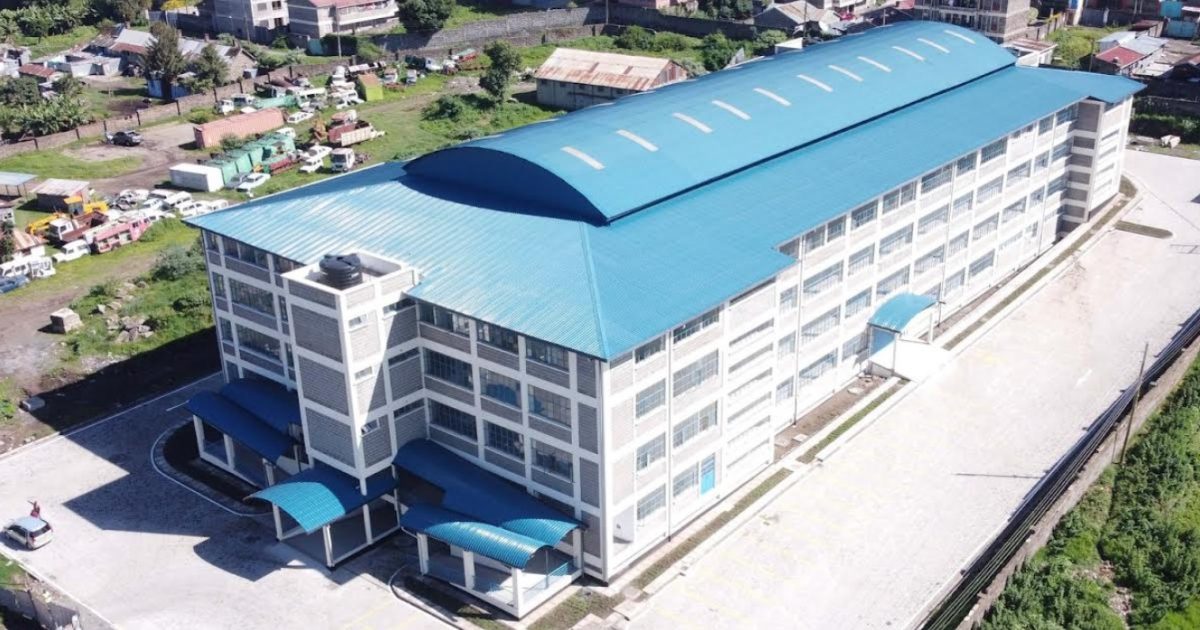
County Director of Housing Nicholas Ogajo told the committee that the 605 affordable housing units on an 8.5-acre land in Bondeni estate in the Nakuru Town East constituency were fully occupied, awaiting commissioning, while the first phase of the 504 affordable housing units’ project in the Bahati constituency was 96 percent complete.
He disclosed that the 220-unit project in Molo was also 85 percent complete.
The Bondeni housing project comprises 45 one-bedroom houses which were sold for Sh1.55 million, 180 two-bedroom units which went for Sh3.25 million and 380 three-bedroom units which cost Sh4.3 million per unit.
The Bahati Affordable Housing Project consists of 60 studio units, 20 one-bedroom units, 120 two-bedroom units and 20 three-bedroom units.
The Director further said that 2,000 units were being constructed on a 55-acre parcel of land along the Nairobi-Nakuru highway near Naivasha GK Prisons, targeting workers earning between Sh15,000 and Sh150,000.
The Director noted that the right to housing was enshrined in Kenya’s Constitution under article 43 (1) (b), which stipulates that all the citizens had the right to accessible and adequate homes and to a reasonable standard of sanitation.
He said the affordable housing project was promoting economic recovery by linking Micro, Small, and Medium Enterprises, and the Jua Kali sector as suppliers of various inputs, such as hinges, doors, and windows, among others, to housing projects.
The housing director observed that investments in affordable housing programmes were creating a multiplier effect where direct and indirect benefits to the county included job creation, improved health and safety and increased household resilience.
Ogajo said the State Department for Housing and Urban Department, through the Economic Stimulus Program (ESP), was also constructing eighteen integrated modern markets in various trading centers in Nakuru County that will cost Sh 3 billion.
He said the mega projects being undertaken by the government to uplift the livelihood of the people in the grassroots will benefit thousands of traders in all the 11 Sub-Counties.
“The vision of the government is to create job opportunities for the many jobless youth. The building of these markets will create that opportunity, as hundreds of local people will be employed in the construction work,” he said.
The two-storey markets will feature social halls, prefab stalls, market area segmentation, cold room facilities, offices, ATM lobbies, baby daycare services (crèche), and primary processing facilities for value addition.
The projects will also include supporting infrastructure such as sewers, high-mast floodlights and raised water tanks, banking institutions, food courts, and modern washrooms that will be compliant with the needs of persons living with disabilities.
Rural Electrification and Renewable Energy Corporation (REREC) Regional Manager in charge of Central Rift Engineer Gideon Gitonga said they had spearheaded efforts to expand electricity access to 4,714 clients spread across all the 11 Sub-Counties at a cost of Sh461 million.
Eng. Gitonga said the 76 projects had connected health centers and administrative buildings, learning institutions, community facilities, individuals, religious institutions and businesses to the national grid, marking a significant step towards enhancing access to electricity, bridging the energy gap in rural areas and promoting socio-economic development.
“This is to stimulate economic activity in rural communities and discourage migration to urban centres. Expanding electricity access can create jobs in rural areas, thereby reducing the pressure on cities caused by migration,” stated the Regional Manager.
Eng. Gitonga explained that the projects involved both grid extension and the installation of solar PV systems for public facilities and households.
REREC, he added, was working to achieve the Kenyan government’s goal of universal access to electricity by 2030.
By Esther Mwangi