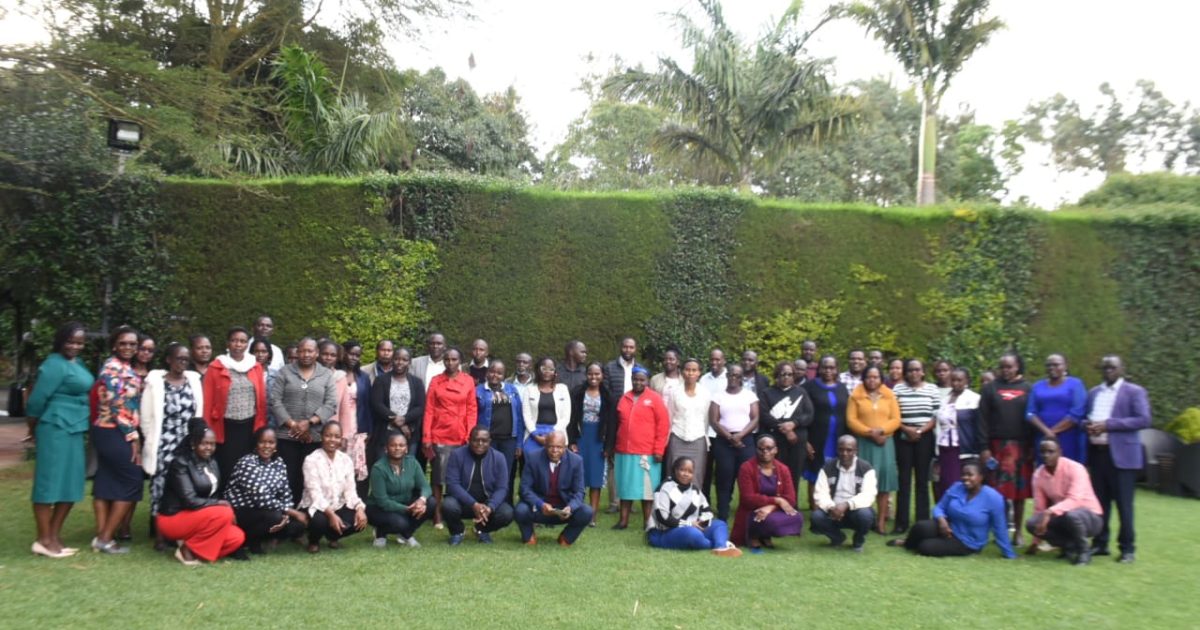
Moi Teaching and Referral Hospital (MTRH) and the County Government of Uasin Gishu in partnership with the National Cancer Control Programme have rolled out pilot training targeting health practitioners across all health facilities from primary up to the tertiary level.
The training is aimed at empowering health workers at every level with practical knowledge and skills crucial to detect multiple myeloma, a rare type of blood cancer early enough and ensure patients receive medical care on time.
Dr Wenseslaus Kuria, Acting Director of Health Services, Uasin Gishu, indicated that through enhancing health workers’ capacities, they aim to reduce diagnostic delays and lower the morbidity and death associated with multiple myeloma.
The project investigator, leading the multiple myeloma programme, Dr Beatrice Meli, a haematologist at MTRH, underscored challenges in diagnosis of the disease as most of the time, people don’t think about it.
She explained that even when a client presents to the hospital, it takes time before the healthcare providers can figure out that it could be multiple myeloma.
“This is an opportunity for us to close the care gaps in management of this disease, appreciating that cancer has slowly become a significant burden in our healthcare system. We’ve come here together with healthcare providers from Uasin County, with all the sub-counties represented,” alluded Dr Meli.
She emphasised their commitment to be able to demystify the process of diagnosis and treatment of myeloma, the second most common cancer after leukaemia.
“And in terms of the process of diagnosis, for you to think about it, you have to have a high index of suspicion. When you look at the risk factors for multiple myeloma, for example, it is common in older people with a median age of above 60 years of age and a bit more common in men,” explained the Project Coordinator.
Dr Meli outlined lifestyle risk factors that are associated with multiple myeloma, like obesity, indicating that it is more common in the black race compared to Caucasians or Hispanics.
“And therefore, we wonder whether this is a disease of the African race. This puts weight on us being able to understand this disease better and to be able to diagnose it early,” She added.
The haematologist emphasised the need for early diagnosis because of the significant implication it has on someone’s health like causing renal failure and weakening bones among other issues.
“Therefore, when you’re in your 60s and you’re having bone pains here and there which you may think of as arthritis, because of old age, it might not be it but rather multiple myeloma. Let us seek early diagnosis because this disease can cause significant damage to different organs in the body,” explained Dr Meli.
By Ekuwam Sylvester