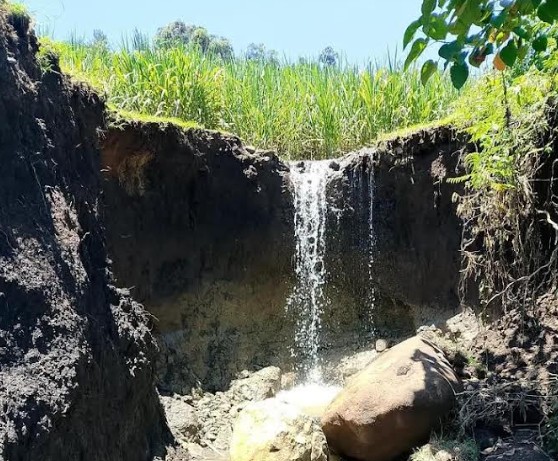
Residents of Tinderet Sub-County in Nandi County are grappling with the devastating effects of relentless heavy rainfall that has pounded the area over the past weeks, leaving a trail of destruction on roads, farms and homesteads while heightening fears of landslides in the hilly terrain.
The ongoing downpour has severely disrupted transport and economic activities across the sub-county, with key access roads in areas such as Kabiyet, Kapsimatwo, Chemeli and Songhor being rendered nearly impassable.
Deep gullies have formed along feeder roads, culverts have been washed away and sections of murram roads have been completely eroded, cutting off villages and isolating residents.
Motorists, traders and farmers have borne the brunt of the destruction, with transport grinding to a halt in some areas.
Public service vehicles have been forced to suspend operations along several routes, while boda boda riders are struggling to navigate the muddy and slippery roads.
“We are stranded. Vehicles cannot pass and even motorcycles are struggling,” said Kiprotich Kemei, a resident of Kabiyet. “Traders cannot bring in goods and even taking milk to collection centres has become a challenge. We are losing income every day,” he added.
In Kapsimatwo ward, residents reported that heavy runoff water has carved deeply into roads, making them unsafe for both pedestrians and vehicles. In some places, makeshift footpaths have been created by locals to enable movement, but these too are being washed away by the persistent rains.
Maize, which is currently at a critical growth stage, risks rotting due to excess moisture, while dairy farmers say milk production has dropped due to cold conditions and limited access to markets.
Beyond the destruction of infrastructure, anxiety is mounting over the increasing risk of landslides, particularly in steep and hilly areas such as Chemeli, Kapkulumben and parts of Songhor ward. The saturated ground has begun showing signs of instability, with cracks reportedly appearing in some areas.
“We are living in fear, especially those of us living on slopes,” said Beatrice Jelagat from Chemilil. “The soil is too soft and we can see cracks forming near our houses. If the rains continue, we might be forced to leave,” she said.
Community leaders have urged residents in high-risk areas to remain alert and consider temporary relocation to safer grounds to avoid potential tragedy.
Community elder Samuel Rotich said some families have already started moving to relatives’ homes in safer zones. “We cannot wait for disaster to strike. People living on steep slopes should move early because once landslides occur, there is little that can be done,” he warned.
Local administrators have also raised concern over blocked drainage systems, which they say are worsening flooding and accelerating road damage. They are calling for urgent intervention from the county government to repair damaged roads, open up drainage channels and deploy emergency response teams.
An official from the Kenya Red Cross Society, David Kiprono, warned that the intensity and persistence of the rains pose a serious threat to lives and property.
“The current rainfall intensity is dangerous. The soils are already saturated, which significantly increases the chances of landslides, especially in highland areas like Tinderet. We are urging residents to remain vigilant and report any signs such as ground cracks or unusual soil movement,” he said.
Kiprono added that humanitarian agencies are closely monitoring the situation and are prepared to respond in case of emergencies, including displacement of families and destruction of homes.
Meanwhile, local leaders are appealing to both county and national governments, as well as development partners, to step in with immediate support. They say urgent measures such as rehabilitation of the roads, provision of relief food and public awareness campaigns are needed to cushion affected families.
By Sammy Mwibanda