The Higher Education Loans Board (HELB) has called on teachers across the country to support efforts to identify genuinely needy students to ensure equitable access to tertiary education funding.
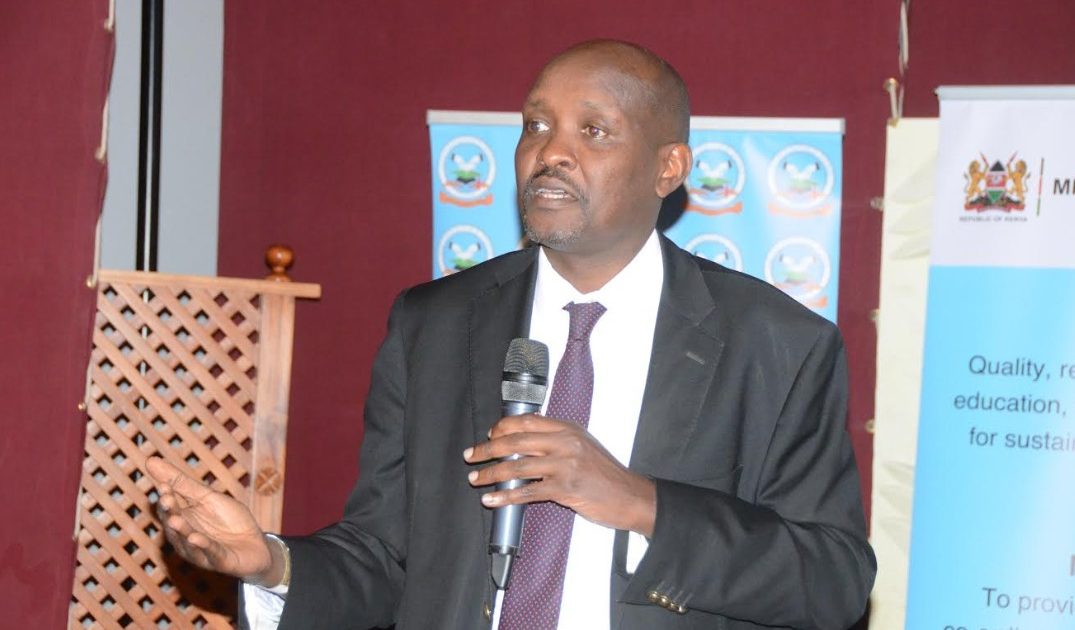
Speaking during the 48th Kenya Secondary Schools Heads Association (KESSHA) Annual National Conference at Sheikh Zayed Hall in Mombasa, HELB Chief Executive Officer Geoffrey Monari said the board remains committed to financing Kenya’s human capital to be competitive in the global workforce.
“Our vision is to finance Kenya’s workforce to work anywhere in the world. Human capital is our most valuable national asset. As educators, we must encourage students to pursue higher learning opportunities,” said Monari.
He noted that a student who completes a Technical and Vocational Education and Training (TVET) programme stands to earn 27 per cent more than a Kenya Certificate of Secondary Education (KCSE) graduate, emphasising the importance of continued education.
Monari outlined HELB’s efforts to support learners at various levels, including undergraduate, salaried, and TVET students. Since its inception in 1975, the board has disbursed over Sh179 billion to more than 1.7 million beneficiaries.
“As of now, we have 463,150 loanees who are actively repaying a total of Sh66 billion,” he said.
Despite these efforts, Monari revealed that HELB still faces a financing shortfall of Sh36 billion. The board has received Sh41.5 billion to date but requires additional resources to fully meet demand.
Monari said currently, the board is tracking a total of 490,817 loan accounts, of which 293,122 are servicing their loans, while 245,030 were in default.
He appealed to loan defaulters to honour their repayment obligations to enable more students to benefit from the revolving fund. “We appreciate the teaching profession, which has the highest number of HELB loan repayers,” he added.
Addressing concerns over the cost of university education, Monari dismissed claims that HELB loans are expensive, citing the 4 per cent interest rate. “At 4 per cent interest, I can assure you it’s affordable. Ignorance, on the other hand, is far more costly,” he stated.
Monari called for closer collaboration between HELB and schools in identifying deserving students. He noted that past attempts to work with chiefs in verifying needy cases were unsuccessful due to abuse and requests for facilitation.
“In some instances, everyone in the community suddenly became needy, and chiefs began demanding facilitation to issue recommendation letters,” he said.
He further observed that some genuinely needy students were reluctant to disclose their backgrounds due to stigma, while some from wealthier families falsely declared themselves as needy, knowing they had nothing to lose.
“To address this, we want to partner with teachers to help us assess students’ financial histories throughout their schooling,” Monari said. “This will help us direct funding to those who need it most and ensure no student is left behind due to financial constraints.”
By Sitati Reagan and Amina Bakari