It is estimated that Migori County produces only a paltry 1 metric tonne of honey while its consumption stands at 50 metric tonnes.
County Livestock and Fisheries director, Charles Nyaanga says the production is far below the figure of 20,000 metric tonnes produced against a consumption rate of 100,000 nationally.
This indicates a huge demand for honey in Migori to satisfy consumer needs, according to Mr Nyaanga.
For many years, Migori has been disadvantaged in producing more honey and its other products due to a serious slump in forest development, a key factor in honey production process.
The fact that the region became a tobacco-growing hub as early as 1970 made it a big forest deficit area as the leaf-curing process turned into gobbling millions of tonnes of wood fuel every year.
The tens of tobacco farmers were engaged in wanton felling of trees to make their tobacco-treating kilns operational. The end result therefore was a serious forest clearance, a move that immediately threatened the existence of bees in the area. Today, the forest cover in Migori stands far below the 10 percent recommended figure to the detriment of bee farming activities by the local people.
However, recent campaigns against tobacco crop growing, a ban on charcoal burning and a raised campaign to increase forest cover by planting more trees in the region have set a great milestone for the county towards scaling up beekeeping activities, as trees are key to honey production process.
Mr Nyaanga says beekeeping has a wide variety of profitable businesses, such as honey selling, hive making and wax selling.
“However, none of these has been fully exploited by the local people,” he told KNA recently in Migori town, adding that farmers should embrace bee farming as it is a lucrative business.
He urged the local farmers to take advantage of the growing beauty, candle and other industries whose raw material is wax, and venture into apiculture.
“Having a venture with sweet returns is what many prospective business people envision. With proper management, a hive can turn a profit relatively quickly, especially if the beekeeper is willing to consider all potential streams of revenue.
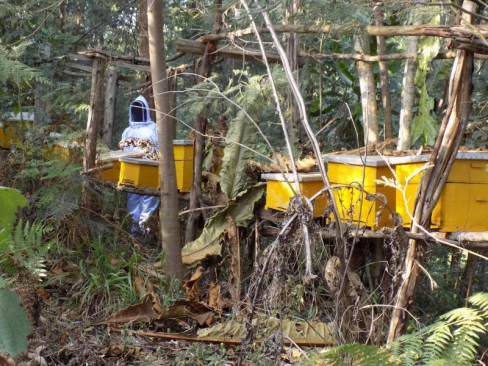
Mr Jared Nyameo, a bee farmer in Uriri Sub County, admits that this type of farming can change the life of a person who has made a firm decision to go full throttle into beekeeping without fearing the odds it carries with it.
The farmer who grows about 30 beehives per season says he has been able to educate his children and fend for his family well using proceeds from the sale of honey and other byproducts like wax.
“Yes, it is a paying effort if only one would not be shaken by the obvious problems faced by almost all bee farmers,” he said.
Some of the challenges Nyameo faces in producing honey in the area include thefts of ripe honey hives, lack of market, lack of bees due to diminished forest cover and inaccessible modern equipment for honey harvesting.
“We also lack proper extension services from experts to enable farmers to earn proper incomes from farming bees,” he explained.
By George Agimba