The Government has intensified efforts to address human-wildlife conflicts by disbursing Sh3.8 billion as compensation to affected victims countrywide.
In that regard, the State Department for Wildlife has issued compensation cheques worth Sh64, 126,000 to Kajiado residents affected by human wildlife conflicts.
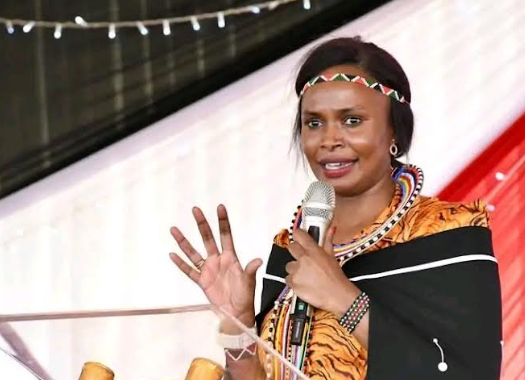
Speaking during the handing over of cheques at Isara, Kajiado East Constituency, the Principal Secretary for Wildlife, Sylvia Museiya, said that in the year 2023, the government released Sh908 million while in 2024 Sh960 million was released and in 2025 Sh1.95 billion has been provided for compensating victims of human wildlife conflicts.
While acknowledging that the amount was not enough as the government has a high number of pending bills in regard to compensation of victims, she reaffirmed the government’s commitment to hasten the compensation process and assured those still waiting for payment that funds will still be disbursed in the next financial year.
Museiya encouraged those who have not yet been compensated to reach out to the department for follow up on their compensation claims adding that verification of claims was still ongoing.
She revealed that the government will soon conduct public fora on biodiversity credits and carbon credits to create awareness as there was a lot of confusion regarding the same.
On his part, Director General Kenya Wildlife Service (KWS), Prof Erustus Kanga, acknowledged the sacrifices made by communities in wildlife conservation and emphasized the importance of the Amboseli–Kilimanjaro ecosystem in sustaining Kenya’s natural heritage.
Kanga revealed that lions, hyenas and elephants are the main wildlife causing human wildlife conflicts in Kajiado and they were putting up measures to curb attacks.
“KWS has been providing comprehensive interventions such as deploying rapid response teams with tracking technology, promoting locally-led measures like predator-proof bomas, translocations, erection of fences, provision of predator deterrent lights and numerous Corporate Social Responsibility programs in the community landscapes such as water pans, water tanks, bursaries for pupils and construction of class rooms and fencing schools,” he said.
He urged the affected communities to be patient even as the government continued to upscale the amount allocated for compensation to cover all victims.
The director further revealed that the compensation was being done partially as recommended by Parliamentary Committee.
“If it is death victims, we find a formula where all of them are paid. For example, 30 or 40 percent of the Sh 5 million and the same happens to all the other victims. By this we ensure that everyone is being compensated at the same time though in bits,” he said.
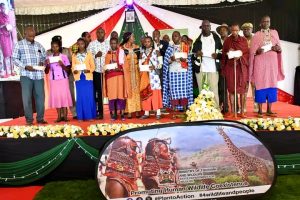
Kajiado East Member of Parliament, Kakuta Ole Maimai, expressed gratitude to the government for the compensation terming it as a reprieve to the victims.
Ole Maimai however called for further action to be taken by KWS as cases of human wildlife conflicts have been on the rise in the area affecting livelihoods yet compensation takes years.
“Even as I urge my constituents to conserve wildlife, we want faster, timely and more efficient compensation payment as we coexist with wildlife. We also want our youth to be recruited as community rangers,” said Ole Maimai.
One of the victims, Peter Kilukei from Ilkelunyeti, who was trampled by an elephant in 2016 said that he was thankful for the compensation as he would use it to open his own business.
Kilukei however urged the government to speed up the compensation process to avert retaliation attacks from the community.
The key human wildlife conflict hotspots in the country include Taita Taveta, Kajiado, Narok, Laikipia, Meru, Kwale, Baringo, Kitui and Isiolo.
65-70% of wildlife in Kenya reside outside protected areas and enhancing sustainable coexistence between people and wildlife has been one of the critical challenges to conservation.
For deaths due to wildlife attack, the government compensates Sh 5 million while an injury of a victim is compensated Sh3 million and livestock predation, crop destruction and property damages are compensated based on validation by agricultural and livestock officers.
The list of all compensated victims is currently available at the Ministry’s website for perusal.
By Diana Meneto