In a pivotal moment for East Africa’s water and climate resilience, the International Water Management Institute (IWMI) has unveiled its Strategy for East Africa 2024–2030 to enhance water security, support climate adaptation, and drive sustainable agriculture across East Africa.
The IWMI Strategy for Kenya and East Africa 2024 – 2030 themed ‘Propelling Change’ brought together government agencies, development partners, research institutions, private sector leaders, and community representatives to engage in dynamic discussions on scaling water solutions.
The new Strategy represents a significant leap forward in IWMI’s delivering on its mission by generating research evidence, developing innovations and solutions, and scaling them up through policies, networks and partners.
Speaking during the launch of the Strategy at the UN Campus, Gigiri, Nairobi, Principal Secretary for Irrigation, Ephantus Kimotho said the strategy is in alignment with the recently launched National Irrigation Sector Investment Plan (NISIP), a roadmap for enhancing irrigation infrastructure, promoting water use efficiency, and ensuring equitable water distribution across all regions.
“The NISIP seeks to accelerate irrigation expansion by integrating multiple funding sources and coordinating sector players,” he said adding that through these initiatives, the government aims to bring an additional one million acres under irrigation.
Kimotho said that currently, Kenya has only 747,000 acres under irrigation, representing about 21 percent of the country’s potential and 5 percent of total arable land.
“This investment plan provides a pathway for Kenya to achieve agricultural water development and food security goals,” Kimotho said, adding that it aligned with the Kenya Vision 2030, the National Irrigation Policy 2017, and the Bottom-Up Economic Transformation Agenda.
Kimotho divulged that with climate change posing major challenges, the government sees irrigation as the key to building resilient and sustainable agricultural systems.
“The future of agriculture in Kenya depends on our ability to harness water resources efficiently. This plan is our blueprint for an irrigated, food-secure, and prosperous nation,” he added.
Kimotho acknowledged IWMI as one of the partners driving impactful change in the region and highlighted the government’s efforts in creating a favorable policy and regulatory environment to attract private sector.
IWMI Director General, Mark Smith while speaking during the launch in Nairobi at the CGIAR Science Week 2025 underscored the urgency of the strategy, emphasizing the need for collaborative, data-driven solutions to address water and climate challenges.
“By harnessing cutting-edge research and fostering regional partnerships, we aim to deliver solutions that improve livelihoods across East Africa,” said Smith adding that water is at the heart of climate resilience, food security and economic development.
He said through this strategy, we are committed to working with partners to implement science-backed solutions to address pressing water-related challenges, improve livelihoods, and support sustainable development in Kenya and across the broader East Africa region.
“Our strategy is a roadmap for research and innovation to improve how water is managed in East Africa” he said, adding that it marks a significant milestone in IWMI’s mission to advance water security, climate resilience, and sustainable agricultural practices across East Africa.
IWMI’s Regional Representative for East Africa, Abdulkarim H. Seid, highlighted the regional priorities and how the strategy will contribute to sustainable development goals by leveraging cutting-edge research and partnerships.
Seid said that the challenges facing East Africa, as with other parts of the world, require collective action to solve water problems in developing countries and scale up solutions.
“The strategy will guide IWMI’s work in the region, ensuring that we co-design and co-develop solutions with local communities, governments, academia, private sector and other key partners to build resilient and innovative water systems for a sustainable future,” Seid explained.
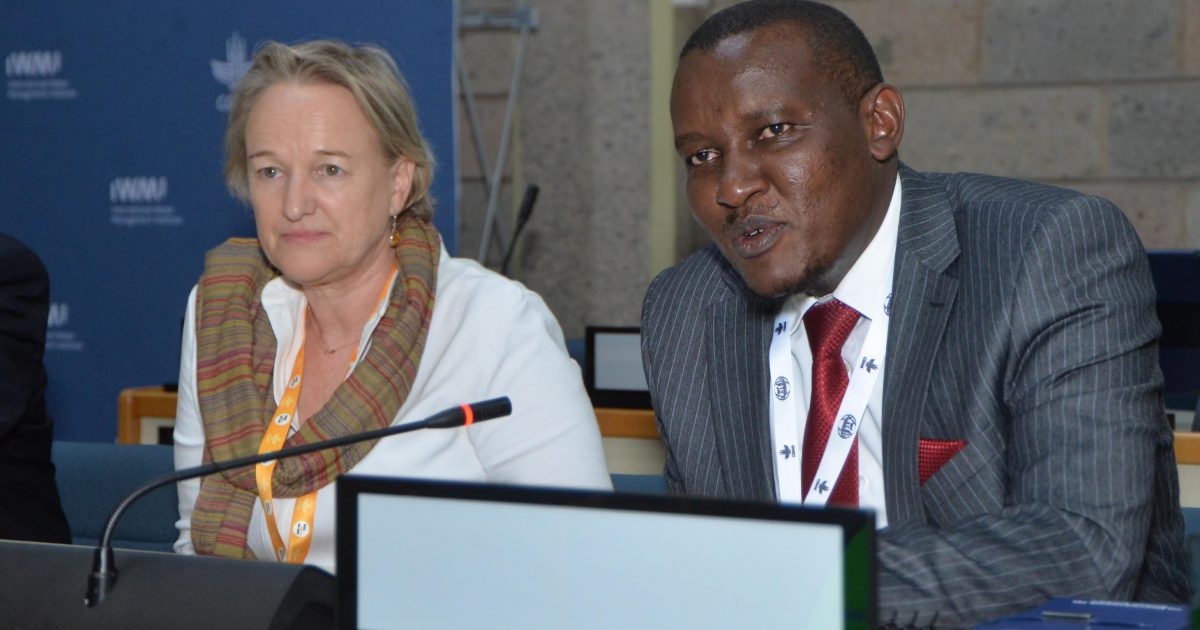
Held during the CGIAR Science Week, IWMI’s strategy launch event convened key stakeholders from government officials, research institutions, development partners, private sector and NGOs representatives to explore bold innovative approaches and solutions for sustainable water management in the region.
The event featured expert panel discussions comprising government officials, farmer organizations, research institutions, development partners and the private sector.
In addition to the insights gained into how IWMI’s strategy aligns with national and regional development plans and means of engagement in its implementation, the interactive sessions and networking opportunities offered a platform for knowledge exchange and collaboration.
By Anita Omwenga