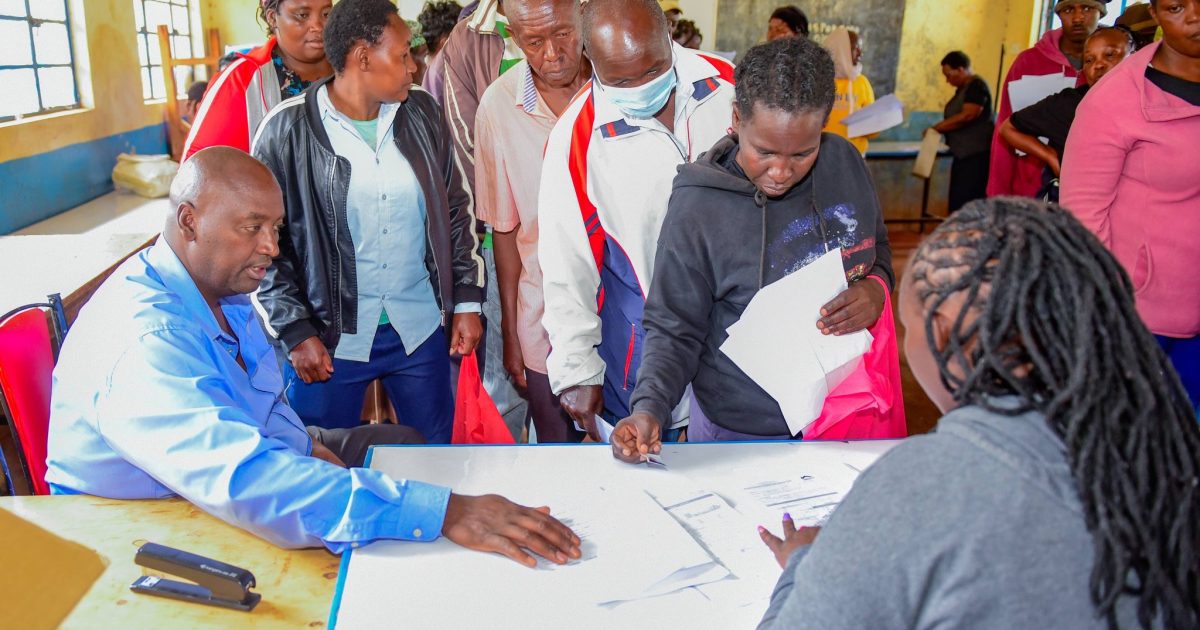
Parents and guardians in Kabete Constituency have continued to stream into designated centres over the past week to apply for education bursaries, as an initiative spearheaded by area Member of Parliament Githua Wamacukuru gains momentum.
The bursary programme, administered through the National Government Constituencies Development Fund (NG-CDF), targets needy, orphaned and vulnerable students who are struggling to meet school fee requirements. The initiative seeks to ease the financial burden on families and ensure that learners remain in school.
The exercise began last week with applications for students in the constituency’s day secondary schools, conducted within the respective institutions to enhance accessibility. This approach allowed parents and guardians to conveniently submit applications without travelling long distances.
In its current phase, the programme has expanded to ward-level centres, where applications for boarding school students, those in tertiary institutions and persons living with disabilities (PLWDs) are being processed. Centres including Kirangari Primary School, Kahuho Primary School and Uthiru Polytechnic have recorded a steady influx of applicants seeking assistance.
Speaking on the initiative, Wamacukuru reaffirmed his commitment to supporting education in the constituency, noting that the bursary programme is designed to ensure that no child is left behind due to lack of school fees.
“This bursary programme is meant to ensure that no child in Kabete is denied an education due to lack of school fees. We are committed to supporting needy, orphaned and vulnerable students so they can achieve their full potential,” he said.
Despite the high turnout, concerns have emerged among some applicants regarding the application process. Parents cited extensive documentation requirements as a major challenge, noting that they are required to present identification documents, proof of guardianship, academic records and evidence of financial need.
Some applicants said the requirements make it difficult for families, particularly those from vulnerable backgrounds, to gather all necessary documents within the limited timeframe provided.
Additionally, the short duration allocated for the exercise at certain centres has raised concerns about accessibility, with fears that some deserving beneficiaries may miss out.
Hannah Njambi, a parent who attended the application exercise, acknowledged the importance of the bursary while highlighting the difficulties faced by some families.
“The bursary is very important for families like mine, but the requirements are many and not everyone can get all the documents in time. If the process could be extended or simplified, more children would benefit,” she said.
Local administrators overseeing the exercise have, however, defended the strict requirements, emphasizing that thorough verification is necessary to ensure fairness and prevent misuse of public funds. They noted that the measures are intended to guarantee that only deserving cases benefit from the programme.
As the exercise continues across Kabete Constituency, stakeholders are increasingly calling for a balance between accountability and accessibility. While the programme remains a critical lifeline for many families, there is growing consensus on the need to streamline the process to make it more inclusive.
For many households, the bursary represents a vital opportunity that could determine whether their children remain in school amid rising financial pressures.
By Grace Naishoo