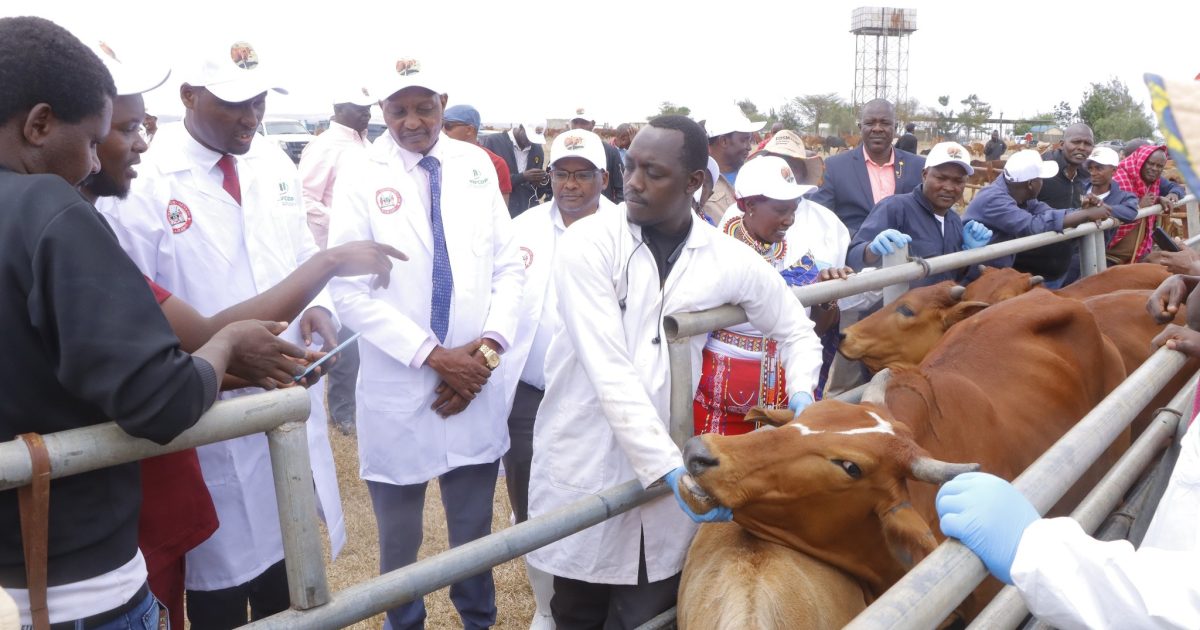
The Kajiado County Government has launched a mass livestock vaccination campaign targeting over 350,000 cattle to curb the spread of Foot and Mouth Disease (FMD) across the county.
The exercise, launched at Ildamat Ward by Deputy Governor Martin Moshisho, is part of the National Livestock Vaccination Programme aimed at safeguarding animal health and boosting livestock productivity.
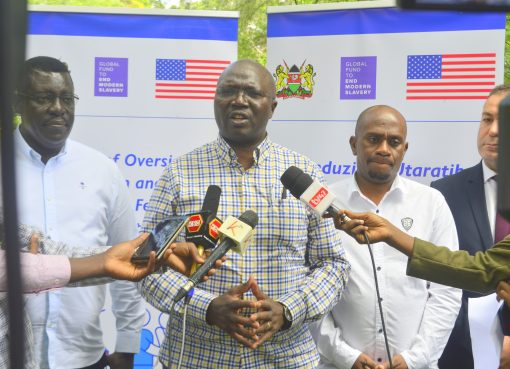
Moshisho said the initiative will protect the county’s livestock sector, which forms the main source of livelihood for many residents, particularly during the ongoing drought.
“In our efforts to safeguard our livestock and their products for consumption, we have today launched a mass vaccination programme targeting Foot and Mouth Disease. The exercise is expected to vaccinate close to 350,000 heads of cattle across the county,” he said.
He noted that the vaccination has been digitized through a special mobile application that records and collects data of vaccinated animals in real time, enhancing transparency and accountability.
“We are glad that part of the team leading this vaccination are our farmers, led by women in the dairy sector. I urge all farmers to come out and avail their animals for vaccination,” he added.
The campaign is being implemented in partnership with the National Agricultural Value Chain Development Project (NAVCDP) and the Kenya Veterinary Vaccines Production Institute (KEVEVAPI), under the coordination of the Ministry of Agriculture and Livestock Development.
County Executive Committee Member for Agriculture, Livestock, Irrigation and Fisheries Francis ole Sakuda said the exercise will target the control of Foot and Mouth Disease (FMD) in cattle and Peste des Petits Ruminants (PPR) in goats and sheep.
“For healthy livestock, especially during this dry season, vaccination is key. It protects the herds from diseases and improves productivity,” said Sakuda, adding that animal and human health are closely linked through the food chain.
The county government, through NAVCDP, trained over 50 veterinary officers and paraprofessionals on the use of the e-voucher vaccination system, which will be used to register farmers and track vaccines through the Kenya Agriculture Management Information System (KIAMIS).
The digitized vaccination process will enhance efficiency, prevent double vaccination, and provide real-time reporting to aid swift decision-making.
Under the cost-sharing arrangement, farmers will pay Sh50 per cow, while the county will subsidise Sh110 per dose. For small livestock, farmers will contribute Sh3 per animal, and the government will cover Sh10 per dose.
Veterinary officers and paraprofessionals have been deployed in all five sub-counties and 25 wards, supported by Farmer Producer Organisations (FPOs) and Community-Driven Development Committees (CDDCs).
Philip Kishoyan, who brought his 40 cattle and 70 goats and sheep for vaccination, welcomed the exercise, saying it would help protect livestock from recurring disease outbreaks that often cause huge losses.
“We have lost many animals in the past due to Foot and Mouth and other diseases. This vaccination will help us keep our herds healthy and improve productivity. I thank the county and national government for this initiative,” said Kishoyan.
Another resident, Joseph Tobiko from Olosuyian, reiterated the importance of the exercise in improving livestock health and sustaining pastoral livelihoods.
He urged fellow farmers to avail their livestock for vaccination, noting that disease control can only be achieved through collective participation.
“This programme is very important for us. When all farmers bring their animals, we will reduce disease outbreaks and improve our income as livestock keepers,” said Tobiko.
By Rop Janet