In the quiet villages of Naivasha, the sound of clucking hens is more than a sign of life—it is the rhythm of rural enterprise.
For generations, poultry has been a lifeline for many Kenyan households, providing food, income, and dignity.
The humble village chicken, once seen merely as a backyard bird, is now at the centre of Kenya’s agricultural transformation drive.
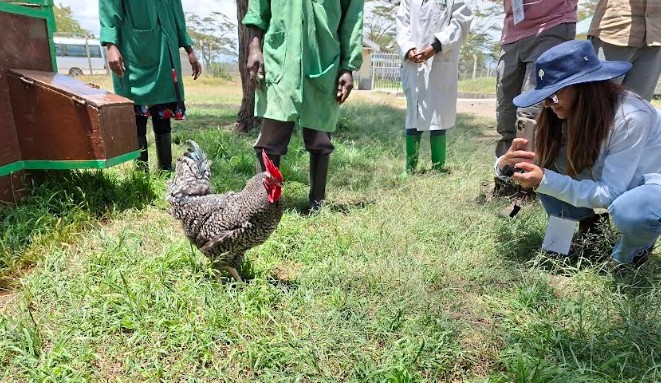
Researchers at the Kenya Agriculture and Livestock Research Organisation (KALRO) are hatching a new generation of indigenous chicken that could help turn the country into what they call a “Chicken Republic”.
Across rural Kenya, poultry remains a cornerstone of livelihoods. According to the Kenya National Bureau of Statistics (KNBS, 2024), more than 60 per cent of rural households rely on chicken for food, income, and social status.
In most homes, a visitor cannot be fully welcomed without a chicken meal.
However, while demand for poultry products keeps soaring, supply has failed to keep up.
The Ministry of Agriculture and Livestock Development (MoALD, 2023) reports that Kenya produces only 110 million kilograms of chicken meat and 7.2 million eggs annually—far below the national demand of 648 million kilograms of meat and 9.72 billion eggs.
This production gap mirrors the country’s low consumption levels. Each Kenyan consumes only 1.7 kilograms of chicken per year, compared to the 12 kilograms recommended by the Food and Agriculture Organization (FAO).
To close this gap, KALRO’s Dairy Research Institute (Naivasha) has intensified its poultry research and breeding programme.
Under the leadership of Dr. Anne Wachira, scientists have developed three improved dual-purpose indigenous breeds that grow faster, lay more eggs, and remain hardy under local conditions.
“Our improved ecotypes reach a live weight of two kilograms within four months and start laying between 220 and 280 eggs per year at about four and a half months,” said Dr Wachira, adding, “Each egg weighs 50 to 60 grams—matching commercial standards but retaining the resilience of local birds.” The innovation is already making waves.
According to KALRO data, the annual supply of improved indigenous chicks has risen from 200,000 in 2010 to more than 800,000 in 2025, thanks to technology transfer and capacity-building partnerships with county governments and farmer cooperatives.
KALRO’s programme also integrates a new poultry vaccine laboratory that produces affordable vaccines against major diseases such as Newcastle and Gumboro.
“Our goal is not only to breed better birds but to ensure they survive, thrive, and deliver economic value to farmers,” Dr. Wachira added.
Beyond improving breeds, KALRO’s broader vision is to integrate smallholders, youth, and women into a sustainable poultry value chain, from hatcheries and feed production to processing and marketing.
The initiative is seen as a vehicle for job creation, nutrition improvement, and food security, particularly in rural areas.
Still, challenges persist. High feed costs—driven by fluctuations in maize and soybean prices—continue to constrain profitability.
Researchers are therefore exploring alternative feed formulations using sunflower cake, insects, and other locally available materials to cut costs and improve efficiency.
FAO estimates that poultry demand in East and Central Africa will grow by about eight percent annually, offering Kenya both a challenge and a market opportunity.
For farmers like Mary Wanjiru of Gilgil, who has adopted the improved breed, the results are already tangible.
“Previously, my kienyeji chickens took six months to mature and laid few eggs; now, I collect eggs every week and still have enough birds to sell,” she added.
As Kenya’s poultry revolution takes shape, KALRO’s vision of a Chicken Republic, where every household can access affordable, nutritious poultry products, may soon be realised.
By Violet Otindo