Kericho County Women Representative Beatrice Kemei has urged communities across the country to confront the stigma, silence, and misinformation surrounding obstetric fistula, calling for stronger preventive measures and community responsibility.
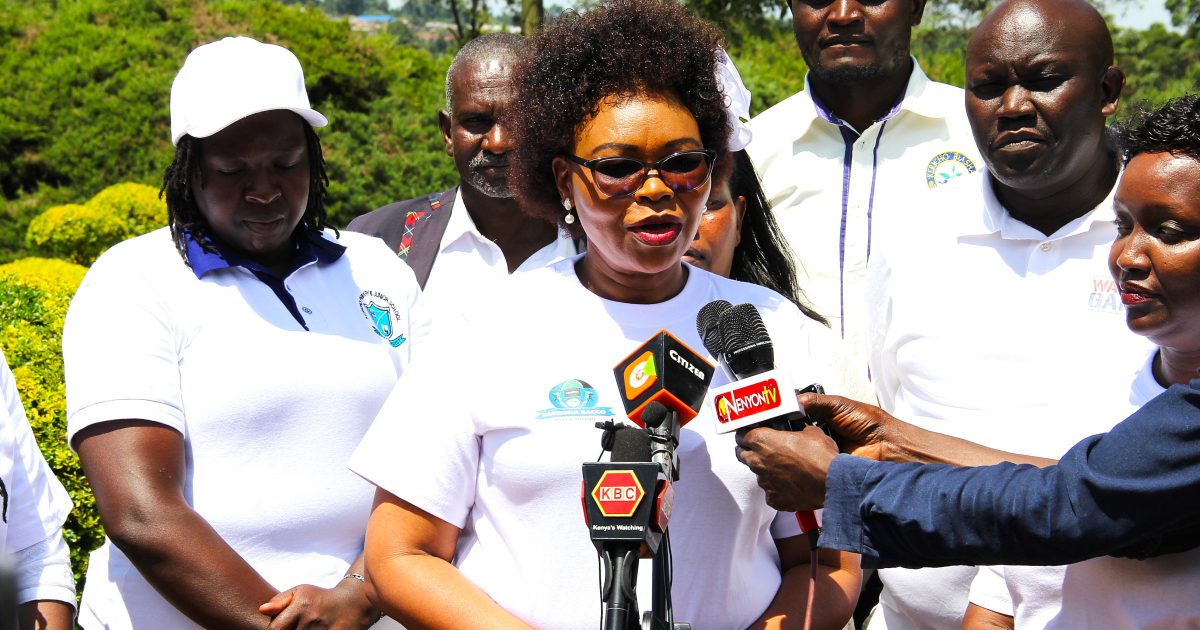
Speaking during the Obstetric Fistula awareness campaign at Kericho Primary School, Kemei delivered a powerful message on the need to protect women’s dignity and safeguard their health. She emphasised that every woman should have timely access to emergency obstetric care, cautioning that delays could cost lives. She further called on health workers, community leaders, and policymakers to work together to ensure that women’s health rights are respected and that no mother is left behind in accessing life-saving services.
“We cannot continue losing our mothers and young girls to preventable childbirth injuries. Obstetric fistula is not just a medical condition — it is a symbol of systemic neglect, where women suffer in silence because society fails to act. As leaders, we must ensure every woman delivers safely and receives dignity, compassion, and timely care, regardless of where she lives or her economic status,” she emphasised.
In an interview with Kenya News Agency (KNA), Kemei emphasised that families and community structures play a critical role in maternal health. She highlighted that early decision-making and prompt referrals are lifesaving, noting that when families act swiftly and seek timely medical care, many cases of obstetric fistula and other maternal complications can be avoided. Kemei urged community leaders and households to actively participate in sensitising women and supporting mothers, stressing that a coordinated community effort is essential to safeguard women’s health and dignity.
“If labour prolongs beyond normal, the delay in seeking care becomes deadly. We must change the culture where complications are handled at home until it is too late. Every family, every neighbour, and every health worker has a role in ensuring that no woman suffers permanent injury because of delayed action,” she urged, encouraging county residents to champion safe motherhood practices.
Her remarks set the foundation for an emotional testimony from Sharon Korir, founder of the Save a Woman Fistula Foundation and a fistula survivor, whose story anchored the day’s message of resilience and urgent reform.
Taking the podium, Korir recalled the harrowing ordeal she endured while living with the condition, explaining how fistula robbed her of emotional stability, dignity, and community acceptance.
“When I developed obstetric fistula, I felt my life lose meaning. I could not control the leakage, I could not stand in public, and I felt unworthy even in my own home,” she narrated. “But the moment I received treatment, I realized that this condition is not a curse—it is simply a childbirth injury that deserves urgent medical care, not humiliation or isolation,” she stated, concluding her testimony with renewed hope
She further noted that many women continue to hide the condition due to shame, despite fistula being fully preventable and treatable.
“What pains me is that thousands of women are suffering quietly. They are living in isolation simply because they cannot afford specialised care or do not know help exists. We must bring them out of the shadows and ensure they access free screening, surgical repair, and psychosocial support,” she emphasised.
Obstetric fistula is one of the most severe childbirth injuries which occurs when a woman experiences prolonged or obstructed labour without timely intervention — typically a caesarean section — causing tissue death between the birth canal and the bladder or rectum. This leads to continuous leakage of urine or stool, chronic infections, painful sores, infertility, and severe psychological trauma.
According to the World Health Organisation and national surveys, Kenya records approximately 3,000 new cases of obstetric fistula every year, while tens of thousands of women continue to live with the condition due to limited access to treatment and specialized care. Although fistula is entirely preventable and treatable, less than 10 % of health facilities offer basic emergency obstetric services, highlighting the urgent need for strengthened maternal health systems. These numbers underscore the critical role of timely medical intervention, community awareness, and coordinated support to ensure that no mother suffers in silence. Ending obstetric fistula is not just a medical imperative — it is a societal responsibility, demanding that families, communities, and institutions work together to protect the dignity and lives of Kenyan women.
As the forum progressed, speakers linked the day’s event to Kenya’s broader national campaigns aligned with global commitments such as the International Day to End Obstetric Fistula held every 23rd May. These campaigns focus on raising public awareness, offering free screening and repair services, strengthening community health systems, and advocating for increased investments in maternal healthcare.
In closing the event, the message echoed across Kericho Primary School was clear: obstetric fistula is preventable, treatable, and undeserving of silence. And as Beatrice Kemei reminded the audience, the responsibility to end it lies not only with government institutions but also with families, communities, and society at large.
“We must stand together. We must protect our mothers. And we must ensure that obstetric fistula becomes a tragedy of the past, never again the story of any Kenyan woman,” she affirmed.
By Gilbert Mutai