Kenya has reaffirmed its commitment to strengthening women’s participation in peace and security across the Great Lakes Region during a regional workshop that also marked the launch of a new regional action plan aimed at advancing women’s leadership in peacebuilding.
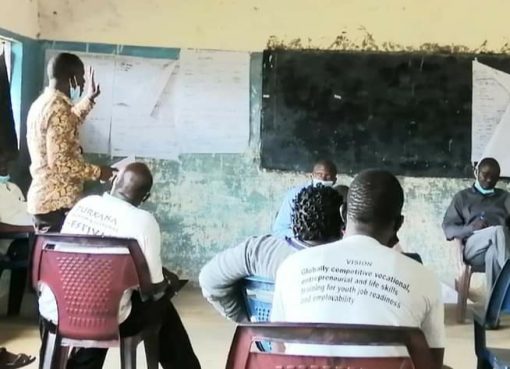
The workshop, convened by the International Conference on the Great Lakes Region (ICGLR) and hosted in Nairobi, brought together representatives from member states, development partners, civil society organisations, and women’s networks to discuss strategies for strengthening the Women, Peace and Security (WPS) agenda in the region.
The Principal Secretary (PS) for Gender and Affirmative Action Kenya Anne Wang’ombe, emphasised the importance of integrating local perspectives particularly those of women into regional peace and security initiatives.
She noted that the workshop comes at a critical time when countries in the Great Lakes Region are seeking practical ways to incorporate community experiences into policies that promote sustainable peace.
“Women at the grassroots level often bear the greatest burden of insecurity, yet their voices remain underrepresented in many decision-making spaces,” lamented the PS, in remarks delivered on her behalf by Michael Mwenga, the Secretary Administration in the State Department for Gender and Affirmative Action.
Importantly, the three-day workshop focuses on strengthening the implementation of the Women, Peace and Security agenda in line with United Nations Security Council Resolution 1325, which recognizes the crucial role women play in conflict prevention, mediation, peace negotiations, humanitarian response and post-conflict recovery.
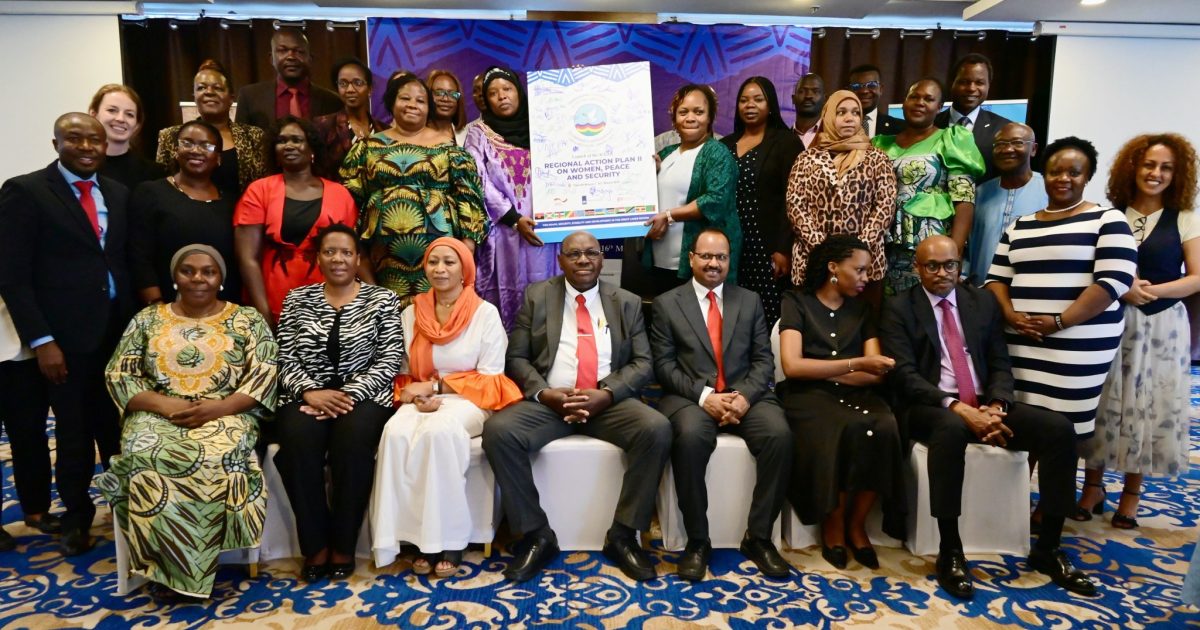
A key highlight of the meeting was the launch of the Second-Generation Regional Action Plan on Women, Peace and Security (2026–2030) by ICGLR. The plan aims to strengthen women’s leadership in peace processes, enhance regional cooperation, and improve coordination among member states in addressing cross-border security challenges.
Notably, the new Regional Action Plan builds on lessons learned from previous initiatives and was developed through extensive consultations involving governments, civil society organisations and women’s networks across ICGLR member states.
In addition, it has already received strong political backing, having been adopted by ministers responsible for gender in November 2025 and later endorsed by regional leaders during the 9th Ordinary Summit of the ICGLR Heads of State.
Further, the event also marked the validation of the ICGLR Gender Barometer II, a regional assessment tool designed to track progress in gender equality and women’s participation in peace and security processes.
To this regard, the PS explained that the Gender Barometer will help governments and regional institutions measure progress, identify gaps, and design targeted interventions to strengthen gender-responsive peacebuilding across the region.
Meanwhile, women mediators and peace champions, according to the government, have played a key role in community dialogue processes, early warning systems and peace committees in conflict-affected areas, helping to prevent the escalation of tensions and strengthen social cohesion.
Speaking at the workshop, Ambassador Yasir Ibrahim Mohammed, the Deputy Executive Secretary of ICGLR said the region continues to face complex peace and security challenges but stressed that sustainable peace cannot be achieved without the meaningful participation of women.
Amb. Mohamed pointed out that women across the region have demonstrated strong leadership in mediation, humanitarian response and community peacebuilding, particularly in areas affected by conflict.
“The contribution of women reminds us that sustainable peace cannot be achieved without their full participation and leadership,” he remarked.
Speaking on behalf of development partners, Alida Kaneza from GIZ echoed that the plan reflects the collective commitment of the region to strengthening women’s leadership in peace and security processes.
She disclosed that Germany supported the development of the framework through the Integrated Women, Peace and Security project funded by the German Federal Ministry for Economic Cooperation and Development and implemented by Deutsche Gesellschaft für Internationale Zusammenarbeit in collaboration with ICGLR institutions.
Similarly, Kaneza maintained that the ownership of the plan rests with ICGLR member states and civil society actors who contributed to its development through consultations held across the region.
To strengthen implementation, the workshop will include capacity-building sessions on results-based monitoring and evaluation scheduled for 19th –21st March, 2026. The training will bring together government officials and civil society representatives to enhance coordination, reporting, and accountability mechanisms supporting the Regional Action Plan.
In the meantime, organizers projected that the initiative is expected to guide regional cooperation on women’s participation in peacebuilding over the next five years, contributing to more inclusive, stable and resilient societies across the Great Lakes Region.
By Michael Omondi