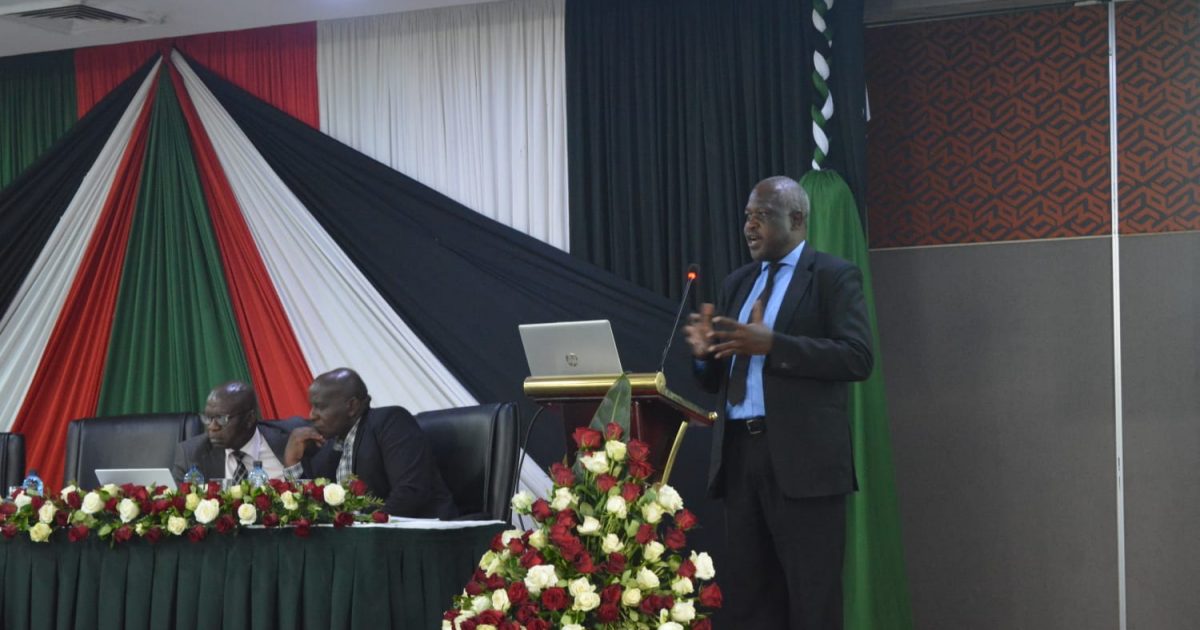
The Ministry of Tourism and Wildlife held the final national public participation forum on the review of the Wildlife Conservation and Management Act, 2013 (Cap 376), amid resounding calls for a new legal framework that truly reflects the voices of communities living with wildlife.
The public participation forum was hosted at the Kenyatta International Convention Centre (KICC) on Monday following a gazette notice issued on April 22 to deliberate on the proposed Wildlife Conservation and Management Bill 2025.
The Bill seeks to realign wildlife governance with Kenya’s Constitution and devolved system of government as it introduces comprehensive reforms aimed at strengthening institutional frameworks, securing sustainable financing, managing human-wildlife conflicts, and ensuring equitable benefit-sharing with local communities.
Tourism and Wildlife Principal Secretary (PS) John Lekakeny Ololtuaa emphasized the government’s commitment to inclusive conservation and people-centered reform.
In a speech read on his behalf by Head of Legal Affairs at the State Department for Wildlife Paul Ojwang, the PS said that this review is not a ceremonial exercise.
“This is a legal and moral obligation to ensure that the law serves both conservation goals and community welfare,” Ololtuaa said.
He reiterated that the ministry seeks to simplify wildlife compensation mechanisms, strengthen local governance, and protect Kenya’s global reputation as a leader in conservation while addressing longstanding injustices.
The Bill also preserves the crucial provision under Section 8(2)(f), which ensures that three community representatives remain on the Kenya Wildlife Service (KWS) Board, promoting inclusive governance. Additionally, county governments will be required to incorporate wildlife conservation into their development plans, helping to protect migration corridors and natural habitats.
The ministry promised a more accountable and transparent wildlife compensation system and pledged to uphold constitutional rights and equitable development.
“We are building a legal framework that prioritizes justice, efficiency, and inclusion. Our conservation efforts must reflect both our national pride and our obligation to protect citizens from the costs of living with wildlife,” Ololtuaa stated.
Nairobi City County Wildlife representative Susan Mugure called for the full inclusion of county governments in wildlife governance structures.
“County governments must have a formal role in conservation and compensation committees,” Mugure urged. “We are the ones dealing with real-time incidents — from snakes in schools to baboons in backyards. Yet our voices are absent in decision-making,” she noted.
She emphasized that both urban and rural counties faced wildlife challenges and must be empowered legally to participate in managing them.
Legal expert Kabaka Wandai, who has been advising on the draft legislation, gave a comprehensive breakdown of the proposed reforms under the Wildlife Bill 2025.
“The 2013 law was ambitious, but the country has outgrown it. The new bill is designed for today’s realities like climate change, population growth, and devolved governance,” he said.
“The Bill puts communities at the heart of conservation where they belong. This is a turning point in how we legislate around wildlife in Kenya,” Wandai said.
Key highlights include the reinforcement of three major institutions Kenya Wildlife Service (KWS), Kenya Wildlife Research and Training Institute (KWRTI), and the Wildlife Conservation Trust Fund (WCTF). In addition, the bill proposes the creation of two new agencies to execute specialized wildlife functions.
A major focus of the proposed legislation is the management of human-wildlife conflict. The bill establishes a structured compensation scheme for victims of wildlife-related injuries, deaths, and property damage. Compensation claims will first be reviewed by newly formed County Wildlife Compensation Committees (CWCCs) and then assessed by the Ministerial Wildlife Compensation Committee (MWCC), which holds final authority on payouts.
Mugure encouraged attendees and the wider public to continue submitting their views in writing as the Ministry prepares its final draft.
According to the bill, the Cabinet Secretary is tasked with developing a human-wildlife coexistence strategy aimed at reducing incidents and promoting peaceful interaction between humans and wildlife.
Participants at the forum underscored the need for a law that not only protects biodiversity but also supports livelihoods and attracts investment in conservation-based enterprises.
The ministry affirmed its commitment to refining the bill based on public input before it proceeds to Parliament. If enacted, the law is expected to significantly reshape Kenya’s wildlife conservation landscape.
The ministry will now consolidate all public feedback into a final report, which will accompany the bill to Cabinet and later to Parliament for debate and enactment.
By Fride Amiani and Daniel Kamau