Stakeholders from the labour and trade sectors have underscored the need for Kenya to realign its labour policies and workforce skills with the evolving global trade landscape, amid emerging challenges such as digital trade, artificial intelligence (AI), green investments, and global supply chain restructuring.
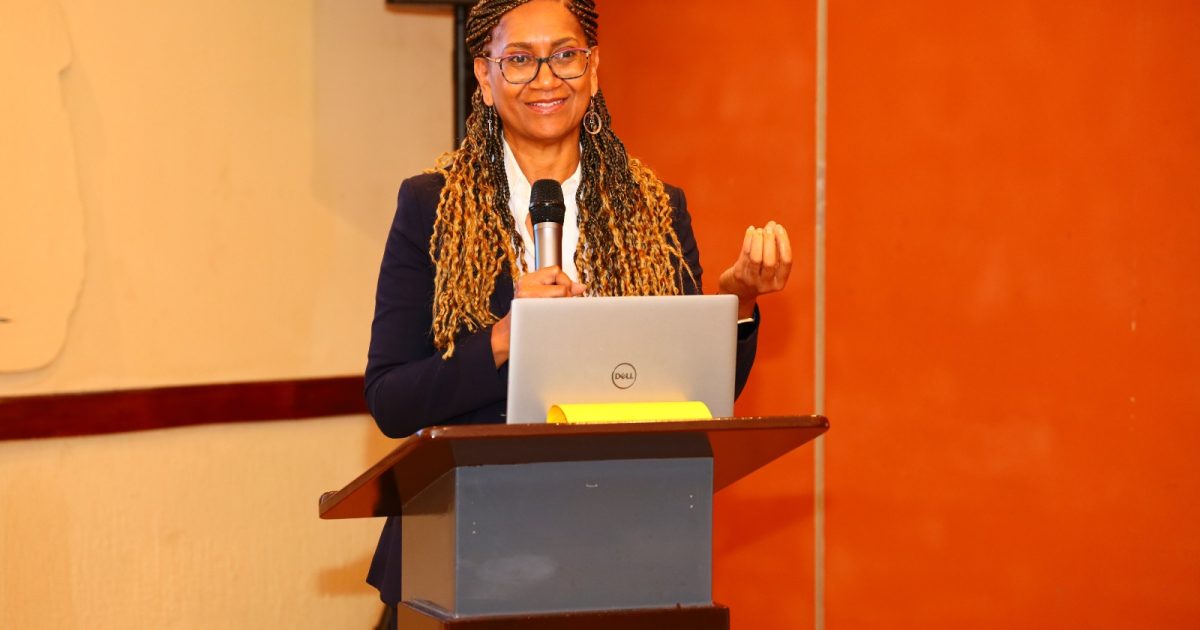
Speaking during a policy dialogue hosted by International Labour Organization (ILO) in collaboration with the Ministries of Labour and Skills Development and that of Trade, the Chief of the Globalisation, Competitiveness and Labour Standards unit at ILO Marva Corely-Coulibaly, reaffirmed the need to operationalise labour clauses within trade agreements, which were often signed but not implemented.
She identified five key priority areas for policy making including inclusive dialogue, informality and access to finance, skills portability, local labour content, and youth integration in trade policy.
“We must strengthen dialogue and inclusivity. Trade agreements cannot succeed if they exclude the very people who power them — the workers,” she cautioned.
Corely-Coulibaly noted that informality remained a significant barrier to fair labour standards and called for practical approaches to formalising small enterprises while maintaining flexibility for innovation and youth employment.
Concurrently, a research department representative at ILO Julia Privalikhana emphasized that labour standards should be embedded within new trade and investment agreements to safeguard workers’ rights and enhance competitiveness.
“With growing trade tensions and new agreements like the EU–India Trade Pact, labour provisions must remain integral. They should not distort trade but instead promote higher standards and fair competition,” affirmed Privalikhana.
She called for greater regional cooperation to strengthen intra-African trade, noting that it currently accounts for less than 20 percent of total trade on the continent.
“The African Continental Free Trade Area (AfCFTA) presents vast opportunities. “Regionalising supply chains will strengthen labour mobility and industrial competitiveness within Africa,” she remarked.
Making his remarks, a representative from Central Organization of Trade Unions (Kenya) Bruno Otiato urged policymakers to study the ‘political economy of global value chains’, noting that understanding who controls production and trade flows could help Kenya position its workforce strategically.
Otiato called for an urgent review of Kenya’s labour laws, many of which were enacted in 2007, to reflect modern work realities.
“The world of work has changed fundamentally. We must redefine who a worker is and ensure gig, digital, and contract workers are protected,” insisted Otiato.
He cited examples of short-term contracts and gig platforms such as ride-hailing services and call centres, where existing legal protections were often inadequate.
“It’s hard to protect workers whose employment terms are fluid. Our laws must evolve to guarantee rights for those in new forms of employment,” he demanded.
Concurrently, Econews Africa representative Edgar Odari said the Fourth Industrial Revolution has dramatically redefined traditional workspaces, demanding that Kenya rethinks its engagement with labour in light of technological and environmental shifts.
“We must redefine the kind of engagement we want with labour in the new spaces. The rise of artificial intelligence, digital marketing, and automation is reshaping how value chains operate. Workers need retraining and new tools to keep up with these changes,” urged Odari.
He also cited the example of China’s transition in car manufacturing, where automation has transformed physical labour into highly technical processes.
“We need to start retraining and equipping our workers with relevant skills for emerging sectors such as green energy and artificial intelligence. Kenya must identify which global value chains to latch onto to secure opportunities for its citizens,” he emphasised.
Consequently, Federation of Kenyan Employers representative Geoffrey Maumo echoed the sentiments, saying that technological disruptions were inevitable but should be embraced through continuous skills upgrading.
“AI is not taking jobs — people lose jobs when they fail to adapt. We must train workers to work with AI, not against it,” asserted Maumo.
Further, he revealed that his organisation is already developing AI-driven human resource systems capable of managing productivity, payroll, and performance evaluations.
“If HR professionals don’t learn how to work with such systems, they’ll soon find themselves replaced,” he warned.
Maumo also highlighted global shifts in trade logistics driven by environmental concerns pointing out that fresh produce exports, which relied heavily on air transport, were increasingly shifting to sea freight to reduce carbon emissions.
“Exporters, farmers, and shipping lines must align with this global shift through retraining and innovation,” he demanded.
The forum also heard calls for stronger oversight in labour immigration and foreign work permits to prevent the influx of unskilled labour from abroad, which participants warned could undermine local employment opportunities.
“Oversight and due diligence are critical. Before granting work permits, authorities must first assess whether those skills exist locally,” Otiato encouraged.
On their part, representatives from both Ministries Millicent Muli and Ivy Waigara called for an urgent review of labour laws, retraining of workers, and stronger institutional frameworks to ensure that Kenya remains competitive and that workers’ rights are protected in the new economic order.
Meanwhile, representatives from the Council of County Executive Committees (CECs) also urged counties to prioritize workforce retraining to align citizens with new trade and climate realities
From the discussion, it was discovered that most trade agreements already have labour standards clauses and what is missing is a clear framework to operationalize them.
Hence, the Ministry of Labour was urged to take the lead with success depending on collaboration across all sectors.
Ultimately, there was consensus that tripartite collaboration between government, private sector, and workers’ representatives remains central to ensuring that Kenya’s labour standards evolve in step with global trade dynamics — securing decent work while driving sustainable economic growth.
By Mary Ndanu