Kenya and the Islamic Republic of Iran have renewed their commitment to strengthen trade relations, with Kenyan tea exports to Iran reaching USD 33 million in 2024.
The crop remains Kenya’s leading export to the Middle Eastern nation, accounting for over 90 per cent of bilateral trade.
The Cabinet Secretary (CS) for Investments, Trade and Industry, Lee Kinyanjui, affirmed that Kenya is determined to address the challenges that have disrupted tea exports over the past year.
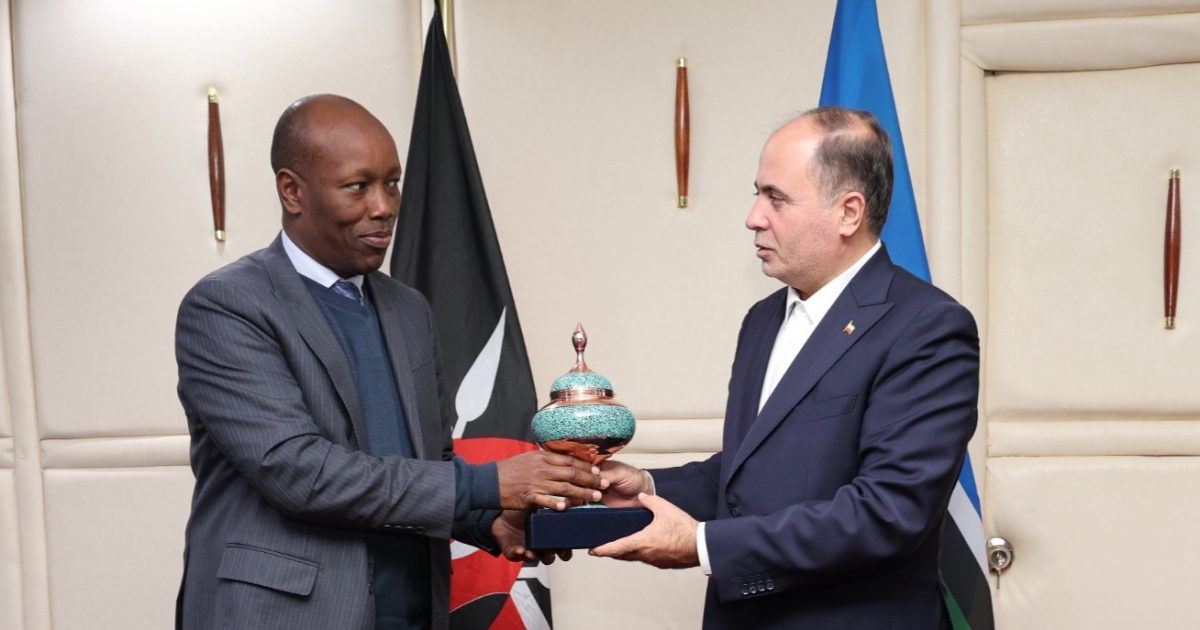
Speaking in Nairobi during a courtesy call by Iran’s Minister for Agricultural Jihad, Dr Gholamreza Nouri Ghezalcheh, the CS noted that the visit marked a turning point in resolving the bottlenecks facing the sector.
“We export a huge percentage of our tea to Iran, and this year we have had surplus production. It is therefore critical that we open up our market, and we are glad the Iranian delegation is here to help resolve the challenges that have affected the market,” explained Kinyanjui.
Further, he announced the formation of a Joint Committee between the two countries to address the recent impasse, terming it ‘a big win for farmers and a boost for the growing tea industry’.
According to the CS, Kenya continues to enjoy a healthy trade surplus with Iran; for instance, in 2024, exports to Iran were valued at USD 50.8 million, compared to imports worth USD 18 million.
Additionally, he stated that tea accounted for the bulk of the export earnings, underscoring its importance to Kenya’s foreign exchange revenues and the livelihoods of millions of small-scale farmers across the country.
In light of the above, the CS commended the Embassy of Iran in Kenya and the visiting delegation for their tireless efforts in seeking solutions to the trade disruptions.
Kinyanjui, at the same time, reiterated that tea production in Kenya has reached record highs in 2024, making the securing of sustainable and reliable markets more important than ever.
“We will continue to implement stringent measures to ensure the tea trade fully complies with established regulations and meets the highest standards,” he assured.
On the other hand, Kinyanjui also expressed Kenya’s solidarity with the people affected by the ongoing humanitarian situation in the Middle East, reiterating the country’s appreciation of its longstanding relationship with Iran.
In his remarks, Dr Ghezalcheh, who was also the head of the Iranian delegation, reaffirmed Iran’s commitment to strengthening trade with Kenya and expressed optimism that the new Joint Committee would find lasting solutions to the tea trade challenges.
Accompanying Dr Ghezalcheh was the Iranian Ambassador to Kenya, Ali Gholampour, while Kenya’s delegation included the Principal Secretary for Investment, Abubakar Hassan, and Principal Secretary for Industry, Dr Juma Mukhwana.
The Ministry said the talks are expected to lay the groundwork for deeper collaboration in the agricultural sector, particularly in enhancing tea trade and ensuring uninterrupted market access.
By Naif Rashid