Kenya has launched Women Count Phase III, in collaboration with Council of Governors, Swedish International Development Cooperation Agency (Sida), UN Women (Women Count) and partners, celebrating more than a decade of progress in closing gender data gaps, influencing policies, and building resilient systems that are accountable to women and girls.
Since 2016, the Women Count programme has helped transform gender data systems, closing critical data gaps, strengthening institutional capacity, and embedding gender statistics in decision making.
In Kenya, collaboration with the Kenya National Bureau of Statistics (KNBS), the State Department for Gender Affairs and Affirmative Action, and other national stakeholders has strengthened the integration of gender statistics across government.
These efforts have driven evidence-based policy reforms and positioned Kenya as a regional leader in gender data, reflected in its top ranking on the Gender Data Outlook Index and leadership across the continent.
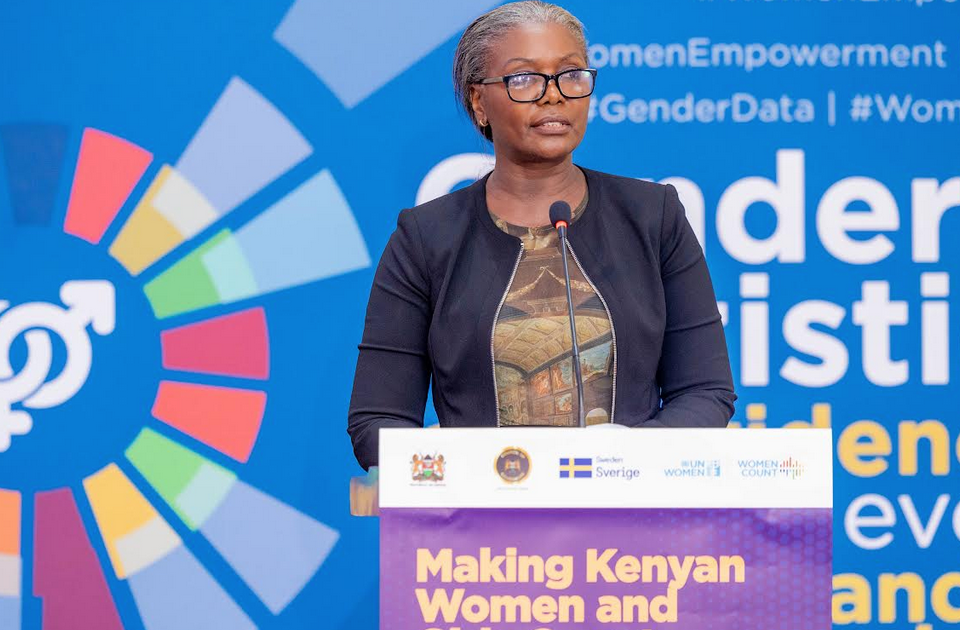
Speaking during the launch in a Nairobi hotel on Wednesday, UN Women Kenya Country Representative Antonia NGabala- Sodonon said a decade of investment in quality gender data has changed the policy conversation in Kenya.
“Partnership is not an add-on; it is the engine of progress. When women and girls count in data, they count in policy, budgets and outcomes,” she said.
The two-day event will bring in partners from around the region to share experiences over the first decade of impact.
It will also unveil the second editions of two flagship national products, the 47 County Gender Data Sheets and the Gender Statistics Strategic Plan (GSSP), to further strengthen subnational planning and long-term coordination of gender statistics
Director General Kenya National Bureau of Statistics (KNBS) Macdonald Obudho noted that gender statistics are essential infrastructure for development.
“With updated county data and a clear strategic plan, Kenya is focusing on quality, comparability, and timely use of statistics across all levels of government,” he said.
Reflecting on the global partnerships that have sustained progress, Head of Development Cooperation Embassy of Sweden Marie Ottosson said that Kenya’s leadership shows the power of partnership, persistence, and evidence.
“Sweden’s longstanding collaboration with UN Women on gender data underscores our shared commitment to transparency and results.” said Ottosson.
Women Count Phase III (2026–2029) will deepen the production and use of gender statistics, strengthen county level systems in the country, and expand regional learning across East and Southern Africa, ensuring that women and girls are visible in data and central to policy action.
Women Count Women Count is UN Women’s global gender data programme dedicated to closing gender data gaps and transforming how gender statistics are produced and used.
Since 2016, Women Count has supported countries to strengthen statistical systems, improve data availability and quality, and ensure women and girls are visible in national and global development agendas.
The programme operates in nearly 100 countries worldwide, partnering with governments, national statistical systems, civil society, academia, and the private sector.
By Anita Omwenga