Kenya has taken a significant step towards improving access to education for visually impaired learners by officially launching the transition to the Unified English Braille (UEB) system.
The move aligns the country with other nations that have adopted the globally recognized braille code aimed at simplifying learning for persons with visual impairments.
The launch, organized by the State Department for Basic Education in partnership with The Action Fund, marks the beginning of Kenya’s gradual shift from the Standard English Braille (SEB) system to the Unified English Braille.
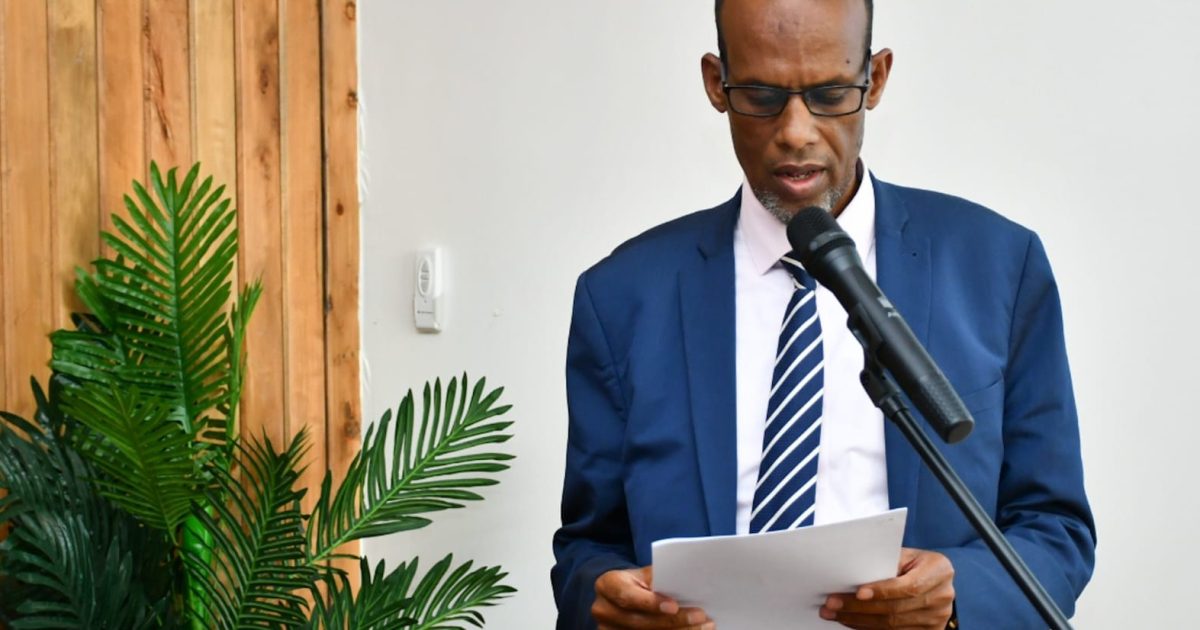
Speaking during the launch, Director General in the Ministry of Education Dr. Elyas Abdi applauded the transition, describing it as a major milestone in enhancing inclusive education in the country.
Representing the Principal Secretary for Basic Education, Ambassador Julius Bitok, Dr. Abdi said the government remains committed to ensuring that no learner is left behind in accessing quality education.
“This transition is a critical step in strengthening inclusive education and ensuring that learners with visual impairments can easily access learning materials,” said Dr. Abdi.
To spearhead the transition process, the State Department for Basic Education has appointed a 20-member Technical Working Group (TWG). The team comprises representatives drawn from the State Department and its Semi-Autonomous Government Agencies (SAGAs).
The Technical Working Group will guide the implementation of the Unified English Braille system, including training of teachers, development of learning materials and coordination with stakeholders in the education sector.
Dr. Abdi called on education stakeholders to work closely with the Technical Working Group to ensure the successful implementation of the programme before the targeted timeline of 2029.
Director of Special Needs Education at the Ministry of Education Dr. Fredrick Haga, who is leading the Technical Working Group, said the transition will help eliminate challenges caused by the use of multiple braille systems.
He noted that the Unified English Braille was developed to address complexities found in Standard English Braille, which had different codes and rules for subjects such as mathematics, science and technology.
Dr. Haga added that the adoption of the new system will simplify reading and writing for visually impaired learners and improve their learning outcomes.
The transition will also align Kenya with global braille standards, enhancing compatibility in learning resources and assistive technologies used by visually impaired learners worldwide.
By Wangari Ndirangu