The transition of the Kenya Meteorological Department into a state corporation is expected to expand its legal and financial mandates and reinforce forecasting, early warning systems and climate information delivery across the country.
The move, according to Cabinet Secretary for Environment, Climate Change and Forestry Dr Deborah Mlongo Barasa is aimed at enhancing climate services and supporting national resilience.
Dr Barasa emphasized Kenya’s leadership role in advancing climate services regionally and globally. She highlighted the critical role of climate services in guiding practical actions across sectors.
“Climate services enable governments, communities and the private sector to anticipate risks, plan and take early action. They support farmers to make informed farming decisions, pastoralists to manage pastures and mobility, health systems to anticipate disease outbreaks, energy planners to optimize generation and disaster management agencies to protect lives and livelihoods,” she said.
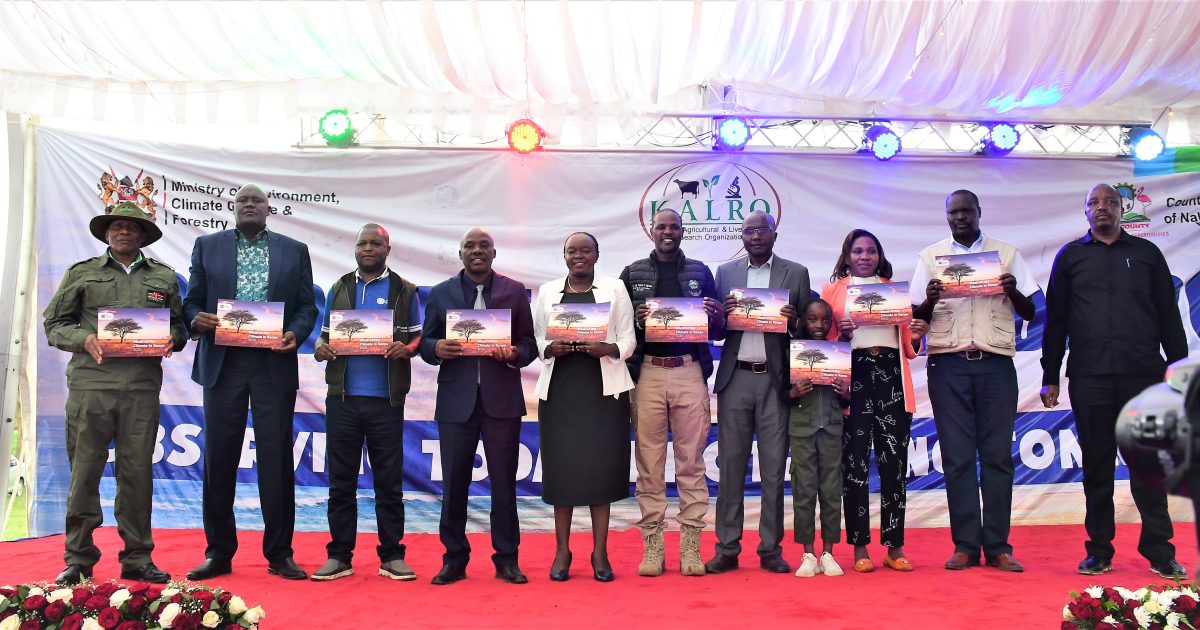
Speaking in Nakuru during celebrations to mark the World Meteorological Day Dr Barasa emphasized the shift from producing climate information to co-producing climate services, ensuring data is accessible and responsive to user needs at community, national and regional levels.
Last week President William Ruto assented to the Meteorology Bill, 2023, which establishes the Kenya Meteorological Service Authority (KMSA), creating a comprehensive framework to regulate and coordinate meteorological services in the country while aligning with global aviation and scientific standards.
Dr Barasa said the new law creates a legislative framework to regulate meteorological services in Kenya and to coordinate and monitor their delivery across national and county governments.
“The law also ensures that Kenya complies with international standards and obligations governing meteorological services under the Chicago Convention on International Civil Aviation and the Intergovernmental Oceanographic Commission of UNESCO,” she said.
The Cabinet Secretary noted that the government is also exploring innovative and sustainable financing mechanisms, including allocating a portion of proceeds from air navigation services to support KMSA.
“Such investments will enhance observational networks, forecasting capacity and last-mile service delivery, directly contributing to resilience and sustainable development across the country,” she said.
Dr Barasa highlighted expected climate conditions and implications for agriculture, food security, water, health, disaster risk management and livelihoods in Kenya, which she said were being aggravated by climate change.
She also reaffirmed Kenya’s commitment to global initiatives, including the UN’s Early Warning for All initiative, and the National Early Warning system launched in 2025.
Dr Barasa assured that the government was ensuring timely and effective early warning systems to protect every Kenyan and property from effects of climate such as rising lakes, drought and floods.
Under the new Meteorology Act the newly created authority will serve as the principal technical adviser to both national and county governments on weather and climate matters.
The authority will be responsible for establishing and maintaining meteorological management systems for data processing, analysis, forecasting and archiving.
It will also prepare and disseminate weather forecasts, issue advisories and warnings to support disaster risk reduction through early warning systems, and develop training curricula in meteorology aligned with international standards.
The authority will further be tasked with registering weather stations used for meteorological data collection and coordinating research and development in the field.
The legislation also creates a Meteorology Training and Research Directorate, which will succeed the Institute for Meteorological Training and Research.
The directorate will operate as a designated regional training center of the World Meteorological Organization, offering certificates, diplomas and professional courses in meteorology, operational hydrology and related sciences.
Additionally, the Act empowers the authority to identify sites for meteorological observation stations and enter into agreements with landowners for the use of their property for observation purposes.
The law also introduces intellectual property protections covering data, advisory services, inventions and innovations generated by the authority.
Principal Secretary, State Department for Environment and Climate Change Engineer Festus Ng’eno said the Act outlines offences related to interference with meteorological infrastructure or services, aimed at safeguarding the effective delivery of weather and climate information.
He pointed out that the reforms are intended to strengthen weather forecasting, climate monitoring and disaster preparedness in Kenya while ensuring compliance with international aviation and oceanographic standards.
Dr Ng’eno explained that the law will modernize meteorological services and improve coordination across institutions that depend on weather data.
“The Meteorology Act establishes a legal framework to regulate and coordinate meteorological services across the country. The reforms will align Kenya’s weather services with international standards. It converts the meteorology department into an authority in line with international best practice to ensure data-driven planning for agriculture, aviation and other weather-dependent activities,” the Principal Secretary said.
He added “In today’s world, marked by increasing climate variability and extreme weather events, accurate and timely weather forecasting is not just helpful—it is essential. Its influence extends across the entire agricultural value chain, affecting immediate on-farm decisions and shaping long-term strategies.”
Dr Ng’eno observed that for modern agriculture to remain productive, sustainable, and resilient, farmers must rely on precise forecasts and real-time weather insights.
Acting Director-General -Kenya Meteorological Department Mr Edward Maina Muriuki noted that better weather data is essential for several sectors of the economy. He pointed out that farmers rely on forecasts to plan planting seasons and manage crops while aviation operations also depend on accurate weather data to ensure safe flights.
While indicating that Kenya has experienced increasing climate variability in recent years, including droughts and severe floods, Mr Muriuki stated that a stronger meteorological system can help the government and communities prepare for extreme weather events.
The Acting Director General explained that weather forecasting has evolved from a general advisory tool into a cornerstone of modern, data-driven agriculture.
“Its impact spans every aspect of the agricultural lifecycle—from planning and production to harvesting and risk management. As climate change continues to increase the frequency and intensity of extreme weather events, the importance of precise, hyperlocal, and timely forecasts will only grow,” stated Mr Muriuki.
By leveraging comprehensive meteorological data and investing in agro-meteorological infrastructure, the official explained that farmers can improve decision-making, reduce losses, optimize inputs, and strengthen resilience against climate-related disruptions.
“In doing so, they contribute not only to their own productivity but also to global food security and the long-term sustainability of agriculture as a whole,” he observed.
Director General of the Kenya Agricultural and Livestock Research Organization (KALRO), Dr Patrick Ketiem noted that weather forecasting is no longer a support tool—but an operational necessity. He said that its continued development and integration into agricultural systems is an urgent priority for governments, researchers, agribusinesses, and farmers alike.
Dr Ketiem said KALRO was promoting adoption of innovative agricultural technologies to boost food production, raise household incomes and mitigate the effects of climate change.
He stated that the state corporation is working closely with communities to promote sustainable farming practices that improve livelihoods.
“We are partnering with communities across all the 11 Sub-Counties in Nakuru to promote climate-smart farming practices that can support sustainable food systems and raise living standards,” Dr Ketiem pointed out.
Beyond rooting for adoption of new climate smart farming techniques, the Director General disclosed that KALRO has also been equipping farmers with skills on how to access markets and explore value addition through cooperatives, which provide a platform for collective marketing and enhance economic sustainability for smallholder farmers.
He said the training on enhancing the utilization of climate-smart agriculture technologies among smallholder women farmers in the country aims not only to provide a platform for the farmers to share knowledge and experiences but also use the knowledge and skills gained from the training to further train other farmers within their communities.
Principal Secretary (PS) for the State Department for Agriculture Dr Paul Ronoh said that climate-smart technologies for smallholder farmers have an impact because when they are trained, they go and adopt them in their households, realize more yields, in process earning more income as they consume some of the farm produce and sell the surplus.
Dr Rono explained that Climate Smart Agriculture (CSA) involves actions that sustainably increase productivity, enhance adaptation, reduce greenhouse emissions to a possible zero and enhance achievement of national food security and development goals.
Climate change, the Principal Secretary added, is not only threatening food security but is also contributing to the loss of biodiversity, insecurity and nutrition.
Dr Ronoh added “The situation on climate change is worsening daily as natural hazards from extreme weather events such as drought and flooding are increasing. This has created greater loss and damage.”
He indicated that Climate Smart Agriculture (CSA) was the solution to erratic weather patterns adding that it involves actions that sustainably increase productivity, enhance adaptation, reduce greenhouse emissions to a possible zero and enhance achievement of national food security and development goals.
While stating that climate-smart agriculture practices which will cushion farmers against climate change challenges like drought, floods, pests and diseases, the Principal Secretary urged farmers to seek advisory services from 24-hour service KALRO’s Call Center free of charge.
by Jane Ngugi & Dennis Rasto