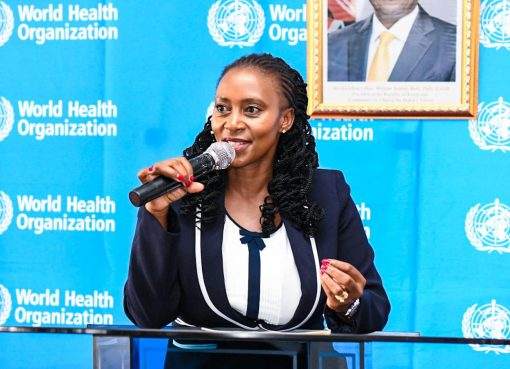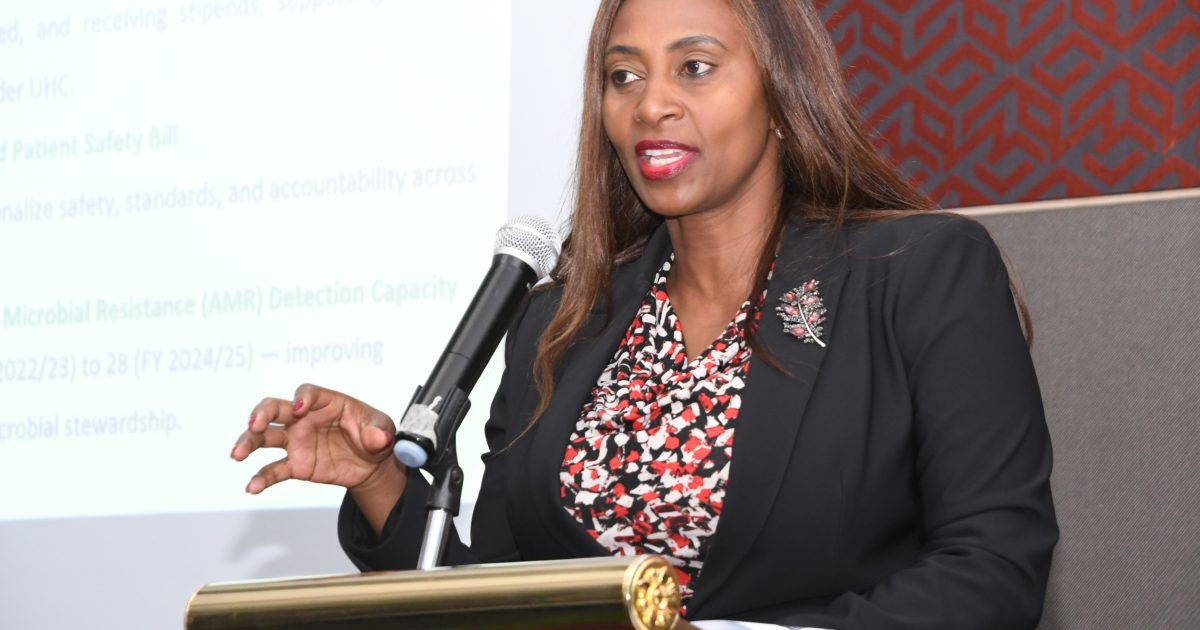
Principal Secretary (PS) for Public Health and Professional Standards Mary Muthoni says that Kenya is making significant strides in strengthening primary healthcare, improving essential services and expanding digital health.
The PS however warned that critical gaps in financing, infrastructure and medicine availability must be urgently addressed to meet the country’s universal health coverage (UHC) targets.
Speaking during a sector presentation conducted by the National Treasury on the proposed Financial Year 2026/27 and the Medium-Term Budget, PS Muthoni stated that the country’s primary health care network, the geographical mapping that links households to nearby Level 2 to Level 4 facilities, underpins the Social Health Insurance ecosystem by allowing Kenyans enrolling for SHA to easily identify facilities closest to them.
She disclosed that while the country is expected to establish 315 primary care networks, only 228 have been completed.
Additionally, the PS highlighted the central role of community health promoters (CHPs), saying 107,831 CHPs have supported 7.8 million households, translating to care reaching more than Sh30 million.
“This turns health into a shared responsibility that begins at the household level,” she said, adding that CHPs continued to deliver basic services such as checking blood pressure and blood sugar, despite ongoing gaps in essential commodities and equipment.
Further, Muthoni announced that the government has improved disease prevention through immunisation and surveillance, with Penta-3 coverage above 83 percent, vitamin A supplementation above 83 percent, and HIV prevalence declining from 3.7 percent to 3.03 percent.
In addition, the PS reported that ART coverage has reached 87 percent of eligible clients, while mother-to-child transmission rates have dropped below 8 percent.
On malaria, Muthoni announced the distribution of 16.5 million ACT doses and 4.7 million mosquito nets.
Concurrently, she underscored progress in antimicrobial resistance surveillance, saying testing capacity has expanded from 17 to 28 laboratories, and emphasised the urgency of curbing self-medication and misuse of antibiotics.
“At some point, medication will not respond to your body, and that is why we are very keen about AMR,” cautioned Muthoni.
Despite these gains, the PS acknowledged persistent challenges revealing that only 18 percent of health facilities have end-to-end digital systems and medicine availability stands at 62 percent below national expectations as the country’s blood supply also remains below the WHO recommended minimum.
“Access to medicine should never be a lottery. The issue of hakuna dawa must come to an end,” affirmed the PS as she added that digitalising health records would reduce repeated tests and improve service delivery.
Equally, Muthoni highlighted that the government is anchoring health reforms under five priorities for the 2026/2027 medium-term expenditure framework including people-centred prevention and health promotion; financial protection through the Social Health Insurance Fund (SHIP), Primary Healthcare Fund and Emergency, Chronic and Critical Illness Fund (ECCIF); scaling up digital health; strengthening quality standards; and expanding specialised and high-impact services.
On the other hand, the PS emphasised the need to stop preventable diseases at household level, citing malaria, cholera and bilharzia as examples.
“Why are we not protecting ourselves at home? Health promotion is critical,” Muthoni implored, calling for stronger community engagement and health literacy campaigns.
On financing, the PS stressed that funding for the Primary Health Care Fund and ECCIF is non-negotiable.
“Nobody should be called from their village to send money for registration at a facility. It should be free,” she asserted, explaining that ECCIF would ensure patients in emergencies receive care even when unconscious or unaccompanied.
The PS also announced ongoing reforms in quality and regulation, including the Quality of Health Care and Patient Safety Bill, currently before Parliament. The Bill proposes an agency to oversee facility standards, investigate fake medicines and provide a central channel for patients to lodge complaints.
“We are not supposed to receive such information from social media,” she warned, stressing the importance of infrastructure, trained personnel and safe medicines.
According to PS Muthoni, counties must invest in continuous training for healthcare workers, while the national government manages policy and specialised training.
“Retention strategies, good remuneration and structured career progression are essential to prevent brain drain,” she outlined pointing to ongoing specialised training at KMTC and new programmes at Kenyatta University as examples of progress.
On high-impact services, Muthoni said that the government is accelerating access to cardiovascular, kidney, oncology and maternal health services adding that the newly established Kidney Institute would enhance regional leadership in transplantation and specialised care.
Also, she divulged that the Ministry aims to raise essential medicine availability to 75 percent within three years, register 35–40 million Kenyans under social protection schemes by 2029, and expand digital health coverage to 50 percent of public facilities.
Calling for joint responsibility, the PS urged development partners, county governments, healthcare workers and Kenyans to work collectively to strengthen the health system. “Health is a shared enterprise. We are not leaving anybody behind,” she said.
During the same session, Dr. Joab Odhiambo of KIPPRA raised concerns over financing gaps within the Social Health Authority structure, especially under the Primary Health Care Fund and the Emergency, Chronic and Critical Illness Fund.
He mentioned that actuarial analysis shows that the projected allocations fall short of actual needs. “If the government allocates about Sh1,900 per person annually, the totals may not match what is required,” established Dr. Odhiambo, noting that his calculations showed coverage needs could reach Sh58 billion, rising further depending on emergency and chronic illness probabilities.
In addition, Dr. Odhiambo warned that the ECCIF is significantly underfunded, with requirements estimated at Sh129 billion against much lower proposed allocations.
He at the same time insisted that reliable data from KNBS and stronger health-financing models would help policymakers justify increased budgetary allocations. “When we go with real numbers, Parliament listens,” he said.
Responding to his remarks, the PS maintained that the Constitution recognises health as a right, but the Supreme Court’s interpretation requires these rights to be realised progressively, balancing citizens’ needs with available national resources.
“We are aware of the requirements, but the money comes from Kenyans,” Muthoni reiterated.
Meanwhile, the PS reaffirmed the Ministry’s commitment to transparency, stronger data systems and collaborative planning to ensure Kenya moves steadily toward universal health coverage.
By Darlene Kuria
Photo/Captions by Boniface Malinda.