Kenya Railways is enhancing railway services to attract businesses to shift their cargo to rail transport, which offers greater cost efficiency compared to other modes.
Freight services have contributed largely to the growth in the manufacturing and industrial sectors by reducing transport costs by 30 percent.
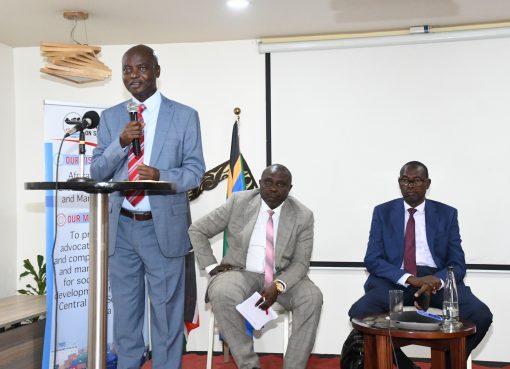
The Kenya Railways Managing Director Philip Mainga said that, “We are committed to fostering regional economic growth by improving rail transport systems and services.”
Cargo movement by both the Standard Gauge Railway and the Meter Gauge Railway has offered the heavy lifting required by industries at a much affordable cost than other means of transport.
Rail freight is not only more economical but also highly reliable, as it is less susceptible to disruptions caused by adverse weather conditions.
With fixed schedules and minimal exposure to road-related delays such as traffic congestion, rail transport assures cargo owners of timely delivery regardless of prevailing weather patterns.
Kenya Railways has also proven to be a great enabler in Kenya’s economic growth, especially after the construction of the Standard Gauge Railway in 2017, the MD said.
“The Madaraka Freight service on the SGR operates between nine and ten Standard Gauge Railway (SGR) freight trains daily, each carrying an average of 108 twenty-foot equivalent units (TEUs)—equivalent to approximately 1,000 containers.
The Meter Gauge Railway (MGR) in Kenya has further demonstrated significant improvements in its performance, particularly in freight transportation and has moved more than 1.029 million tonnes in the 2024-2025 financial year surpassing last year’s achievement.
According to Mainga, a key driver of this resurgence is the revitalized Nanyuki Meter Gauge Railway whose corporation’s monthly freight capacity on this line surged from 40,000 tonnes to 100,000 tonnes following its refurbishment.
The Nanyuki freight train plays a crucial role in the distribution of fuel, notably transporting approximately 600,000 litres of fuel in a single trip over a distance of 755 km from the Mombasa terminal in Shimanzi to the Vivo Energy depot in Nanyuki.
This substantial volume highlights the MGR’s growing contribution to the national logistics network and its enhanced efficiency in serving key industries.
The Corporation is also working to reconnect and upgrade other branch lines like in the coastal region where a trans-shipment facility at Voi is planned to link the SGR with the old MGR network, along with new cargo-handling yards at Taveta on the Kenya–Tanzania border.
“The upcoming revival of the 130 km Voi–Taveta railway line, which had ceased operations in the mid-2000sis on course and once the line is rehabilitated, will connect Kenya’s rail system directly into northern Tanzania reaching Moshi beyond the Taveta/Holili border”, the MD noted.
This initiative, Mainga said, aligns further with recent discussions between the Governor of Taita Taveta Andrew Mwadime and Kenya Railways which explored a potential collaboration to revamp the railway line from Voi to Taveta.
“The re-establishment of this line promises to unlock new economic opportunities and improve logistics for the entire Taita Taveta County,” he said and adding that the local authorities and Kenya Railways leadership have been collaborating on this project, recognizing that it would boost regional trade and even tourism.
By restoring this route, businesses in both Kenya and Tanzania will gain a seamless, efficient logistics corridor, and communities along the line stand to benefit from renewed economic activity.
Furthermore, the anticipated completion of the Standard Gauge Railway (SGR) extension to the Kenya–Uganda border at Malaba, scheduled for commissioning later this year, is expected to significantly boost regional trade.
This strategic link will increase the volume of goods moved by rail across East Africa, further reinforcing rail transport’s role as a critical driver of economic growth and regional integration.
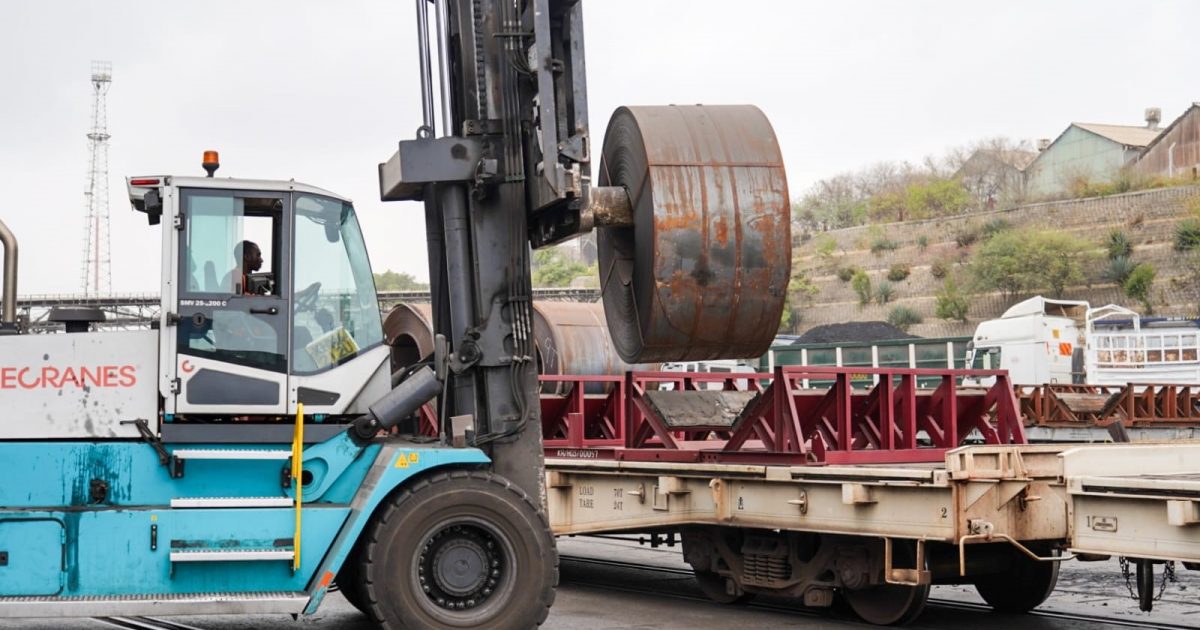
Common commodities being transported include fertilizers, bulk grain, steel, and containerized cargo for manufacturers, wholesalers and retailers with vegetable oil being the latest addition to the equation.
The Corporation has also acquired internally-powered wagons designed to transport refrigerated containers for perishable goods without reliance on external power sources
As it stands, statistics indicate the corporation currently contributes to 3 percent of the country’s GDP.
By Lizzie Auma and Wangari Ndirangu