Kenya has reiterated its commitment to a people-centred, inclusive information society, recognizing affordable and secure connectivity as essential to education, health, civic participation and economic growth.
The commitment was made during the World Summit on Information Society (WSIS+20) High-Level Meeting, held from December 16th to 17th 2025, in New York, USA, which brought together Member States, United Nations leadership and a wide range of stakeholders to review two decades of progress under the World Summit on the Information Society (WSIS) and to agree on priorities for advancing global digital cooperation.
The summit called for accelerated action to address persistent digital divides and emphasized increased investment in digital infrastructure, strengthened digital skills, and the responsible governance of emerging technologies, including artificial intelligence and data ecosystems, in line with human rights and trust.
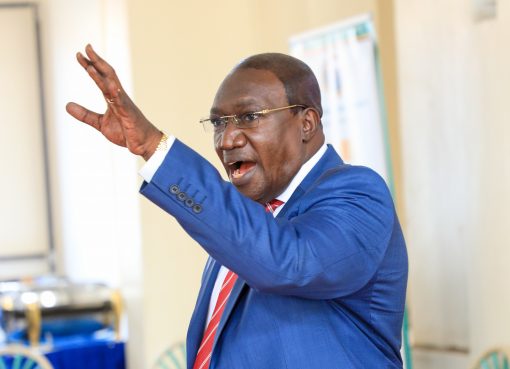
In a statement delivered at the High-Level Meeting of the United Nations General Assembly, ICT Cabinet Secretary William Kabogo said the Kenyan government had embarked on aggressive efforts to bridge the digital divide through aggressive expansion of broadband and mobile connectivity to the remotest parts of the country, as well as the establishment of ICT hubs across the country.
‘‘Our Universal Service Fund has bridged urban-rural divides, ensuring access to mobile network services to the unserved and underserved populations. We are now extending this mission through digital hubs in every lowest administrative unit, 1,450 of them, connecting public offices to broadband, and catalyzing other aspects of our economy, including education, justice and even the agricultural spheres,’’ said CS Kabogo in a statement delivered by Mr. Stephen Isaboke, the Principal Secretary, State Department for Broadcasting and Telecommunications.
The CS added that Kenya continues to enhance digital skilling as well as gender equality, empowering women and girls in STEM, giving thousands of young people economic dignity online.
Kenya, a co-facilitator alongside Albania, played a pivotal role throughout the WSIS+20 process.
‘‘Kenya leads with pride in ICT development. As co-facilitator of this review alongside Albania, we’ve steered dialogues on AI capacity building, digital public infrastructure, and cybersecurity frameworks that protect our children from online harms,’’ he added.
Kenya has participated at a Partner2Connect side event, which seeks to mobilize global efforts and resources towards realization of meaningful connectivity, where the CS indicated the country had invested approximately USD 30.97 million in deployment of cellular mobile broadband infrastructure and services, as well as a further USD 38.72 million in national fibre optic infrastructure, laying over 8,000 kilometers of backbone network, through the Universal Service Fund (USF).
“These financial pledges underscore not only our proactive stance in realizing the meaningful connectivity agenda but also our focus on access, affordability, quality, digital skills, and inclusive content, ensuring no one is left behind, especially women, youth, and persons with disabilities,” added the CS.
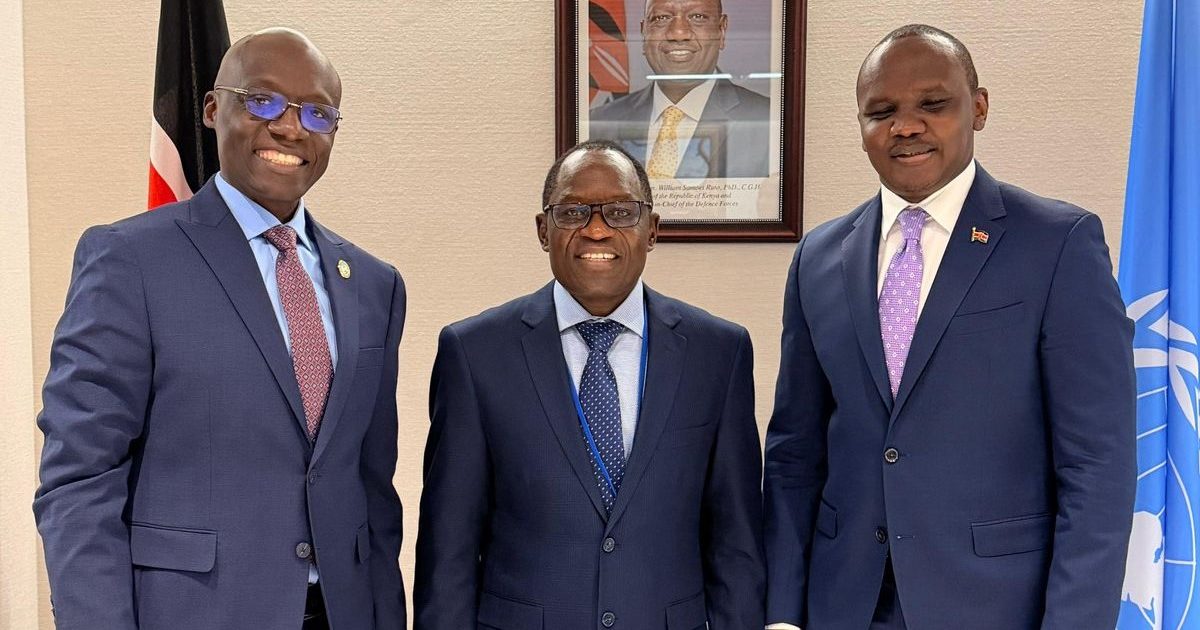
Besides Mr. Isaboke, Kenya was represented in the meeting by Ambassador Ekitela Lokaale, Permanent Representative of Kenya to the United Nations; Amb. Philip Thigo, Special Envoy on Technology; and representatives from the Communications Authority of Kenya (CA) and the Ministry of Foreign and Diaspora Affairs (MFA).
The WSIS+20 outcome reinforces the multistakeholder model that has defined the WSIS process since its inception, underscoring collaboration among governments, the private sector, civil society, the technical community, and international organizations.
It also highlights the importance of trustworthy digital governance, online safety and security, predictable policy environments, and sustained international cooperation, while elevating the role of the United Nations Internet Governance Forum (IGF) and strengthening WSIS follow-up and review mechanisms to sustain progress beyond the twenty-year review.
By Joseph Ng’ang’a