Kenya has reaffirmed its commitment to promoting the responsible use of Artificial Intelligence (AI) in the defence and security sectors, stressing that the fast-evolving technology must be harnessed to advance peace, stability, and the protection of human dignity.
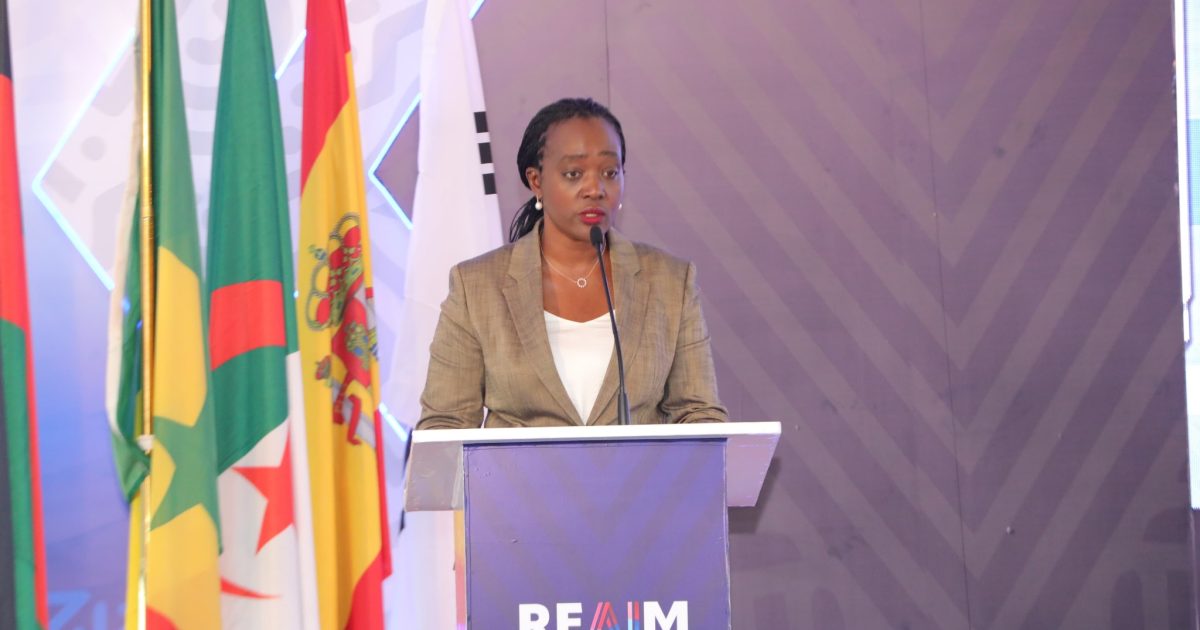
Speaking during the Africa Regional Consultation on Responsible AI in the Military Domain (REAIM) in Nairobi, Defence Cabinet Secretary (CS) Soipan Tuya insisted that Africa must play a proactive role in shaping global frameworks on military AI, noting that the workshop hosted in Nairobi was a milestone for the continent.
“Kenya is particularly proud to co-host this consultation for the second year in a row, having already launched the AI Strategy 2030, which lays the foundation for a comprehensive national AI policy,” expressed Tuya, adding that the strategy provides a roadmap for integrating AI into national development while safeguarding against misuse in sensitive areas such as defence.
The CS noted that Kenya’s participation in the development of the United Nations resolution on responsible military AI underscored the country’s dedication to multilateral cooperation.
Further, she mentioned that the collaboration between Africa and international partners demonstrates the importance of shared responsibility in ensuring emerging technologies, strengthening peace and security.
Concurrently, National Defence University-Kenya Deputy Vice Chancellor, Centre for Security and Strategic Studies, Maj. Gen. Joyce Sitienei, stated that Africa must be an ‘active architect’ in developing ethical frameworks for military AI.
She applauded the Netherlands, the Republic of Korea, and Spain for their continued collaboration as co-hosts of the consultations and congratulated Spain for assuming the role of hosting this year’s global REAIM Summit.
Sitienei also recognized the technical support provided by the United Nations Institute for Disarmament Research (UNIDIR) and commended Kenya Defence Forces officers for their role in organizing the forum.
Additionally, she called for greater involvement of civil society, academia, and youth in AI governance, warning that Africa cannot afford to sideline its innovators in such a transformative field.
“We must bring different stakeholders on board, with young people at the center of this discussion, because they are innovative and at the heart of the AI revolution,” urged Sitienei.
Making his remarks, the Ambassador of the Republic of Korea to Kenya, Kang Hyung-shik, observed that the consultation was a platform for strengthening international cooperation in tackling emerging global challenges.
He congratulated participants on the opening of the UN General Consultations and praised Kenya’s leadership in convening the forum.
“AI is advancing at an unprecedented pace, bringing both opportunities and challenges that demand collective responsibility and principled approaches,” he noted.
Further, Hyung-shik underscored the need for multi-stakeholder dialogue while reaffirming Korea’s commitment to deepening bilateral ties with Kenya, particularly in defence cooperation.
Similarly, Hyung-shik revealed that Kenya and Korea have enjoyed a flourishing relationship since establishing diplomatic ties in 1964, anchored on shared democratic values and cooperation in multilateral platforms.
In his remarks, the Ambassador of the Kingdom of the Netherlands to Kenya, Henk Jan Bakker, highlighted the importance of dialogue and accountability in AI governance.
He described AI as a transformative tool in defence, supporting decision-making, logistics, and situational awareness, but warned that it also carries serious risks such as loss of human control over weapons systems, spread of disinformation, and erosion of trust.
“Innovation must be matched with accountability to ensure AI contributes positively to global peace and security,” advised Bakker.
He recalled that the Netherlands co-launched the first REAIM Summit in 2023 with Korea and the second in Seoul in 2024, stressing that challenges posed by AI are global and require inclusive cooperation.
Also speaking at the event was Deputy Head of Mission at the Embassy of Spain in Nairobi, Miguel Solar Gomis, who reaffirmed his country’s commitment to advancing responsible use of AI in the military domain.
He thanked the governments of Kenya, the Netherlands, and Korea for their collaboration and commended UNDP for its technical support.
In addition, Gomis announced that Spain will host the third REAIM Summit on Responsible AI in the Military Domain later this year, organized by the Ministries of Foreign Affairs, Defence, and Information, Communications, and the Digital Economy.
The event, according to Spain’s Deputy Head of Mission, will provide a platform for governments, academia, think tanks, and civil society to exchange views and translate principles into concrete actions.
“Spain is committed to a human-centered approach in AI, ensuring human responsibility and control, especially in critical decisions such as the use of force,” explained Gomis.
He highlighted that the summit will focus on governance, technological aspects, and military applications of AI, with the aim of turning agreed principles into practice.
Notably, the Nairobi consultation underscored the need for AI development in defence to remain aligned with international law and ethical values.
Participants urged African nations to build capacity, strengthen regional cooperation, and engage diverse voices to ensure the continent plays a central role in shaping the rules governing military AI.
Meanwhile, Kenya has positioned itself as a regional leader in digital transformation, with its AI Strategy 2030 complementing wider government initiatives to harness technology for economic growth and national security.
Meanwhile, with international partners pledging continued support, the Nairobi forum was viewed as an important step towards building trust, transparency, and collective responsibility in managing AI for peace and security.
By Wendy Sheilla and Naif Rashid