Kenya is preparing to host its inaugural One Health Conference, a high-level forum aimed at strengthening collaboration among human, animal, and environmental health sectors in preventing and managing emerging public health threats.
The event, jointly organised by the Kenya Medical Association (KMA) and the Kenya Veterinary Association (KVA), will take place in November as part of a week-long series of activities leading up to the global One Health Day.
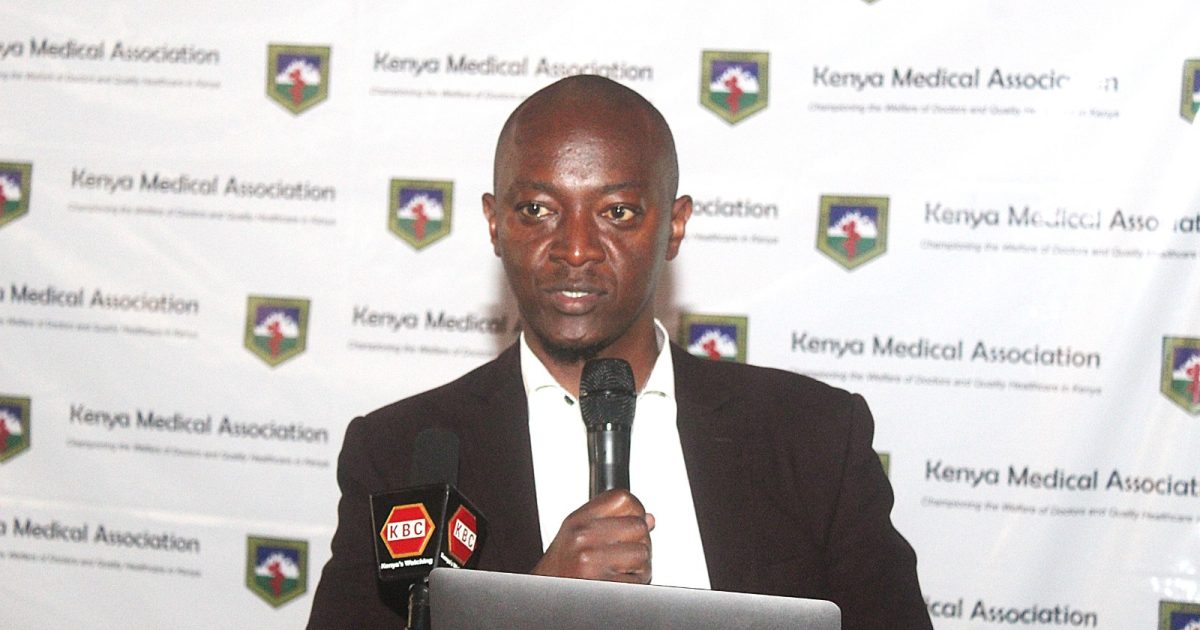
Speaking during a media and stakeholders’ breakfast in Nairobi on Tuesday, KMA President Dr Simon Kigondu said that the One Health approach recognises the deep interconnection between people, animals, and their environment and called for stronger collaboration across sectors.
“This gathering is not just another meeting; it is a call to action,” said Dr Kigondu. “We must strengthen our understanding, collaboration, and commitment to the One Health approach, which recognises that the health of people, animals, and our environment are intertwined.”
Dr Kigondu noted that global health crises such as COVID-19, have demonstrated that human health cannot be safeguarded in isolation from animal and environmental health.
“Environmental degradation, climate change, antimicrobial resistance, and food safety are shared challenges. They are not just medical or veterinary problems they are collective issues that demand collective solutions,” he said.
The KMA president revealed that Kenya had achieved a significant milestone at the global level after Dr Jackline Kitulu, a member of KMA, was inaugurated as President of the World Medical Association (WMA) during its recent General Assembly in Portugal.
“Kenya now leads the world’s doctors through Dr Kitulu’s presidency,” Dr Kigondu said. “This global recognition underscores our leadership in promoting collaboration across professions and strengthening the One Health movement.”
He added that the World Medical Association and the World Veterinary Association (WVA) have a long-standing partnership promoting inter-professional cooperation, a model being mirrored locally through the collaboration between KMA and KVA.
“The WVA president has challenged us to expand our focus beyond rabies and address broader health challenges such as pandemics, zoonotic diseases, and antimicrobial resistance,” he said.
“We must now take that challenge forward in Kenya by ensuring our professions work together for prevention and preparedness,” he added
Dr Kigondu emphasised that the One Health conference will not only raise awareness but also drive policy dialogue and practical action across multiple sectors, including government, academia, and civil society.
“By sponsoring or supporting this conference, you are not just funding an event you are investing in Kenya’s resilience and collective well-being,” he said.
“Our vision is to make One Health a lived reality, embedded in schools, national policies, and community programmes,” he stressed.
He further urged the media to play an active role in raising awareness and educating the public about the One Health concept.
“When journalists highlight how animal health affects human livelihoods or how clean environments prevent disease, people listen,” he said. “We count on the media to shape national conversations towards prevention and public health.”
The Chair of the One Health Planning Committee, Dr Victor Yamo, said preparations for the conference were in advanced stages and that Kenya’s event is currently the only One Health conference registered in Africa on the global One Health Day platform.
“Nearly 70 per cent of emerging and re-emerging diseases originate from animals. Until we address the health of animals and their environment, human health challenges will persist,” Dr Yamo said.
The conference will run under the global theme “By Protecting One, We Protect All” and will feature plenary sessions, student webinars, and community engagement activities. Key events include a pre-conference webinar, university and college student forums, and a community outreach programme in Thika, featuring a farmers’ field day and a medical camp.
Dr Yamo noted that the initiative’s total budget stands at Sh3.6 million, with sponsorship categories ranging from diamond to bronze to encourage participation by private and public partners.
KVA Chairperson Dr Kelvin Osore said the upcoming conference will serve as a platform to consolidate Kenya’s regional leadership in advancing the One Health agenda.
“This is not just about organising a meeting,” said Dr Osore. “It is about creating a movement that unites medical, veterinary, and environmental experts to tackle shared challenges through a coordinated approach.”
Dr Osore said the Kenya One Health Collaborative, a joint initiative between KMA and KVA, aims to promote research, advocacy, and practical interventions on zoonotic diseases, antimicrobial resistance, and food safety.
He added that the two professional bodies are finalising a Memorandum of Understanding (MOU) to formalise their partnership immediately after the conference.
“We have already received over 35 scientific abstracts, including submissions from Ethiopia, Uganda, Tanzania, South Africa, and the UK. This demonstrates strong regional interest in the conference,” he said.
Dr Osore cited Bungoma County as an example of how collaboration between doctors and veterinarians has effectively helped control livestock-related diseases such as brucellosis.
“We want to replicate such success stories across the country,” he said. “Our goal is to ensure the One Health approach reaches the grassroots where prevention is easier, cheaper, and more sustainable than treatment.”
He thanked stakeholders, media representatives, and partners for their support, noting that their engagement will be vital to the success of the conference and the wider One Health movement.
“The One Health Conference is a bold step towards building a healthier, more resilient nation,” he said.
“By protecting one, we truly protect all,” he added
By Mary Ndanu