The government has stepped up efforts to revive the Mau forest complex with the launch of an integrated conservation and livelihoods programme, aimed at protecting the country’s largest water tower while boosting the economic well-being of local communities.
Speaking at Bararget forest in Kuresoi North Sub-County, Environment and Climate Change PS Eng. Festus Ng’eno underscored the strategic importance of the Mau, noting that it is the source of 12 rivers that feed Lake Turkana, Lake Victoria, Lake Nakuru among other water bodies.
“The Mau is an irreplaceable ecological asset. Its conservation is not just a policy decision but a matter of national survival,” Ng’eno said.
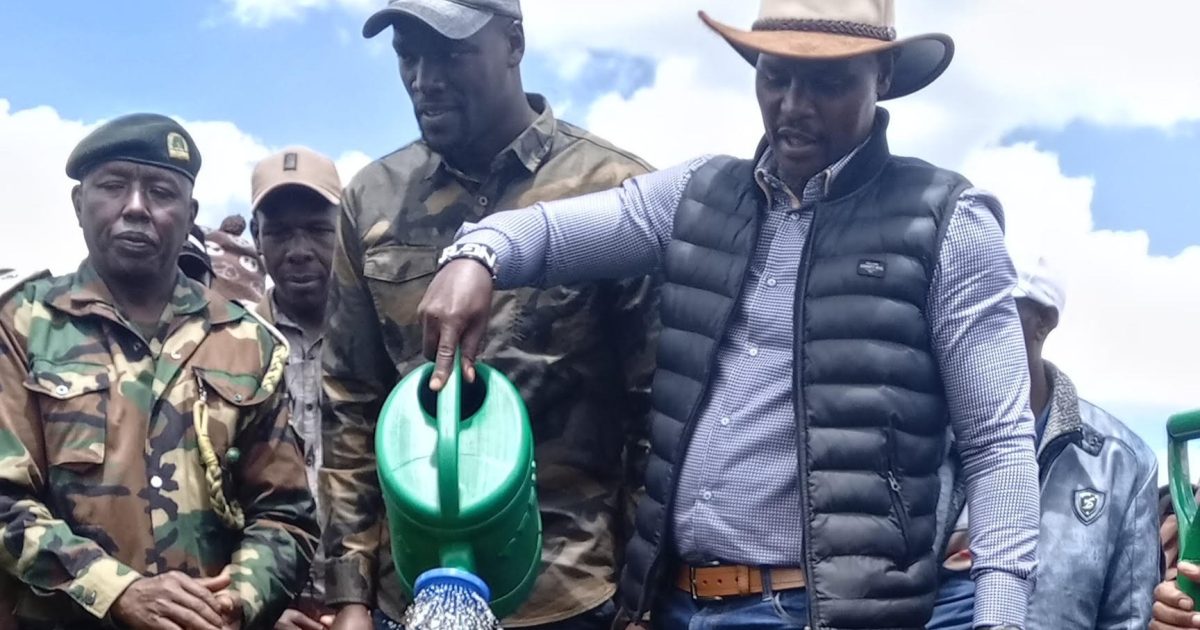
The programme, officially set for launch on October 24, is already underway, with over 20,000 tree seedlings planted.
The planting exercise conducted ahead of the official launch date will continue every Friday. The initiative targets the restoration of 3,800 hectares, equivalent to 4 million tree seedlings, in its first phase.
Unlike traditional reforestation programmes, this initiative integrates livelihoods support to ensure long-term sustainability.
Farmers in surrounding counties will benefit from potato, avocado, and tea seedlings for commercial farming, reducing pressure on the forest and promoting economic growth.
“This is not just about planting trees; it is about integrating conservation with livelihoods. Communities must be part of the solution,” Ng’eno stressed, calling for more partners to join the effort.
The Mau Forest Complex spans Nakuru, Kericho, Bomet, and Narok counties, with blocks in Molo, Njoro, Kuresoi North, and Kuresoi South in Nakuru County. Of its 22 blocks, most are under the Kenya Forest Service, while the Maasai Mau block is managed jointly with local communities.
Additional interventions including de-silting of dams, will complement the programme, enhancing water storage and climate resilience.
“Climate change demands permanent solutions. By acting now, we can conserve the Mau and secure water, food, and livelihoods for generations,” the PS said.
The Mau Forest Complex is East Africa’s largest indigenous forest and a key water catchment area. It has suffered decades of deforestation through illegal logging, settlement, and encroachment.
Successive governments have initiated evictions, forest reclamation and rehabilitation drives.
The new integrated approach marks a shift toward combining conservation with livelihood improvement, ensuring that communities become co-owners in the protection of this vital ecosystem.
By Emily Kadzo