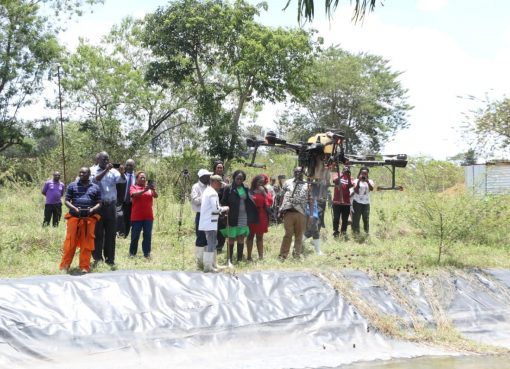
Kenya has been actively engaged in efforts to eradicate tsetse flies and trypanosomiasis through the Pan African Tsetse and Trypanosomiasis Eradication Campaign, a continental initiative coordinated by the African Union.
Agriculture and Livestock Development CS Mutahi Kagwe said the country has made notable progress, and areas previously plagued by high tsetse and trypanosomiasis challenges can now support profitable agriculture.
Speaking in Nairobi during the 37th Conference of the International Scientific Council for Trypanosomiasis research and control (ISCTRC), Kagwe said on 16th June 2025, a significant milestone was achieved by Kenya when the World Health Organization (WHO) validated Kenya as having eliminated Human African Trypanosomiasis commonly known as sleeping sickness as a public health problem.
“This was made possible through the collaborative efforts of our Ministry of Health, the Ministry of Agriculture and Livestock Development, communities and development partners,” he said.
The CS highlighted that Kenya is among the 38 African countries affected by the tsetse fly, with approximately 23 percent of our landmass infested. This has significant implications for our livestock and agricultural productivity, particularly in the rangelands where over 70 percent of our livestock population is reared.
“The estimated annual loss due to tsetse fly and trypanosomiasis in Kenya is around $143 million. The impact of this disease is felt across sub-Saharan Africa, and it is crucial that we work together to combat it as the challenge transcends boundaries, sectors and disciplines,” explained the CS.
According to Kagwe, the theme of this conference: Harnessing One Health Technologies and Innovations Towards Eliminating Trypanosomiasis in Africa, aligns with the multisectoral agenda, being implemented by Kenyan government in dealing with complex health and economic issues that require collaboration for impactful results.
“By freeing our rangelands from the tsetse fly menace, as a country we will contribute significantly to Kenya government’s Bottom-Up Economic Transformation Agenda (BETA), aimed at increasing livestock productivity in the priority value chains of dairy, beef and leather, thus improving livelihoods,” he said.
“We take note that the 36th ISCTRC conference took place in Mombasa, Kenya in September 2023 and the 37th one is currently taking place once again here in Nairobi. It is a great honor to Kenya for the African Union and Member States to consider our country to host this biennial conference twice, successively,” said Kagwe.
African Union – InterAfrican Bureau for Animal Resources (AU-IBAR) Director Huyam Salih said that 38 out of 55 countries are affected by tsetse fly and trypanosomiasis.
Salih said that 50 million cattle are at risk of trypanosomiasis, resulting in an annual death toll of three million.
“The direct losses from reduced meat and milk production, treatment costs, and vector control is estimated at $1.2 billion annually. The economic impact of Trypanosomiasis on agricultural production is estimated at a staggering US$ 5 billion annually across tsetse-infested regions.
Trypanosomiasis also contributes to decreased draft power and fertility, which undermines food security and rural livelihood,” she said.
According to Salih, the human population exposed to the risk of trypanosomiasis was estimated at 6 million people in 2024, while 583 Human African Trypanosomiasis cases were reported in 2024, which is a drastic reduction of 28,000 cases experienced earlier in 1999.
“The reduction reflects decades of coordinated surveillance, treatment innovation, and vector control efforts across endemic regions,” she said.
Salih highlighted some of the challenges being faced by the continent including suboptimal (fake, counterfeits and power delivery systems) and diagnostic tools that are not always field-friendly or affordable.
“Climate change and land-use shifts are also altering tsetse distribution, complicating control efforts. Parasite resistance to drugs and insecticide resistance in tsetse populations are also emerging threats as well as re-infection from wildlife reservoirs or untreated livestock undermines progress,” said Salih.
She highlighted the need to invest in Integrated Surveillance Systems combining human, animal, and vector data to detect outbreaks early.
“For this, use of geospatial tools and mobile diagnostics to monitor tsetse fly distribution and parasite prevalence in both livestock and humans is needed.
There is also need to foster Cross-Sector Collaboration and coordination between medical, veterinary, and environmental agencies and alignment of national, regional and continental strategies,” said Salih.
The director called for involvement of local communities in vector control and health education saying it was of paramount importance in order to improve uptake of interventions like traps, insecticide-treated targets and screening.
“Resistance towards the trypanocides is an emerging challenge and there need to put in place mechanisms to monitor drug use in both humans and animals and assess the scale of chemoresistance and develop clear guidelines for trypanocides stewardship under One Health principles,” she said.
At the same time, Salih emphasized need to embrace AI and integrated One Health (OH) data platforms for vector mapping, predictive modeling, and decision support systems and Genomic Surveillance for parasite detection and resistance monitoring, among other technologies.
“However, we need to ensure that technologies are accessible and adaptable to local contexts. I am pleased to inform you that AU-IBAR is in the process of rolling out the African Union Digital One Health Platform (AU-DOHP) to promote OH data integration and sharing,” said Salih.
By Joseph Ng’ang’a