The Geothermal Development Company (GDC) has announced that Kenyans are inching closer to getting a relief of lower power bills when two independent power producers (IPPS) start generating geothermal power next year from geothermal steam wells on the floor of Menengai Crater in Nakuru.
The first geothermal power plant at Menengai, built by local firm Sosian Energy started electricity production in 2023 after completion through Sh6.5 billion funding from the China-based, Zhejiang Kaishan Compressor.
The two parties also signed a 14-year Sh1.8 billion operations and maintenance of systems agreement.
The Menengai fields were developed by GDC, which is mandated with undertaking the capital-intensive work of exploration for geothermal steam and then developing viable fields by drilling production wells and building steam gathering systems.
After derisking the fields, GDC competitively selected three firms; Sosian Energy alongside, Quantum Power East Africa and the American firm OrPower Twenty-Two Company in 2013 through competitive bidding to build, operate and own the first three power plants in Menengai, each generating 35 Mega Watts to pump into the national grid a cumulative 105 Mega Watts.
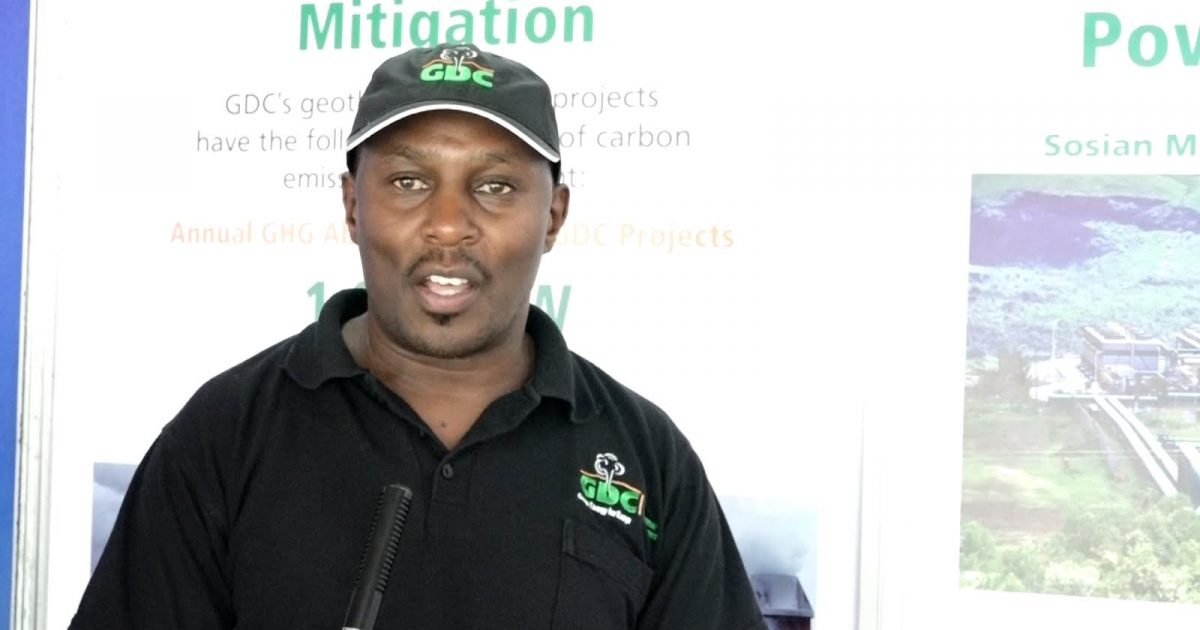
According to Deputy Manager for Corporate Communications and Marketing at GDC Mr. Eric Wamanji, construction of Quantum Power East Africa’s power generation facility was 60 percent complete, while works at Orpower 22 power Company were 50 percent complete.
Mr. Wamanji affirmed that once the two firms join Sosian on the nation grid within the First Quarter of next year electricity generated from the multibillion-shilling Menengai Geothermal Project, will cost at least Sh 8 per kilo watt compared to fossil fuel or hydro generated power which costs Sh22 per Kilowatt hour (kWh).
He said entry of the three Independent Power Producers (IPPs) into electricity generation is expected to yield a significant drop in power tariffs and in turn attract more investors locally and regionally, as they will have a huge saving on energy and creating employment opportunities. Prices of various value-added commodities, he observed, will drop drastically.
Speaking during GDC’s public engagement with the public and stakeholders at the Nakuru Agricultural Society of Kenya (ASK) Trade Fair, Mr Wamanji explained that the State Corporation has drilled steam wells with an output of 165 Mega Watts which is more than enough for the first 105MW of electricity expected to be generated by the three IPPs.
GDC has constructed the steam gathering system while Kenya Electricity Transmission Company (Ketraco) has set-up a 132 kilovolt (kV) substation that will transmit electricity from the three power plants.
Under the arrangement christened Menengai Model, GDC was to take care of upfront risks and then invite private sector players to construct, own and operate the plants for 25 years.
According to Mr Wamanji, the completion of the 105MW Menengai project will elevate Kenya’s global ranking to fifth overall, establishing beyond all contestation that economic growth and clean energy development can go hand in hand.
In addition to increasing the renewable energy generation capacity in the country, the Menengai geothermal project is expected to reduce greenhouse gas emissions by 1.95 million tonnes of carbon dioxide annually.
According to GDC, when electricity is finally generated at Menengai, the country will save more than Sh13 billion as fuel levy annually and ultimately lower the cost of power bills, a move that would see Kenya save some Sh45 billion spent to buy diesel.
Quantum Power East Africa was the first of the three IPPs to receive a letter of support from the Government for the construction of the 35MW power plant.
In 2021, a London-based power firm Globeleq acquired a majority stake in Quantum Power East Africa. British Nation Investment (BII – formerly CDC) holds 70 percent of shares in Globeleq while the rest are owned by Norwegian DFI Norfund.
Globeleq secured Sh8.89 billion ($72 million) to develop the power plant after signing a financing agreement with the African Development Bank (AfDB), the Eastern and Southern African Trade and Development Bank (TDB) and Finnfund.
Mr Wamanji explained that the Menengai Geothermal Project had the capacity to produce enough electricity to serve almost 500,000 homesteads and 300,000 businesses once the three IPPs are fully operational.
“We are proposing to have industrial parks to be constructed adjacent to our power plants. They will benefit from our tariffs, which will be the lowest at US $7 cents per kWh. The industries will also utilize the readily available geothermal steam for processing at very competitive rates. This is a major boost towards transition to clean energy,” he added
The Company began drilling at Menengai site in February 2011 and has so far sunk over 43 wells, 24 of which have been tested giving 165 MW. The rest of the wells are still undergoing tests.
Last year, the New York based Orpower 22 broke ground at the Menengai Geothermal project for the construction of a 35MW plant.
The firm expects to spend Sh11.7 billion ($90 million) putting up the power plant in 14 months.
Mr Wamanji disclosed that GDC is targeting the IPPs to operate the three geothermal power plants for 25 years, with an estimated initial annual revenue of Sh1 billion for GDC.
At Baringo-Silali Paka, GDC has harnessed 75MW of geothermal steam. The company targets to have a 105 MW power plant at Paka by 2027. Similarly, GDC has started to open the Suswa field.
He added that GDC further aims to harness an additional 218 MW of geothermal steam capacity through drilling new wells and developing existing resources, which will allow for more steam to be sold to power plants and other industries.
According to Mr Wamanji, GDC plans to pump an extra 1065mw into the national grid in the next ten years which will be generated from Menengai (465 Mega Watts), Baringo-Sailable (300 MegaWatts) and 300 Megawatts from South Rift region as the government seeks more geothermal energy.
He noted that the Power plants being developed at Menengai and Baringo-Silali Paka geothermal projects will significantly boost Geothermal Development Company’s (GDC) revenues adding that the State Corporation still had its sights on achieving financial sustainability by 2029.
“GDC will be able to pay its bills and have some spare money for investments,” he noted.
Currently, GDC relies heavily on government funding for its operations.
Mr Wamanji said GDC is also exploring wellhead technology, which allows for smaller, modular power plants to be built directly at the wellhead, enabling faster deployment and access to revenues earlier in the investment cycle.
He explained that Geothermal steam can be utilized in a range of applications from industrial, agriculture, tourism, leisure and domestic, depending on the resource temperature and usage.
GDC has been demonstrating direct-use technology in the Menengai geothermal field since 2015 including steam heated green houses, steam heated aquaculture ponds, geothermal milk pasteurizer plant, geothermal laundry unit and geothermal grain dryer.
“The direct use demo project was set up to showcase the viability of direct use technology and act as a marketing tool for GDC to potential investors, research and learning institutions and the community that surrounds Menengai Crater.
The steam powered grain dryer, the first of its kind in Kenya and in the region has a capacity of drying 20 tonnes of cereals per day. GDC has embarked on commercializing the technology by inviting investors to use the technology to power processes in their firms or investments,” he further stated.
Mr Wamanji said that the use of geothermal steam in industrial processes will reduce greenhouse gas emissions and that it was a reliable and available source of energy through all seasons.
“These innovations will make Kenya a competitive investment hub as Industrialists will save a great deal on energy costs when they invest in geothermal steam powered facilities,” he indicated.
Mr Wamanji observed that if efficiently harnessed, geothermal heat will deliver energy that will enable farmers and food processors to increase production and improve food security. The steam can also be used in the industrial drying of fish, vegetables, tea, and pyrethrum and in brewing.
“The geothermal fluid boosts tourist paradise in the form of medicinal spas, while in milk pasteurization manufacturers can cut up to 70 per cent of their heating costs by using geothermal energy. Other studies show that when it is used to heat greenhouses, the cost of production drops by about 40 per cent,” the official added.
He explained that steam harnessed from Menengai Crater Geothermal fields in Nakuru can be transported for about 10km through an elaborate reticulation of pipes and pumped into individual farms, Private homes and industries.
Geothermal heated greenhouses, aquaculture ponds, dairy plants and geothermal powered laundries within that radius can negotiate with GDC for facilitation. Farmers and homeowners who use electric powered systems will save up to 50 per cent by switching to a geothermal system.
“The smallest single unit of geothermal powered milk plant can process between 250,000 to 500,000 litres of milk every day. Bahati Constituency which hosts Menengai crater is one of Nakuru’s best tomato producers. With adoption of this new system of energy, farmers will improve yields by more than 30 per cent,” affirmed Mr Wamanji.
With a proven potential of 7,000 megawatts, geothermal energy from Kenya’s geologically active Great Rift Valley forms the cornerstone of a government scheme to boost energy production.
Data from the Energy and Petroleum Regulatory Authority indicate that geothermal is the leading contributor of power to the national grid, accounting for 44.12 percent followed by hydropower at 26.98 percent. Thermal is below 13 percent. This is in contrast to 2014 when the share of thermal was at a high of 34.49 percent due to erratic rains that reduced hydropower sources.
Kenya has been deepening supply of power from cheaper sources such as wind and steam. This is expected to translate to reduced power bills for consumers.
Kenya tops in Africa with 700 megawatts (MW) of geothermal power. The US has the largest geothermal generating capacity with 2,500 megawatts followed by the Philippines (1,900 MW), Indonesia (1,800 MW), Turkey (1,100 MW), New Zealand (1000 MW), Mexico (900 MW), Italy (800 MW), Iceland (750 MW) and Japan which has been ranked tenth with an output of 500 MW.
The rest of the world shares 950 MW. Ethiopia is the only other African country with developed geothermal energy at 7 MW.
By Jane Ngugi and Dennis Rasto