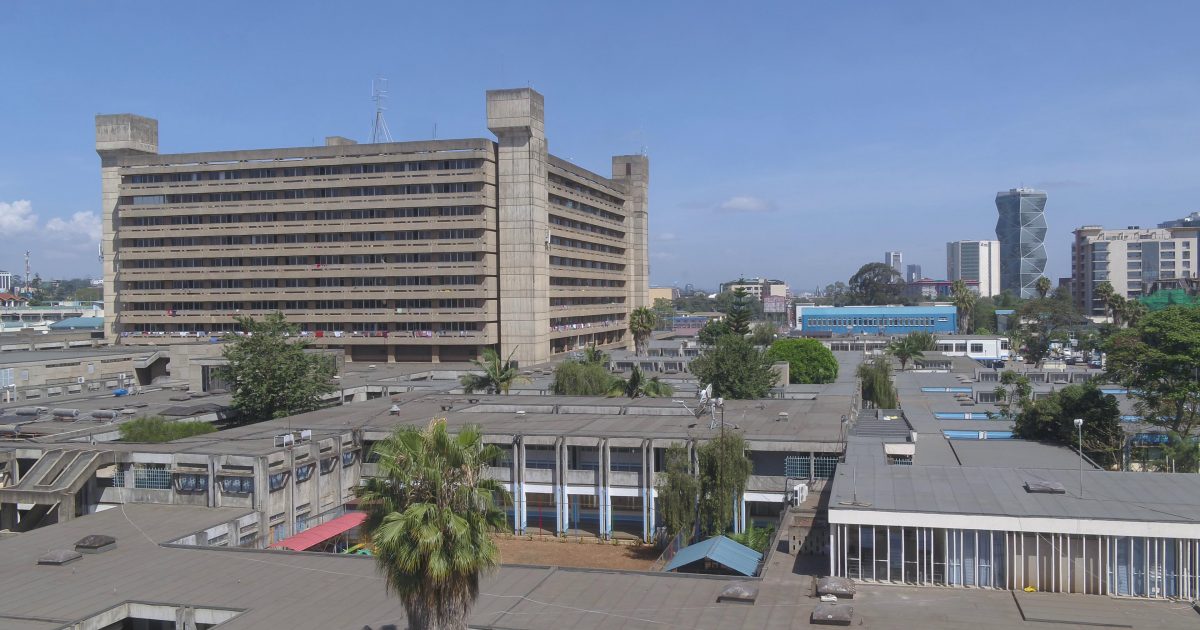
The European Investment Bank’s development arm (EIB Global) will help Kenyatta National Hospital (KNH), Kenya’s largest hospital, expand and green its energy supply through guidance on the installation of a solar-power system.
The goal of the project is to meet a growing demand for electricity at the hospital while increasing its energy independence and reducing its carbon footprint.
EIB Global will offer the assistance in partnership with the German Development Agency (GIZ) through a grant of 7.3 million Kenyan shillings (€50,000) from a multi-donor initiative run by the World Bank and EIB for cities—the Cities Climate Finance Gap Fund.
In addition, the support will cover technical studies and a financial assessment regarding the planned installation of the photovoltaic (PV) system.
The hospital, which is also the largest public health centre in East Africa, has a capacity of 2,400 beds and serves about 2 million patients annually.
In this regard, high grid costs in Kenya are straining the budget of the hospital, and power outages are forcing it to rely on diesel generators that meet only about 65 percent of demand, leaving critically ill patients at risk.
“Our goal is a climate-smart future, and we are committed to supporting Kenyatta National Hospital in its transition to green electricity,” asserted the EIB Regional Hub for East Africa Head Edward Claessen in a press statement.
He added that the forthcoming technical studies will lay the ground for successful implementation of the PV system.
Under the support agreement, GIZ experts will carry out the technical and financial evaluations for implementation and maintenance of the solar-power system.
KNH intends to direct savings on energy bills resulting from the planned PV system to areas such as purchasing medical supplies, hiring more staff and upgrading facilities.
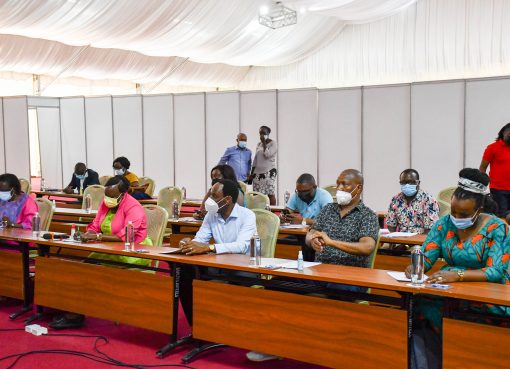
In his remarks, KNH Chief Executive Officer (CEO) Dr. Evanson Kamuri expressed that the hospital is grateful to the European Investment Bank, GIZ, and the City Climate Finance Gap Fund for their support through this technical assistance programme.
“This collaboration marks a significant step forward in our commitment to sustainable healthcare delivery,” noted Dr. Kamuri.
He observed that by integrating energy efficiency and climate-smart solutions, KNH is not only enhancing operational resilience but also setting a benchmark for environmentally responsible healthcare infrastructure in the region.
Meanwhile, the EIB Global and GIZ support will lead to concrete recommendations to the hospital on attaining a reliable and efficient power supply through the planned PV system.
The studies will assess the hospital’s current energy-consumption patterns, evaluate the feasibility of integrating the planned PV system into the hospital power grid, provide financial modeling for installation and maintenance, and address regulatory questions.
The European Investment Bank, through the Cities Climate Gap Fund, supports cities in the early stages of project development by assessing the actual challenges, understanding the risks, and designing fit-for-purpose solutions that resonate with their goals for a climate-smart future.
By Michael Omondi