For ten years now, 38 years old environmental activist Ronald Keter from Kericho County has become the face of environmental conservation-related activities, championing active youth involvement in conservation and climate change mitigation initiatives across the region.
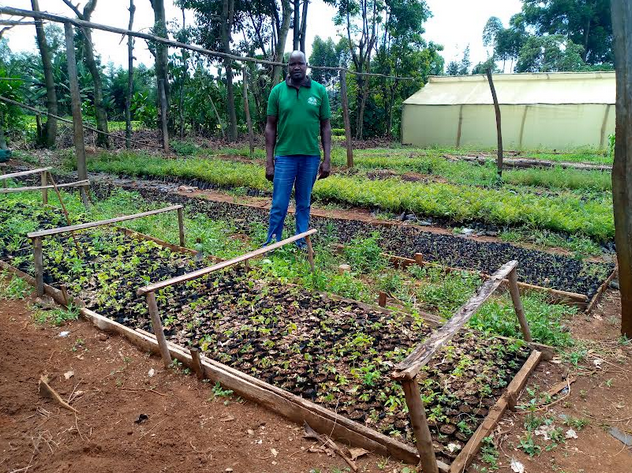
Keter, a resident of Bakiko village within Bureti sub-county in Kericho County has turned part of his farm into a forest garden. He cultivates indigenous crops, fruit and agro-forestry trees both for sale and also to boost local environmental conservation in the area.
When KNA toured his half-acre forest garden, they were welcomed by a breathtaking landscape of more than 400,000 tree seedlings and mature trees. Among them was the African cherry, cypress, rose apple, neem, black wade among other indigenous tree varieties, interwoven with agro-forestry species such as calliandra, leucaena and grevillea, plus tree-tomato, guava, loquat and pawpaw fruit trees. Together they formed a sanctuary where birds, insects and the earth itself seem to breathe deeply.
Keter’s passion for environmental conservation was sparked in 2015 while he was working with an organisation that empowered youth on drug abuse and gender-equality issues. During that time, media reports highlighted the urgent need to tackle climate change and he became increasingly drawn to climate-action initiatives.
He goes on to explain that his first passion was poultry and horticulture farming, but everything shifted in 2019 when he began working with a group that was planting indigenous trees in his sub-county. Later the same year he launched his own initiative, a community based organisation (CBO) which he christened Transfo Green World.
“In 2019 I co-founded a community based group after collaborating on local tree-planting projects. Since my CBO did not have a nursery yet, we sourced seedlings from established groups. Our aim was clear- to keep pushing forward on environmental conservation,” said Keter.
His big break came when the group applied for training and was selected for the YETU initiative boot-camp later that year. After the intensive session, the members topped the class after they were equipped with hands-on-resource mobilization skills and promptly launched fundraising activities to drive their environmental-conservation targets.
YETU is a partnership between the Aga Khan Foundation and the Unites States Agency for International Development (USAID).
“For me the YETU boot camp was an eye opener. It totally reshaped our organization and gave us the ability to stand on our own. TransFo Green World has now partnered with the Kericho county government, Kenya Tea Development Authority (KTDA), Equity Bank and Kenya Forest Service (KFS) and we are building a strong culture of tree-planting and environmental stewardship right in our community,” reflected Keter.
Having registered TransFo Green World as a community-based organisation (CBO) in 2021 and upgraded to a non- governmental organization (NGO) in 2024, Keter, now the country director of the NGO notes that they run their own nurseries with 180,000 indigenous tree seedlings, 190,000 agro forestry seedlings, 20,000 fruit tree seedlings and 25,000 five species of bamboo tree seedlings. These operations, he reveals, generate about Sh40,000 in monthly proceeds.
From 2023 to present, Transfo Green World has cultivated a tree-planting and conservation culture among school-going children. To date we have reached 187 schools across Kericho County planting more than 50,000 trees and running climate-change education programs in partnership with the learning institutions reiterates Keter.
“When we started out, we focused on planting exotic trees mainly grevillea and cypress because our target market at the time was schools in the region. As years went by, the idea of restoring and rehabilitating our wetlands, river-lines and water bodies emerged and we shifted to indigenous tree species for these activities,” added Keter.
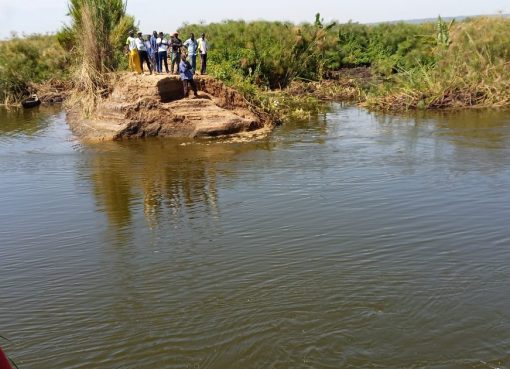
He further adds that, over the past three-years, the NGO has restored and rehabilitated twenty- seven river-lines, twenty wetlands and numerous water points across Kericho County.
“With the help of our partners in a spun of three years we have rehabilitated 27 river-lines and 20 wetlands and numerous water points across Kericho County. One of them was the Kapnawai and another is Daraja Sita which is the largest wetland running from Bomet County cutting through Bureti sub-county in Kericho. We have the largest bamboo tree nursery in the entire South Rift region with 20,000 bamboo tree seedlings and this year during the World Bamboo Day celebrations that was commemorated in Kericho we planted 15,000 bamboo tree seedlings in seventeen water catchment areas within the County.” said Keter.
Keter notes that they have also been holding awareness talks and training sessions for women in the community, emphasizing that clean-energy use as a key step toward climate-change mitigation.
The county director noted the NGO’s challenges and emphasized that they are actively seeking new partners to ensure seamless operations and continued community impact.
“We draw water from three boreholes, but the water levels have dropped drastically. At times, the quality of our seed is compromised, which reduces demand from our buyers, including local farmers, schools, NGOs and private organizations. In addition, the market remains unpredictable,” said Keter.
He called upon the youth to explore the idea of running their indigenous and fruit- tree nurseries as well as engage in the construction of improved jikos, noting that these ventures can create sustainable income opportunities for them.
“I am encouraging young people to venture into tree nurseries as well as in the construction of improved jikos. They can start on fruit tree seedlings especially avocadoes so they achieve two benefits at once; producing food and participating in climate-change mitigation activities. By tapping into these opportunities, they can also create a sustainable source of income for themselves,” noted Keter.
The Kericho environmental activist urged both the national and county governments to partner with community -based groups on conservation, stressing that such collaborations would significantly boost climate change mitigation and environmental stewardship.
As of late 2024 and early 2025 reports, Kenya has planted over 1.06 billion trees since the launch of the national 15 billion tree campaign in December 2022.This flagship climate change and development agenda is geared at restoring degraded land, reduction of greenhouse-gas emissions and increase forest cover from around nine percent to 30 percent by 2032.
by Sarah Njagi