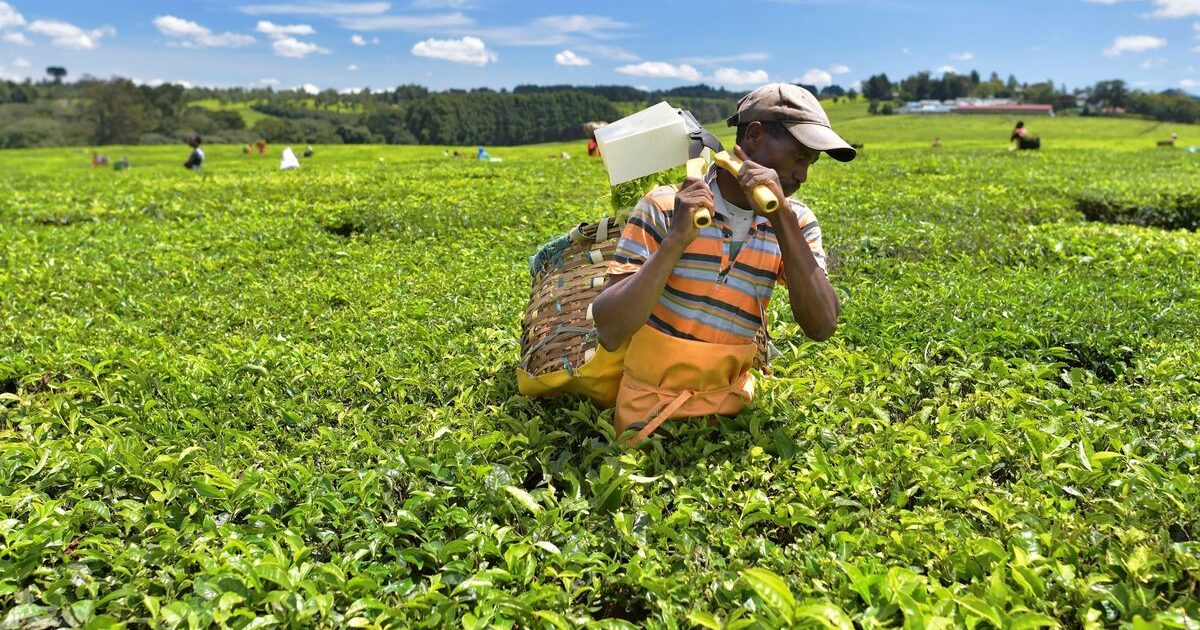
Smallholder tea farmers in Kericho County are set to take home reduced bonuses this year, with earnings projected to range between Sh20 and Sh32 per kilo of green leaf, compared to last season’s average of Sh35 to Sh45 per kilo.
The dip in payments is expected to strain household budgets in a county, where tea farming remains the primary source of livelihood.
In a press release, the Kenya Tea Development Agency (KTDA) confirmed that factories in the West of Rift, including Kericho, recorded substantially lower earnings compared to their East of Rift counterparts.
The agency explained that Kericho factories averaged only Sh245 per kilo of made tea, which, after deducting operational costs and monthly advances, translated into much lower farmer bonuses.
In Kericho, the estimated payouts vary across factories, with Litein and Kapkatet expected to pay farmers close to the upper band at around Sh30–32 per kilo, while Tegat, Chelal and Momul are likely to settle at between Sh25 and Sh28 per kilo.
Smaller factories such as Toror are projected to fall at the lower end, paying between Sh20 and Sh24 per kilo.
By comparison, factories in the East of Rift counties such as Kirinyaga, Meru and Murang’a are paying between Sh40 and Sh57 per kilo, nearly double what Kericho farmers will take home.
KTDA said the disparities in payouts were largely determined by global trading conditions and the cost of running individual factories.
“The final payment is a direct reflection of global trading conditions beyond KTDA’s control. While understandably disappointing to many, this year’s bonus was shaped by both international tea prices and the costs incurred in factory operations,” the statement read.
The agency added that East of Rift factories performed better because they generally recorded higher quality green leaf, enjoyed favourable weather, and had lower production costs. Many also diversified into orthodox teas, which attracted premium buyers in international markets.
“Factories that have embraced orthodox tea production and maintained higher quality standards have been able to command better returns, while those that rely solely on black tea and face higher energy costs are more exposed to price volatility,” KTDA noted.
The agency explained that Kericho and other West of Rift factories were more affected by higher costs of energy, transport and labour, as well as fluctuating Mombasa auction, combined with global oversupply and weaker demand for black tea, which dragged down their final earnings.
Even as farmers in Kericho grapple with reduced bonuses, KTDA maintained that the sector’s long-term prospects remained intact.
“Our strategy going forward is to open new markets, promote value addition, and modernize our factories to cut costs. These measures, combined with diversification into orthodox teas, will ensure farmers earn more sustainable returns in future,” KTDA assured.
A closer look at last year’s performance further highlights the disparity. In the 2023/24 financial year, farmers in the East of Rift received between Sh26 and Sh57.50 per kilo, while those in the West of Rift, including Kericho, earned between Sh15 and Sh32 per kilo.
The trend has persisted this year, underscoring both the structural challenges faced by Kericho factories and the urgent need for reforms aimed at improving quality, efficiency, and market diversification.
For now, Kericho farmers face tighter margins, but experts believe that if KTDA’s reform agenda is successfully implemented, the county’s tea sector could once again reclaim its competitiveness in global markets, while securing better incomes for thousands of smallholders.
By Gilbert Mutai