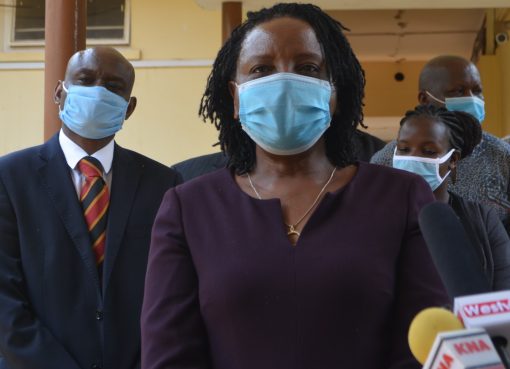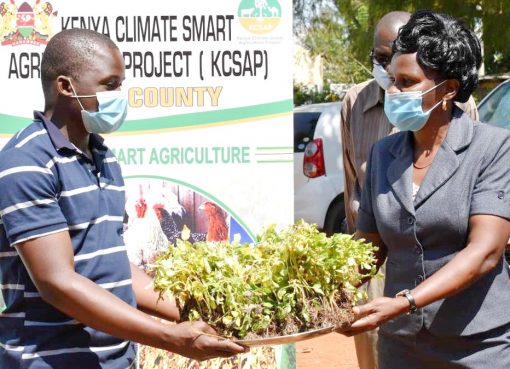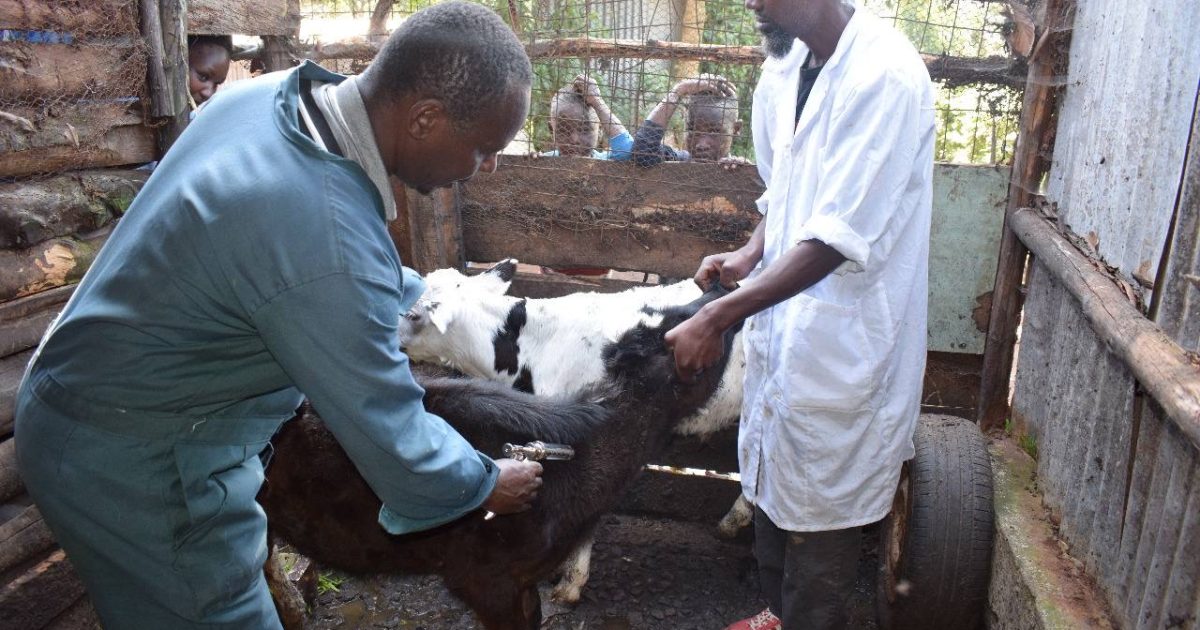
The Kiambu County Government has launched a countywide subsidized vaccination and animal registration exercise, aimed at combating Foot and Mouth Disease (FMD) and improving livestock management across all its 60 wards.
The program, rolled-out on October 6th, is being implemented in partnership with 15 dairy cooperative societies, under the Department of Agriculture.
Governor Kimani Wamatangi announced that the initiative seeks to enhance animal health, strengthen the dairy value chain and protect farmers’ livelihoods.
The vaccination will be conducted door-to-door by veterinary officers, who will also register livestock for traceability.
“This drive will ensure that our animals are protected, our farmers are supported, and our dairy industry remains competitive,” Governor Wamatangi said during the launch.
Under the subsidized program, each vaccination will cost Sh50 per animal, significantly reduced from the usual Sh160.
Farmers are required to pay through M-Pesa and collect vouchers from their cooperative societies, before the veterinary teams visit their farms.
The exercise is expected to run for three months, from October to December 2025.
According to the County’s Department of Agriculture, vaccination against FMD will help prevent severe illness, weight loss and reduced milk yields in cattle.
It will also protect young calves, reduce the need for costly treatment or emergency measures and help farmers avoid movement restrictions during outbreaks.
The County further noted that widespread vaccination strengthens community-wide herd immunity and promotes sustainable livestock production.
According to the County Chief Officer for Livestock, Fisheries and Veterinary Services, John Ngigi Kuria, the initiative marks a turning point in disease control and livestock data management.
“Through this program, we are not only preventing FMD outbreaks, but also creating a reliable livestock database that will help us make informed policy decisions, respond swiftly to disease threats and support farmers with accurate information,” Mr Kuria said.
Alongside the vaccination, animal registration will enable the government to track livestock from birth to market, control the spread of diseases and ensure fair compensation in case of outbreaks or government interventions.
The registration records will also help build trust with buyers and cooperatives, through transparent data management.
The County Chief Officer for Livestock further added that the program will deliver multiple benefits to the farming community.
“This initiative supports effective planning and policymaking in the livestock sector, protects farmers from theft by providing verifiable proof of ownership, and encourages responsible farming practices that improve overall herd management,” Mr Kuria said.
Governor Wamatangi urged farmers to cooperate with veterinary officers and participate fully in the exercise.
“We encourage all farmers to welcome and support our vets as they visit our farms. Together, let us keep our animals healthy, safeguard our livelihoods and grow a stronger dairy sector,” he said.
According to data from the Kenya Dairy Board, the country’s dairy industry contributes about four percent to the national Gross Domestic Product (GDP) and supports more than 1.8 million smallholder farmers.
Improved livestock health and management practices, such as vaccination and registration programs, are seen as key to increasing productivity and maintaining Kenya’s position as one of Africa’s leading milk producers.
By Grace Naishoo