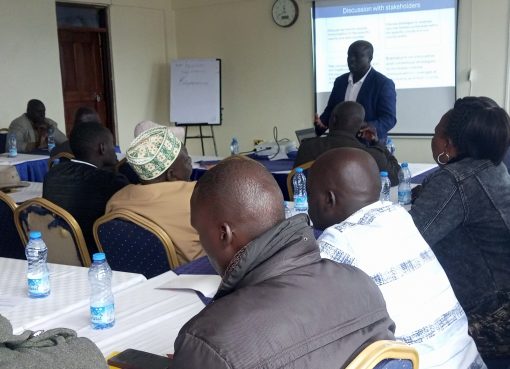
Kiambu County has taken a bold step towards ensuring its residents can access quality healthcare without financial strain by launching a comprehensive capacity-building programme on sustainable health financing and Universal Health Coverage (UHC).
The initiative, launched during a sensitization meeting officiated by County Director of Health Dr. Hillary Kagwa, brought together critical health leaders including the County Health Management Team (CHMT), Sub-County Medical Officers of Health, Medical Superintendents, hospital administrators, facility in-charges, and hospital accountants.
This milestone marks Kiambu’s strong commitment to strengthening its health system. As one of the 21 counties implementing the Facility Improvement Fund (FIF), Kiambu is setting the pace by being the first to initiate training on the Social Health Authority (SHA) Provider Portal.
This digital platform is expected to revolutionize how health facilities in the county track revenue while promoting transparency and accountability in service delivery.
“FIF is giving health facilities financial autonomy and the flexibility to improve services where they are needed most,” said Dr. Kagwa. “Combined with social health insurance and partnerships with the private sector, we are now in a better position to strengthen our health systems,” he added.
The SHA Provider Portal training is expected to empower frontline health workers with skills to optimize resource use, increase SHA registration, and ensure better patient care.
Importantly, the programme also includes modules on integrating HIV services into routine healthcare, a critical move as traditional donor support continues to decline.
This entire effort is supported by the Council of Governors (CoG), the Ministry of Health’s Division of National AIDS and STI Control Programme, Amref Health Africa in Kenya, and the U.S. CDC. The departments of Finance and Economic Planning are also offering technical support to ensure effective implementation.
With these developments, Kiambu is not just investing in health infrastructure but building a stronger, more resilient health system, one that prioritizes sustainability, inclusivity, and accountability.
By Laura Mundeye