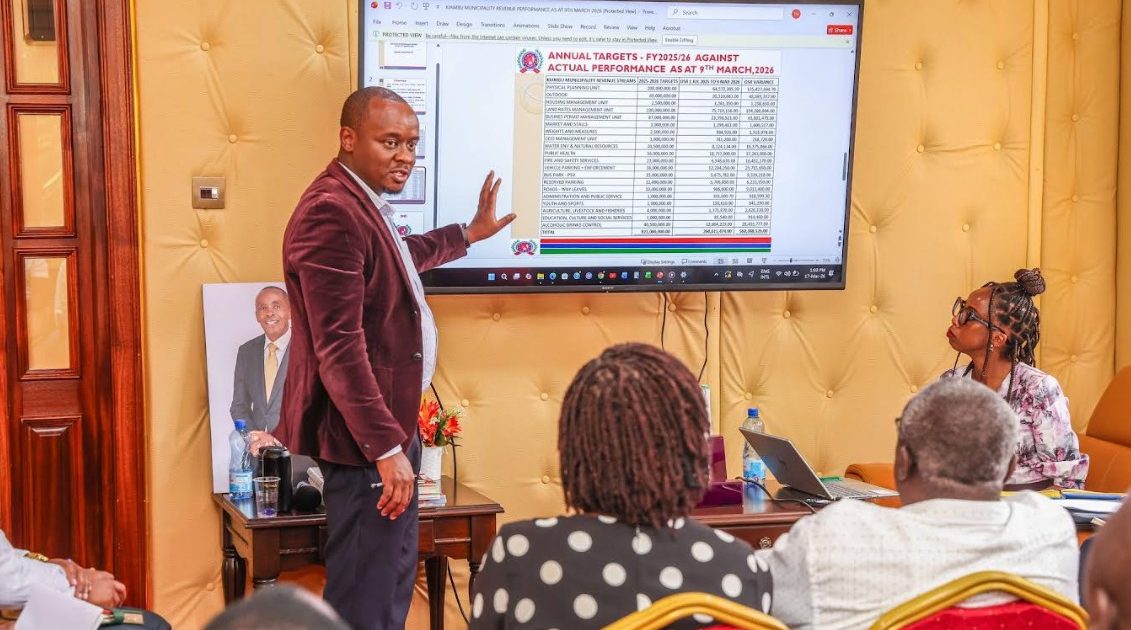
The Kisumu County Assembly’s Ad Hoc Committee on Revenue has completed a three-day benchmarking visit to Kiambu County, seeking insights into effective own-source revenue (OSR) management amid Kisumu’s persistent shortfalls.
The delegation, led by Chairperson Lumumba Owade, members; James Omollo and Vice Chairperson Millicent Omuya, among others, aimed to understand how Kiambu consistently outperforms other counties in local revenue collection.
In FY 2024/2025, Kiambu achieved approximately Sh5.4 billion in OSR without raising fees or levies thanks to streamlined administration, digital systems like ERP for leak-proof collection, and broad enforcement of property rates, licenses, parking, and market fees.

By contrast, Kisumu collected only Sh2.4 billion against a target of Sh3.6 billion in a comparable period, highlighting a growing concern over fiscal autonomy. Recent data for FY 2025/2026 shows Kisumu’s OSR target at Sh3.63 billion, but first-half collections (July–December 2025) reached just Sh452.4 million, about 12% of the annual goal due to leakages, inefficiencies, and enforcement gaps.
James Omollo noted, “We observed that deliberate revenue administration and sealing leakages are key. Kiambu demonstrates what focused systems can achieve.” Chairperson Owade emphasised urgency: “If unaddressed, this trend widens development gaps, heightens reliance on delayed national transfers, and hampers service delivery.” Vice Chairperson Omuya added the need to broaden the revenue base, boost transparency, and strengthen accountability for sustainable growth.
Low OSR forces greater dependence on equitable share and conditional grants, which can be conditional or delayed, limiting investments in infrastructure, health, education, and economic projects. It also erodes private sector confidence and public trust.
The Ad Hoc Committee, formed to probe causes of underperformance and propose reforms, has 60 days to submit findings and recommendations to the Kisumu County Assembly.
These may include adopting digital tools, expanding revenue streams, closing loopholes, and enhancing enforcement lessons drawn directly from Kiambu’s model.
The visit marks a proactive step toward reversing Kisumu’s revenue decline. County leaders hope these best practices will help close the gap, restore financial stability, and accelerate development for residents. As devolution matures, such inter-county learning remains vital for equitable progress across Kenya.
By Felix Kipkorir