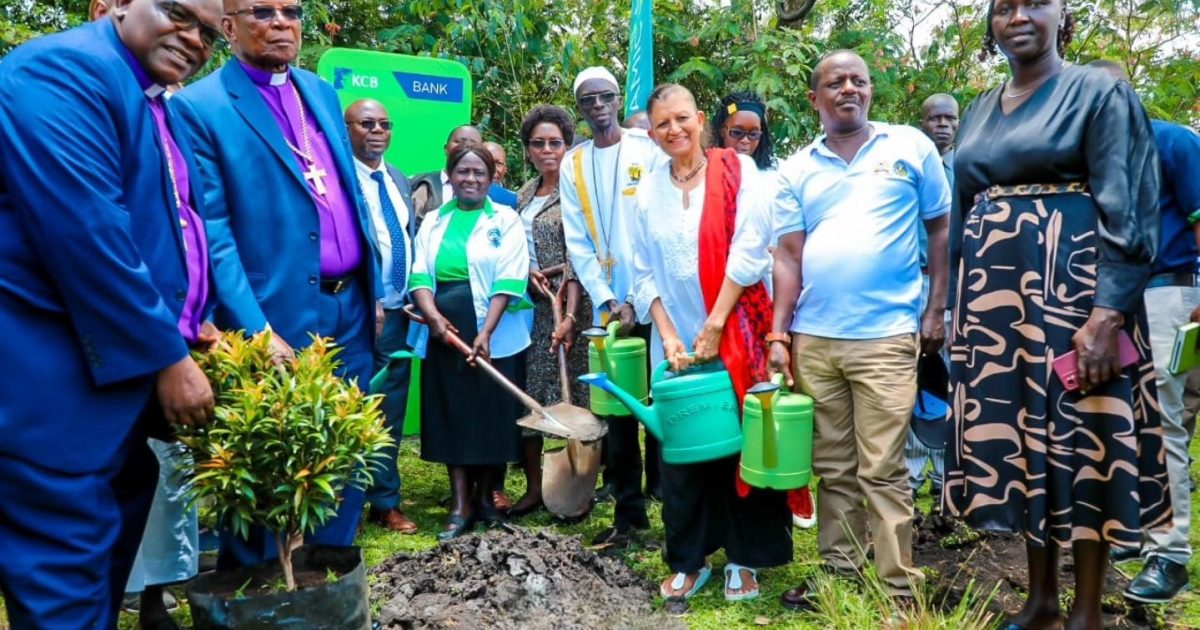
More than 600 members of the clergy across Kisumu County have joined hands with civil society groups to launch a major faith-based environmental campaign targeting to grow over 1.5million trees within a year.
The initiative is led by the National Council of Churches of Kenya (NCCK) in partnership with the Lake Basin Development Authority (LBDA) and the Mazingira na Jamii Afrika.
It seeks to rally faith communities to take an active role in environmental conservation and climate action.
NCCK Kisumu branch chairman, Bishop Clement Otieno, speaking during the campaign unveiling in Muhoroni Sub County, described it as a turning point for faith-driven climate advocacy.
“Today, over 600 clergy from all denominations came together to begin this tree-planting journey. It will take time, but our target is 1.5 million trees,” Dr Otieno told journalists at the launch.
The campaign kicked off with the planting of 50 symbolic trees at the event. An additional 10,000 seedlings will be planted next week, supported by Kenya Commercial Bank (KCB) Bank, which donated the trees.
To ensure wide reach, the initiative will leverage the influence of church networks.
“We are working with 360 Steward of Grace clergy who will ensure every church member plants at least one tree at home,” Dr Otieno explained.
“Schools will also participate to strengthen community involvement.”
Dr Jennifer Otieno, Chairperson of Mazingira na Jamii Afrika, highlighted the unique role clergy play in grassroots mobilisation.
“Faith leaders are often overlooked in restoration programmes, yet they engage daily with men, women, children, and even widows. Working through them ensures the message of environmental stewardship reaches every household,” she said.
According to Dr Otieno, the idea was conceived more than a year and a half ago following discussions with KCB Bank’s faith engagement programme in Nairobi.
The partnership aims to equip clergy as environmental champions, providing seedlings while instilling responsibility for long-term care and sustainability.
By Robert Ojwang’