The county government of Kwale has commenced countywide public participation forums on the County Fiscal Strategy Paper (CFSP), a statutory document that outlines revenue projections, expenditure ceilings and sector priorities ahead of the 2026/2027 budget.
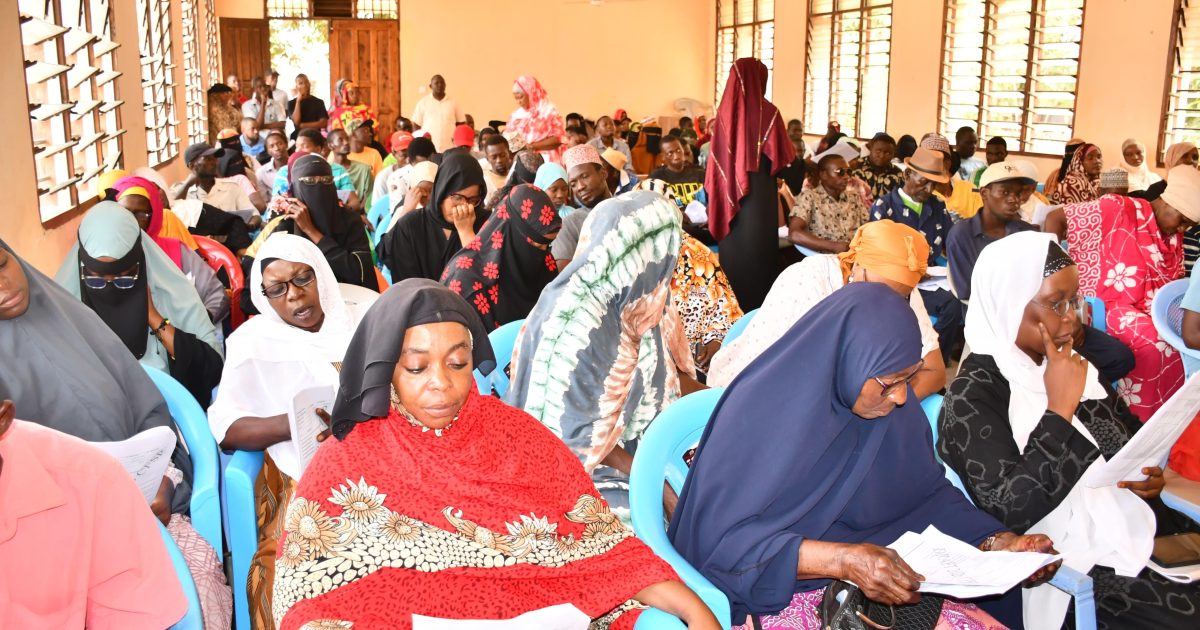
The first forum was held at Kombani Social Hall in Waa-Ng’ombeni Ward, with parallel sessions conducted in Ukunda, Tiwi and Gombato-Bongwe.
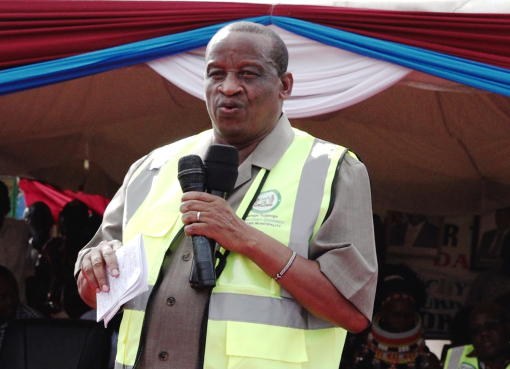
Addressing residents, County Economic Advisor Antony Yama said the exercise is anchored in law and must be concluded before the end of February.
“By law, before February 28, we must have collected views from residents on the County Fiscal Strategy Paper so that it can be submitted to the County Assembly for review and approval,” said Yama.
He described the CFSP as a critical stage in the budget cycle that lays the foundation for tabling budget estimates in March.
“This document guides the entire budget process. It sets the ceilings, the projections and the priorities that will shape the final budget,” he said.
Yama said the county had presented revenue projections for the 2025/2026 financial year and forecasts for 2026/2027, including Own Source Revenue (OSR) and equitable share allocations from the National Treasury.
“We have explained the revenue we generate locally and what we expect to receive from the National Treasury. We have also shared our expenditure plans for the current and coming financial years,” he said.
The CFSP outlines a three-year Medium-Term Expenditure Framework (MTEF) aimed at aligning spending with strategic development priorities.
For the 2026/2027 financial year, the county has prioritized Agriculture, Health, Education, Infrastructure development particularly water and roads and economic empowerment programmes targeting women, youth and persons living with disabilities.
“These are our key priorities as a county, and we appreciate the support from residents,” Yama said.
However, he acknowledged that since the onset of devolution, the county has consistently fallen short of its Own Source Revenue targets.
“For many years under devolution, our Own Source Revenue has fallen below projections. We have not been meeting the targets we set each financial year,” he admitted.
To bridge the gap, Yama said the county has introduced measures to strengthen revenue collection, especially in health facilities.
“We project to collect Sh400 million from county hospitals alone,” he stated.
With the total Own Source Revenue target set at Sh841 million, he said the balance would be raised from land rates, markets, parking fees and business licensing.
“I want to assure residents that we will meet this revenue target in the current financial year,” he said.
Kwale expects to receive Sh9 billion from the National Treasury in the 2026/2027 financial year, bringing the total projected budget to Sh12 billion, to be shared between development and recurrent expenditure.
“We have put in place strict financial discipline to ensure prudent use of public funds,” Yama added.
County Budget and Economic Forum member Athman Kibada said the next stage will involve preparation of budget estimates in March.
“The CFSP is derived from the Annual Development Plan (ADP), which contains projects proposed by residents. That is the foundation upon which ceilings and sector allocations are set,” Kibada said.
He noted that during the budget estimates stage, departments will be allocated funds for specific projects, providing another opportunity for public input.
Kibada confirmed that the ADP for the 2026/2027 financial year has already been approved by the County Assembly, although the Assembly retains the mandate to make amendments where necessary.
The five-day public participation exercise, which began on Tuesday, will be concluded on Saturday.
While welcoming the engagement, residents raised concerns over persistent revenue shortfalls and delayed disbursements from the national government.
Hamisi Magisu, a resident of Ng’ombeni Village Unit, commended the county for involving the people in the process but questioned its revenue collection record.
“Every financial year, revenue targets are set, but the county has never achieved them. When targets are not met, it means some community projects will not be implemented,” said Magisu.
He urged the county government to strengthen enforcement and accountability mechanisms to improve revenue performance.
Magisu also questioned disparities between planned and actual national allocations.
“If the national government planned to allocate Sh8.8 billion in 2024/2025 and the county only received Sh4.2 billion, where is the balance?” he posed.
He further noted that although Kwale expects Sh9 billion for the 2025/2026 financial year, only Sh3.7 billion has been disbursed so far.
“We are approaching the end of the financial year while large balances remain unpaid. What concrete steps have been taken to secure the county’s rightful allocation?” he asked.
As the county moves toward the budget estimates stage, the CFSP forums have revealed broad consensus on development priorities alongside growing concerns over fiscal gaps.
Residents called for enhanced transparency, accountability and sustained follow-up to ensure adequate resource mobilisation and timely disbursement of funds to safeguard the county’s development agenda.
by Chari Suche