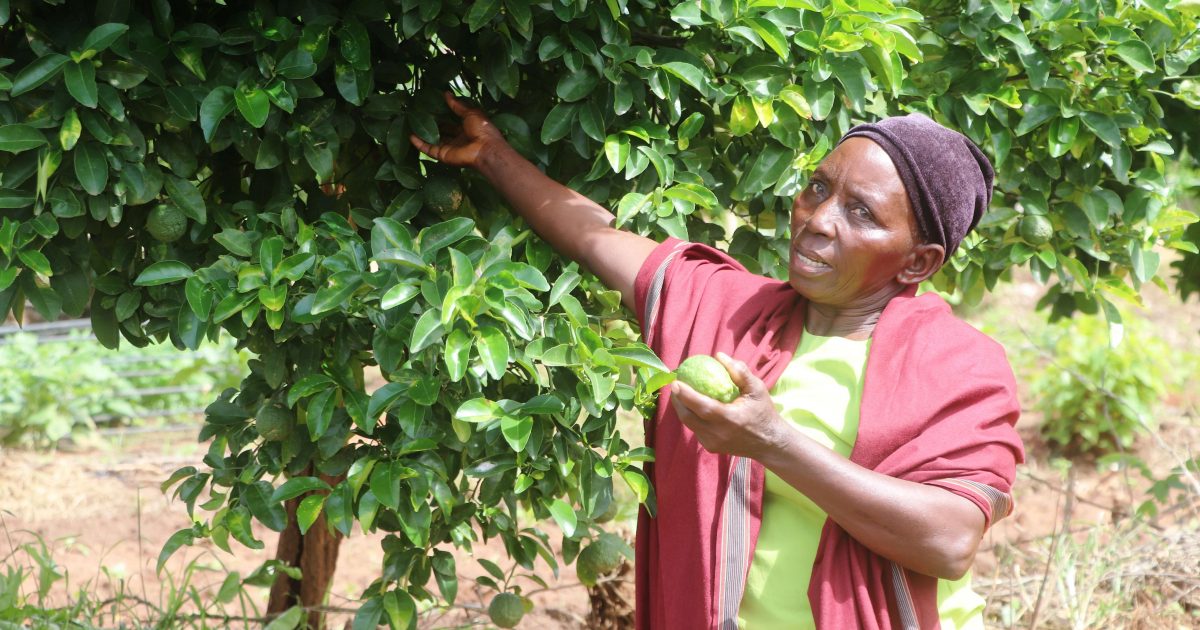
Smallholder farmers in Kwale County are slowly adapting to climate-smart agriculture practices to improve productivity, enhance resilience to climate variability, reduce greenhouse gas emissions and store carbon.
In Kikoneni ward of Lungalunga sub-county, small-scale farmers John Mutuku, Befronia Kingethu and Paul Muteti have taken to using climate-resilient crop varieties, improving water management, and adopting conservation agriculture techniques to mitigate climate-induced agriculture disruptions.
The farmers are embracing climate-smart agriculture that encompasses farming practices such as agroforestry systems, drought-tolerant crop varieties and techniques like crop diversification, conservation farming, crop rotation and intercropping.
Climate-smart agriculture is an integrated approach to managing landscapes such as cropland and livestock that addresses the twin challenges of food security and climate change.
Confronted with the reality of erratic rainfall patterns and low yields farmers across the coastal county are ‘opening their arms’ for climate-smart agriculture practices in the hope of increasing crop yields and farm income.
The transformative smart agriculture farming is gaining traction in the coastal county with the help of the Global Evergreening Alliance’s Restore Africa Programme, World Vision, Self Help Africa, Just Dig It and Africa Harvest among others.
A pivotal aspect of the restoration programme is the incorporation of agroforestry which merges agriculture and forestry practices bolstering farm productivity and sustainability.
Implementation of the Restore Africa Programme (RESAf), the world’s largest farmer-led, nature-based restoration initiative, is spearheaded in Kenya by World Vision and a consortium of development partners.
Farmers under World Vision’s Green Farm Project termed the integrated approaches to agriculture as a ‘beacon of hope’ and a ‘step in the right direction’ that benefits the farmers, consumers and the planet.
John Mutuku who has been in farming for over 30 years says local farmers have learnt practices like cover cropping and crop rotation helping improve soil health, retain moisture, and reduce soil erosion.
The farmer says in the past unpredictable, extreme weather events and shifting weather patterns harmed their crops and reduced yields threatening food security.
“Farmers are adopting crops that are better suited to the changing climate such as drought-resistant species contributing to secure food supplies,” he said.
Befronia Kingethu says local farmers by utilizing ‘climate and crop information’ now know when to plant and specifically which crop varieties to plant thus increasing agricultural productivity.
She says farmers are ‘bidding goodbye’ to unsustainable agricultural practices that can lead to high greenhouse gas emissions, soil erosion and reduction in soil fertility.
Paul Muteti, a subsistence maize farmer says climate change has caused decreased crop yields and disruptions to food supply chains impoverishing farmers who rely on agriculture for their livelihoods.
Muteti has dedicated a section of his farm to growing native trees as a climate change mitigation measure and earning income by selling carbon credits which represent the amount of carbon dioxide stored.
He says farmers are allowing trees to regenerate on their land as a key strategy for carbon sequestration where carbon dioxide is removed from the atmosphere and stored.
The targeted small-scale farmers who bear a disproportionate share of the climate crisis receive seeds of indigenous, exotic and fruit trees to help them restore their degraded lands.
Natural Resource Management Coordinator, World Vision Elizabeth Nyagoha, says the conservation programme is working closely with farmers in Kwale, Elgeyo Marakwet, Kilifi, Migori, and Narok counties.
The environmental conservation project is in its infancy stage but is slowly setting the stage for long-term collaborations and transformative climate actions in the agricultural and land use sectors.
The conservation programme is also training and empowering journalists selected from different media organisations in the counties to produce climate change stories in their local communities.
She says the collaboration for climate action in the agriculture sector is aiding the benefiting farmers’ journey towards climate resilience and sustainability.
Nyagoha says small-scale farmers involved in the environmental initiative are sustainably increasing productivity and becoming more resilient to climate-related shocks.
She says climate-smart practices such as organic farming and agroforestry to enhance soil health help farmers to cope with droughts, pests, and other climate-related risks.
Nyagoha said a pivotal aspect of the restoration programme is the incorporation of agroforestry which merges agriculture and forestry practices bolstering farm productivity and sustainability.
“Integrating trees within farming systems will go a long way in improving soil health, provide shade and enhance carbon sequestration,” she said, adding that agriculture is highly dependent upon the climate.
She says the smart farming supported by the consortium of development partners aims to reduce greenhouse gas emissions in the atmosphere and effectively adapt to the vagaries of climate change.
Nyagoha says the programme aims to restore over 250,000 hectares of degraded land and improve the livelihoods of more than 250,000 small-scale farming households.
She says the project while bolstering farm productivity and sustainability is also playing a crucial role in supporting biodiversity and facilitating carbon sequestration.
The World Vision official says climate-smart agriculture is a game changer for farmers and increases agricultural productivity allowing sustainable farming besides ensuring food and nutritious security for communities.
She says 285,000 trees have been planted in Kwale and 297,000 in Kilifi with a target of planting 1.6 million trees by December 2025.
Nyagoha says as the trees grow they take in carbon from the atmosphere and store it in wood, plant matter and soil in a process known as carbon sink.
World Vision Carbon Coordinator Perkins Omondi says climate-smart agriculture reflects an ambitious programme of integrating agricultural development and climate responsiveness.
Omondi says the partnership between the farmers and the consortium of development partners seeks to achieve food security amidst climate change and increasing demand for food.
He says media practitioners in Kwale and Kilifi were inducted on the pivotal role of climate-smart agriculture so as to continue highlighting the interconnectedness of climate change, biodiversity and conservation.
“We want to bring all stakeholders on board to drive sustainable agricultural transformation and build resilience,” he said.
He says the media training is aimed at equipping the participants with the proper knowledge to report on climate change issues and solutions approaches.
Omondi who is an environmental, social and governance expert called for concerted efforts to mitigate climate change and adapt to its adverse effects such as extreme weather events, changes in ecosystems and disruptions to agriculture and livelihoods.
By Hussein Abdullahi