For the second year in a row, lower Murang’a mango farmers are expecting a bumper harvest as all indications show they will surpass what they harvested in the last three years seasons.
They attribute this to proper management of the crop, conducive weather and the monthly agricultural extension services they receive.
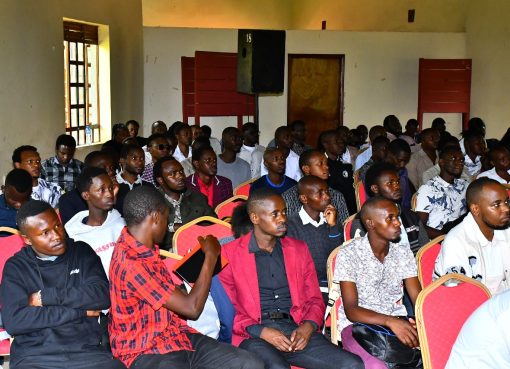
Kenya News Agency (KNA) caught up with over 70 farmers of the Nyakiha cluster at the home of one of farmers in Kamahuha Wednesday as they received lessons on pruning, pest and disease control, nutritional management and correct harvesting of their mango fruits.The farmers meet monthly.
In 2023, the Lower Murang’a Mango Farmers’ Cooperative Society sold 310 tonnes while in January/February 2024, they managed to sell 839 tonnes of the produce.
“During the selling window that opened in December 2024 to February 2025, we managed to sell 1,272 tonnes of the fruit,” the Cooperative’s Chairperson Fredrick Kinyajui said.
In the selling window that will open on December 15 to February 2026, the Cooperative Society anticipates to harvest and sell between1,800 to 2,000 tonnes of mangoes. The cooperative has 1,200 members drawn from across 10 wards in Lower Murang’a.
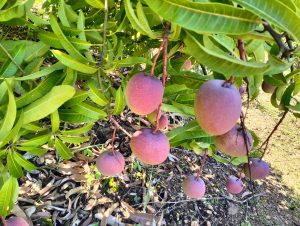
Should they achieve this feat, the farmers will smile all the way to the bank as the county government has partnered with three leading fruit processing companies; which will buy the fruits at Sh16 per kilo.
Moreover, the county government adds a subsidy of Sh7 per every kilo sold, further motivating the farmers.
“Last season, I managed to harvest 20 tonnes but all indicators show that this season I will harvest not less than 30 tonnes from my 800 mango tree fruits,” says Kinyanjui.
“As you can see, the trees are unable to hold the fruits owing to the abundance and that is why we have to support them to avoid breaking the branches,” he says.
Another farmer, Jane Wanjiru, says that for many years, she struggled with poor returns mainly because she did not know how to manage her nearly 200 mango trees in the Igikiro area.
“Since I started attending the monthly training, I have seen a huge difference. In February, I managed to harvest five tonnes of the fruit and right now my trees are so heavy with fruit I will harvest not less than 10 tonnes,” a beaming Wanjiru says, adding that over the years, she learnt new techniques of pruning and pest control.
The farmers have now adopted organic farming methods of using compost manure and intercropping with legumes to improve soil health.
“I used to overly depend on chemical fertilizers but now I use organic manure from my cows and my trees are not only stronger but my soil is healthier and the harvests have increased,” says one Peter Mwangi.
“This year, I anticipate to harvest more than 6 tonnes. Last year I harvested just three tonnes of the fruit,” he adds.
Growing mangoes (Mangifera indica) is lucrative and easy since they require less management and will produce the first fruit in 3 to 5 years depending on the soil and the ecological conditions of the area
Some common varieties grown in Murang’a include the Ngowe, Apple, Kent, Tommy Atkins and Sabine varieties which are popular both in local and export markets.
Some mango varieties are more susceptible to pests and diseases than others. Overall, mangoes are susceptible to a fungal disease known as anthracnose before flowering, the mango weevil and fruit fly, and a farmer has to be on the lookout and ensure timely pesticides application to counter the effects of the pests and disease on the fruit.
The trainers emphasized the use of correct harvesting tools such as fruit pickers and soft collection nets to prevent bruising and damage to the fruits which is one of leading causes of post-harvest waste.
They were also taught proper timing of harvest ensuring fruits are picked only when mature to improve quality and shelf life.
By Florence Kinyua