As the world marked the International Day to End Impunity for Crimes Against Journalists, the Media Council of Kenya (MCK) called for stronger protection of journalists against Artificial Intelligence (AI)-facilitated gender-based violence, expressing deep concern over rising threats targeting female reporters both online and offline.
The Council warned that online harassment and AI-enabled abuse against women journalists often go unpunished, escalating into real-world harm, and emphasized the need for urgent action to create safer digital spaces for media professionals.
MCK Chief Executive Officer, Mr David Omwoyo, reaffirmed the Council’s unwavering commitment to press freedom and the protection of journalists across all platforms.
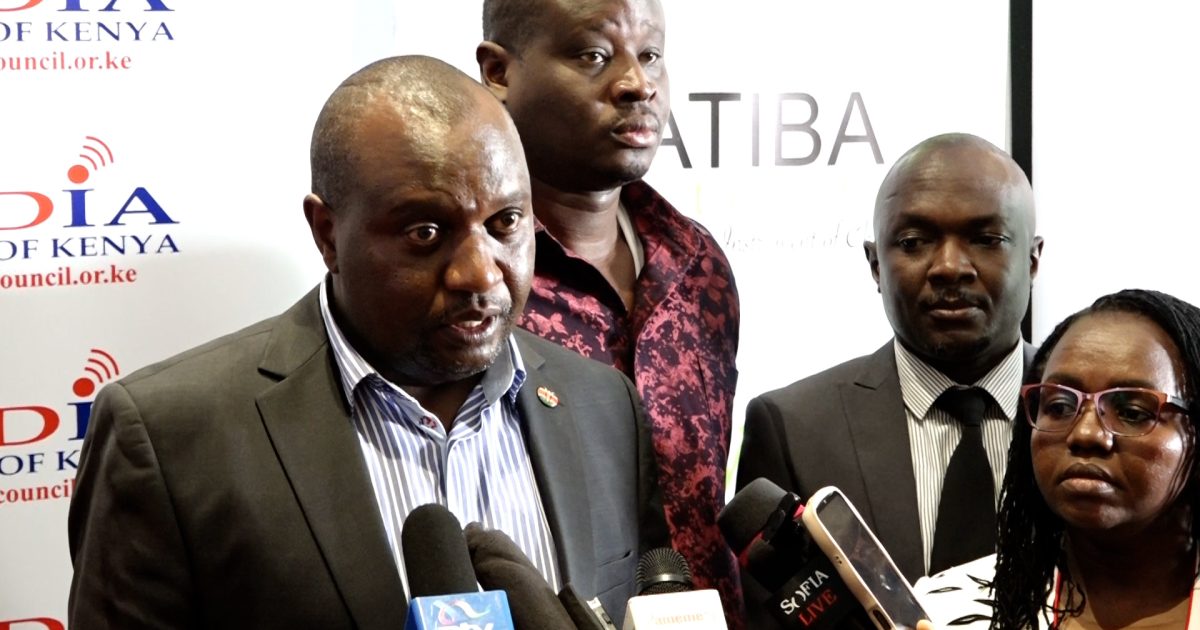
Speaking in Nakuru during a commemoration themed “Chat GBV: Raising Awareness on AI-facilitated Gender-Based Violence against Women Journalists,” Mr Omwoyo said technology-driven harassment is forcing women and girls in media to self-censor, thereby silencing their voices and weakening democracy.
He called for the arrest and prosecution of individuals implicated in recent attacks against journalists, urging collaboration between the government and the media instead of confrontation. “We need common ground between government and the media, not blame games. Both need each other for the good of the country,” he said.
Mr Omwoyo urged that the Independent Policing Oversight Authority (IPOA) be empowered to independently investigate and prosecute security agents’ misconduct against journalists, while Parliament should enact stronger safety laws to criminalize harassment of journalists.
He noted that the rising online abuse targeting women journalists continues unchecked, often leading to physical harm. “Digital spaces must be safe for those who gather and report news. When journalists are silenced, we all lose our voice. Let us stand together to defend press freedom, demand accountability, and ensure those who speak truth to power can do so without fear,” he said.
Citing Kenya’s declining ranking on the World Press Freedom Index, from 69th in 2022 to 117th in 2025, Mr Omwoyo warned that the country risks joining the ranks of states where the media is controlled or silenced if urgent reforms are not made.
He announced plans to institute private prosecutions against perpetrators of violence against journalists as part of broader efforts to enhance accountability and combat the culture of impunity.
“Without accountability, there can be no freedom. Without a free press, there can be no democracy,” he declared. “The MCK, in partnership with the Kenya Union of Journalists (KUJ), the Office of the Director of Public Prosecutions (ODPP), the Judiciary, and the Witness Protection Agency (WPA), is working to ensure justice and enhance journalist safety.”
Mr Omwoyo disclosed that MCK continues to monitor and document all cases of threats and attacks against media professionals, advocating for legal action and better protection mechanisms through collaboration with law enforcement and judicial agencies.
Katiba Institute Deputy Executive Director, Ms Christine Kuria, emphasised that the 2010 Constitution guarantees press freedom under Article 34, while Article 33 protects freedom of expression and Article 35 upholds citizens’ right to information. Together, she said, these provisions establish the media as a constitutional right, not a privilege.
She noted that for those aggrieved by media reporting, lawful channels of redress exist. “The Media Council Act (2013) established the Media Complaints Commission, empowered to resolve disputes without harassment. The Defamation Act (Cap 36) allows civil remedies for reputational harm, and the Access to Information Act (2016) reinforces transparency. Kenya already has legal tools to address grievances lawfully. Intimidation and violence are plainly illegal,” she stated.
Ms Kuria further reminded that Kenya, as a signatory to Article 19 of the International Covenant on Civil and Political Rights (ICCPR) and the African Charter on Human and Peoples’ Rights, is obligated to protect media freedom.
“We must stop branding the media as anti-government. Likewise, journalists must uphold professionalism. Both sides need constructive dialogue to foster mutual understanding and national progress,” she said.
Kenya Union of Journalists (KUJ) Secretary General, Mr Eric Oduor, urged collective efforts to improve the media environment. “We are ready to engage with the government at all levels to find solutions to the challenges facing the media industry. Every institution has a role to play in moving our country forward,” he said.
Mr Oduor called for adherence to ethical journalism aligned with modern realities, emphasizing that a free and independent media must also be responsible. “Whether in government or media, we all owe a duty to the Constitution and the laws of this country. A free press must be chained to truth, objectivity, fairness, and diversity of opinion,” he noted.
Association of Media Women in Kenya (AMWIK) Executive Director, Ms Quinter Mbori, raised alarm over the growing use of AI to facilitate gender-based violence against female journalists through manipulated and AI-generated images and content.
She explained that this new form of abuse worsens existing problems such as online harassment and weak newsroom protection policies, leading to serious psychological trauma and discouraging women from participating in public discourse.
“The experience of AI-enabled GBV causes deep emotional distress, driving many female journalists to self-censor, withdraw from digital platforms, or even quit the profession entirely,” Ms Mbori said. “This chilling effect reduces diversity in media coverage, especially on critical social issues such as reproductive rights, gendered poverty, and domestic violence.”
She observed that Kenya’s rapid AI adoption has outpaced regulatory frameworks, leaving gaps that embolden perpetrators. “The absence of oversight creates a dangerous environment where accountability is almost non-existent,” she warned.
Kenya Editors Guild trustee, Mr Martin Masai, underscored the need for a multi-sectoral approach involving government, civil society, and the media to ensure the protection of journalists. “Protecting journalists requires prevention, protection, and prosecution. Ending impunity is key, ODPP must ensure all crimes against journalists are thoroughly investigated and prosecuted,” he said.
Mr Masai also called for nationwide awareness campaigns to educate the public about the importance of a free press and the dangers faced by journalists. “We must empower journalists with digital and physical safety training to help them manage risks effectively,” he added.
The participants agreed that while AI presents opportunities for innovation, it also brings new threats that must be urgently addressed through legislation, awareness, and collaboration between government and the media.
By Jane Ngugi