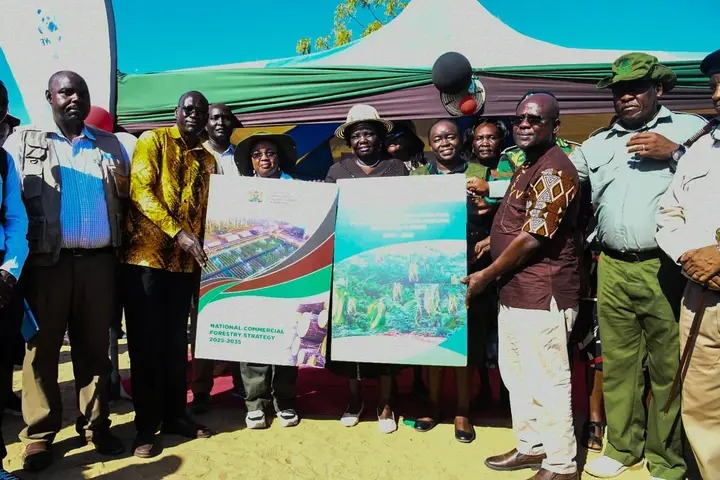
Cabinet Secretary for Environment, Climate Change and Forestry Dr Deborah Barasa has officially launched the Prosopis Strategy that provides a phased and regulated approach to preventing new invasions, eradicating isolated infestations, containing dense stands, and ensuring productive use of cleared biomass.
The Cabinet Secretary emphasised that integrating Prosopis management with commercial forestry will ensure that restored lands become productive, resilient landscapes and enable counties such as Turkana to emerge as hubs of sustainable green enterprise.
It is aligned with the Forest Conservation and Management Act and the Charcoal Regulations (2025), two landmark national policy instruments aimed at transforming Kenya’s Arid and Semi-Arid Lands (ASALs) and strengthening climate resilience across the country.
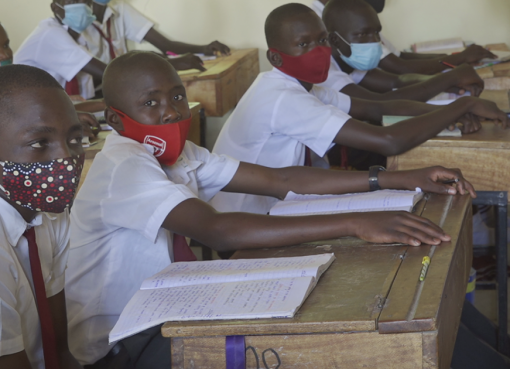
The launch, held at Nadoto Primary School in Turkana County, marked the unveiling of the National Strategy and Action Plan for the Management and Control of Prosopis juliflora (2025-2035) alongside the National Commercial Forestry Strategy (2025-2035).
CS Barasa, who was also joined by her East African Community (EAC) Affairs, the ASALs and Regionals counterpart, Ms Beatrice Askul Moe described the launch as a defining moment in Kenya’s environmental and economic journey, particularly for ASAL counties that have long faced land degradation, invasive species, and climate shocks despite their immense potential.
Prosopis juliflora, commonly known as Mathenge, was originally introduced for land rehabilitation but has since become one of Kenya’s most aggressive invasive species, now covering over 1.1 million hectares across more than 22 counties. In Turkana and other dryland regions, its spread has degraded rangelands, disrupted water systems, reduced pasture availability, threatened biodiversity, and undermined livelihoods.
Dr Barasa noted that while Prosopis presents a serious ecological challenge, scientific research by the Kenya Forestry Research Institute (KEFRI) and the Kenya Forest Service (KFS) has demonstrated that, when managed responsibly, the species can be transformed into a climate-smart economic resource.
Products such as briquettes, bioenergy, biochar, livestock feed, and timber can generate green jobs and support local enterprise development, especially for women and youth.
At the same time, the National Commercial Forestry Strategy seeks to position forestry as a driver of economic growth by promoting climate-smart plantations suited to dryland conditions, reducing pressure on natural forests, strengthening forest-based value chains, and attracting private investment.
Both strategies are aligned with Kenya’s national and global commitments, including Vision 2030, the Bottom-Up Economic Transformation Agenda, the National Landscape and Ecosystem Restoration Strategy (2023-2032), the Sustainable Development Goals, and the AFR100 initiative, under which Kenya has committed to restore 10.6 million hectares of degraded land.
Turkana County was deliberately selected to host the launch due to its central role in ASAL restoration challenges and opportunities.
Askul noted that the county will serve as a regional demonstration and learning hub for integrated invasive species management, dryland commercial forestry, community-led restoration, and climate-resilient livelihood models.
Deputy Governor John Erus assured the CSs of the county’s commitment to moving decisively from policy to action and transforming the Prosopis challenge into an engine of prosperity, while positioning commercial forestry as a pillar of sustainable development in Kenya.
The event was also attended by Turkana Central MP, Emathe Joseph Namuar, CEO Kenya Forestry Research Institute (KEFRI) Dr Jane Njuguna; Senior Deputy Chief Conservator of Forests (SDCCF) of the Kenya Forest Service Dr Clement Ng’oriareng; Secretary for Administration State Department for Forestry (SDF) Mr Patrick Meso; Environment Secretary Dr Selly Kimosop; and Director of Agroforestry Dr Jesse Owino, among others.
By Peter Gitonga