The Cabinet Secretary (CS) for Roads and Transport, Davis Chirchir, has reaffirmed government’s commitment to enhancing road safety through digital innovations, safer infrastructure, and integration of road safety into national development plans.
In this regard, the Ministry of Roads and Transport has unveiled a raft of measures from digital enforcement to safer infrastructure to stem the alarming rise in road accidents, as fatalities hit 3,397 countrywide between January and September 2025.
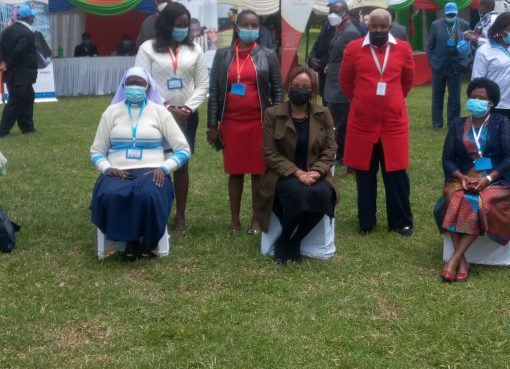
Speaking during the second National Dialogue on the Implementation of the National Road Safety Action Plan (NRSAP) 2024–2028 in Mombasa, Chirchir said the dialogue is crucial in galvanizing efforts to save lives, prevent injuries, and protect the country’s productivity.
The inter-agency forum, themed “Facilitating an Inter-Agency Conversation and Dialogue for the Successful Implementation of the National Road Safety Action Plan 2024–2028,” comes amid a surge in road accident deaths, which stand at about 4,600 annually.
A recent National Transport and Safety Authority (NTSA) report shows 3,397 fatalities were recorded between January and September 2025, 28 more than the same period last year.
Some of the noticeable achievements of the National Road Safety Action Plan are the establishment of 47 County Transport and Safety Committees, mobilization of road safety funding through the exchequer and development partners and completion of the Road Safety Investment Plan 2025 to guide interventions.
“Through risk targeting, we have mapped high-risk corridors. Several road safety audits have been conducted nationwide, and over 750 kilometres of roads have been star-rated to identify risks as well as latent conditions, leading to black spot treatments and safer infrastructure designs,” stated the CS.
“We have also completed regulations to strengthen vehicle safety inspections, deter drunk driving, enhance the safety of school transport, as well as frameworks for instant fines to improve speed enforcement,” he added.
The CS also disclosed that regulations to strengthen vehicle safety inspections, deter drunk driving, enhance the safety of school transport, as well as frameworks for instant fines to improve speed enforcement, have been finalized.
Road safety has also been integrated into the national school curriculum (from Pre-Primary 1 to Grade 12), while post-crash care is being boosted with a new trauma centre in Sagana and a modern crash data system developed with support from JICA.
“These achievements demonstrate real momentum but also remind us that road safety remains a shared responsibility that requires even stronger multi-agency collaboration,” said the CS, noting there are challenges despite the progress, like insufficient sustainable financing, gaps in coordination and data integration, and slow policy adoption.
The dialogue will enable the government to assess achievements and challenges, identify areas for improvement, and chart a new course of action to address some of the challenges in a bid to enhance road safety.
The CS further underscored the need to adopt effective strategies to address road safety concerns, like operationalizing the multi-agency governance framework, securing sustainable financing through a Road Safety Fund and scaling up risk targeting and black spot interventions.
Others are intensifying digital enforcement, expanding trauma centres and ambulance networks and completing and integrating the national crash database.
“These actions will build on the progress made so far and tackle emerging challenges to improve road safety,” stated the CS.
The CS further directed the establishment of a Multi-Agency Implementation Framework with clear measures to curb road carnage at the conclusion of the dialogue.
The State Department of Roads, through the various agencies, is expected to submit by 1st October a detailed program for marking of roads and bumps, signage, and critical safety barriers for road users.Meanwhile the State Department for Transport, through NTSA, will submit a detailed implementation programme by 1st October, for the automation and modernization of inspection centres, and driver testing.
Principal Secretary for Transport, Mohamed Daghar, noted that the government has initiated a review of the Traffic Act to strengthen road traffic legislation and align with regional initiatives.
Other interventions are the operationalization of all County Transport and Safety Committees, building County capacity, integrating county data, and securing dedicated resources.
“We urge County Governments to: implement localized road safety programs, enhance enforcement, and allocate adequate budgets to support the Safety Committees,” said the PS.
The PS also called for the utilization of Technology and e-enforcement by optimizing the use of Intelligent Transportation Systems (ITS) in road transport operations, including surveillance, instant fines, and automated fare collection.
He called for integration of the Road Safety Database between NTSA, Police, Health, Insurance and county systems for evidence-based decision-making.
Principal Secretary for Roads, Eng. Joseph Mbugua, emphasized that road safety is the sacred duty of every citizen, and the identification of high-risk corridors should be continuous. He urged legislators to ring-fence funds for road safety.
By Sadik Hassan and Bahati Hassan