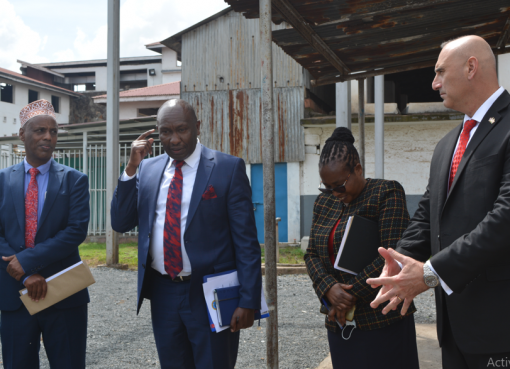
Makueni County Deputy Governor (DG) Lucy Mulili has commissioned the Makindu Chronic Care Centre funded by Aids Healthcare Foundation (AHF)-Kenya at a cost of Sh8.5 million.
Mulili disclosed that the centre would serve over 2,300 clients who have been diagnosed with chronic ailments like HIV, cancer, diabetes and hypertension who must be registered at the clinic in Makindu Sub county hospital.
“In the spirit of integration that is being encouraged, especially with the dwindling resources both from domestic sources and donors, the centre will be of great help to patients with chronic conditions.
It has come at an opportune time when we are experiencing rising cases of non-communicable diseases,” said Mulili.
The DG said that the hospital is strategically placed, as it serves travellers along the busy Nairobi-Mombasa highway and others from neighbouring counties like Kitui, Machakos and Kajiado.
While lauding AHF for the good gesture, Mulili said they value partnerships and that the government is ready to enhance collaborations in any way that would benefit the residents of Makueni County.
“We are now friends with AHF, having worked together for 17 years. We are available to enhance the collaboration in any way the partner will see necessary,” noted the Deputy Governor.
Additionally, the Department of Health County Executive Committee Member (CECM) Dr. Paul Musila said that the prevalence rate of hypertension among adults is 1 out of 4.
Dr. Musila revealed that his department has embarked on mapping out areas with diabetes across the county, besides other chronic diseases, to enable them to create awareness among the people with a view to coming for checkups and medical tests to combat the ailments.
Further, he observed that due to staff constraints, they have resulted in treating patients with chronic illnesses through integration with a view to optimally utilise the staff they have in all the health facilities.
“As you can see, we have put people suffering from diabetes, hypertension and HIV together. We intend to utilise staff optimally. If we have two nutritionists at a facility, they are placed centrally where they can see people suffering from chronic diseases. As you witnessed today, integration is the way to go,” said the CECM.
Speaking at the same event, the Chief Operations/Risk Management and Quality AHF Global Laura Boudreau said that chronic illnesses like HIV, hypertension and diabetes needed constant care, hence the need for an integrated system where they could be attended to.
“This facility does all three by integrating services under one roof, supported by a modern ICT system. We are moving away from fragmented care and towards something truly holistic, truly human-centred,” said Boudreau in a speech she read during the event.
“Integration is not only smart health policy; it is an act of justice. When we emphatically treat people with chronic conditions within the broader health system, we normalise the sanctity of life. We say to them, You are not alone, and you are not less,” she added.
The CORMQ further added that her organisation, which is in 45 countries, invests in community clinics, advocacy, mobile outreach, prevention, and digital systems that are not only for treatment but also to transform.
AHF Country Programme Director Samuel Kinyanjui said that the centre would eliminate stigma that is attributed to silencing voices and delayed treatment.
“By integrating HIV care with other chronic services, we say to every patient, you belong, you are not alone and you are not defined by diagnosis,” said Kinyanjui.
By Patrick Nyakundi