Efforts to address rising mental health crisis among staff in the law enforcement agencies got a boost after seven more police officers were ordained as Pentecostal pastors to offer psychological and spiritual guidance to affected colleagues.
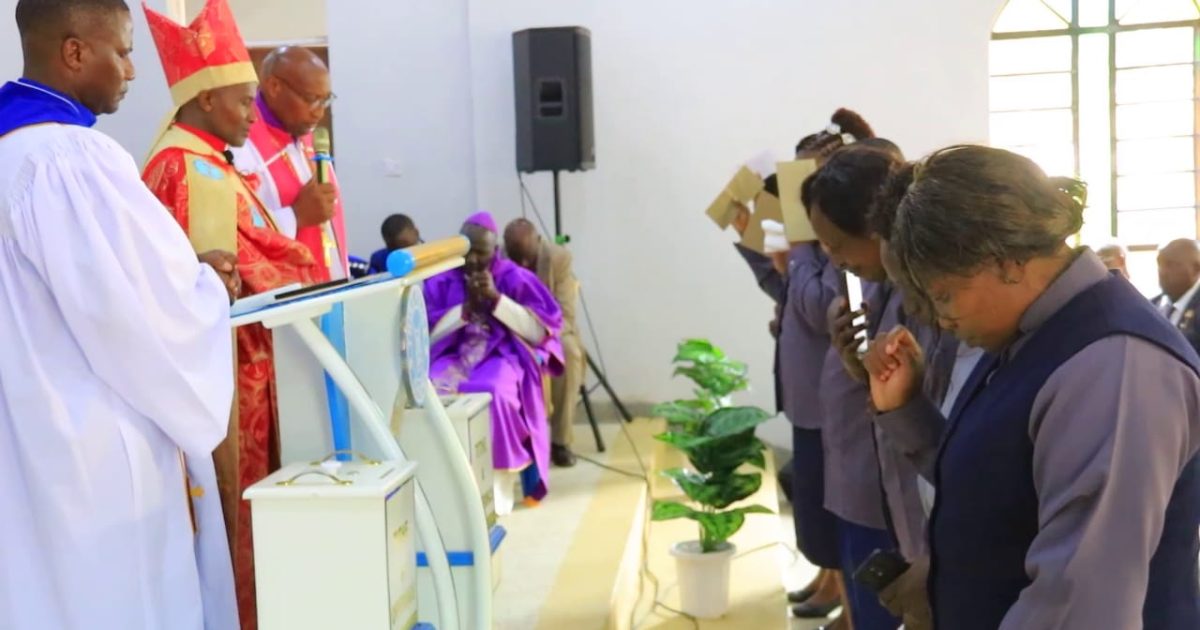
The officers were commissioned as chaplains in a ceremony at the Thika Police Chapel in what leaders described as both symbolic and urgent.
The seven officers will now set aside their operational duties to assume roles centred on counselling, spiritual guidance, and emotional support for colleagues grappling with stress, trauma, and psychological strain.
Drawn from the Administration Police (AP), General Service Unit (GSU), National Youth Service (NYS), Kenya Forest Service (KFS), and the regular police, the newly ordained chaplains will join 32 others already serving across the Central Region.
Police commanders acknowledged that a shortage of chaplains has left many officers without adequate support, despite increasingly demanding and high-risk working environments.
Speaking during the ceremony yesterday, Samuel Kobina, representing Central Region Police Commander Samuel Ndanyi, said the strengthened chaplaincy programme is expected to provide much-needed spiritual and psychological care while contributing to internal transformation within the service.
“As these chaplains report to their respective sub-counties, we believe their presence will help officers cope with workplace pressures and promote moral renewal within the force,” Kobina said.
Earlier this month, more than 300 police chaplains drawn from across the country underwent specialised training in Kiambu County on addressing mental health challenges within the force. The programme equipped them with skills to mentor, counsel, and support officers facing rising psychological and family-related pressures.
GSU Assistant Superintendent Hosea Tunayo said officers routinely confront trauma, violence, and intense pressure but often lack mechanisms to process the emotional toll of the job.
“Our officers are trained to confront crime and carry firearms, but they are rarely equipped to manage the psychological strain that comes with the uniform. The badge does not make us immune to pain. Behind every uniform is a human being who requires care, prayer, and counselling,” Tunayo said.
Police leadership noted that areas with active chaplaincy programmes have reported a decline in suicide cases and severe mental health distress, underscoring the need to expand the initiative.
Plans are underway to establish chapels in every subcounty across the Central Region, with leaders emphasising collaboration between the police service, communities, and theological institutions.
by Muoki Charles