The county government of Murang’a has taken a step to make its healthcare system more inclusive with a new initiative aimed at bringing essential services closer to persons with disabilities.
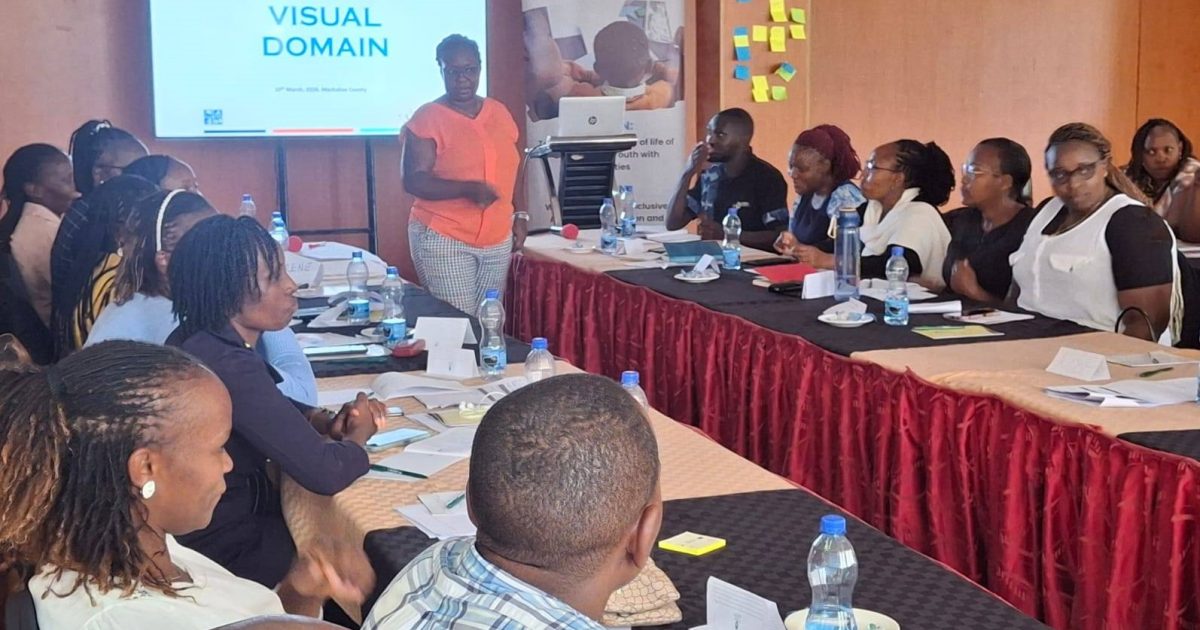
In a move that promises to ease access and restore dignity for many families, the county administration in partnership with Action Foundation, this week has trained 40 officers on the assessment and categorization of disabilities.
The officers are now set to be deployed across all eight sub-county hospitals, a shift that is expected to transform how disability assessment services are accessed at the grassroots.
For years, disability assessment services were largely centralized at Murang’a County Referral Hospital, forcing many residents, some with limited mobility, to endure long and costly journeys.
For families already navigating the challenges of disability, the distance often became an additional burden.
According to Murang’a County Deputy Director of Health, Dr Kairo Kimende, decentralizing the services is a major milestone.
Dr. Kimende speaking on Friday during official closing of the training which was conducted in a Murang’a hotel explained that proper assessment is not just a medical process but a gateway to opportunity.
“Assessment enables the identification, registration and rehabilitation of persons with disabilities while also informing policies at both county and national levels.” He noted.
The Doctor added that “Beyond healthcare, the process carries economic significance. Once assessed and registered, eligible persons with disabilities can access tax exemptions through the Kenya Revenue Authority, offering much-needed financial relief.”
The trained officer, Kimende observed that they will be stationed at sub county health facilities to assess and assist persons with disabilities.
On his part, Victor Ogula of Action Foundation noted that the initiative will be life-changing for individuals who previously could not travel to the referral hospital for assessment.
“This initiative brings services closer to the people who need them most,” he said, emphasizing that accessibility is not just about infrastructure, but about fairness and inclusion.
Ogula noted that the presence of trained officers in local hospitals will mean shorter queues, reduced travel costs and quicker access to critical support services.
“It is a shift that turns what was once a distant and complicated process into something more human and reachable,” he added.
Ogula urged persons with disabilities in villages to visit local sub county hospitals for the assessment noting that there are a number who are not captured by the National Council for Persons with Disabilities. (NCPWD).
By Bernard Munyao