Residents of Migori County have urged the National Assembly (NA) to pass the Ethnic Minority and Marginalised Communities Draft Bill, 2025, once it reaches the floor of the house.
The draft Bill, an Act of Parliament, will give effect to Articles 7, 11,27,44,56 and 232 of the constitution to provide a framework for the recognition, inclusion and participation of ethnic minorities and marginalised communities in national life and to promote equality, cohesion and respect for Kenya’s cultural and linguistic diversity.
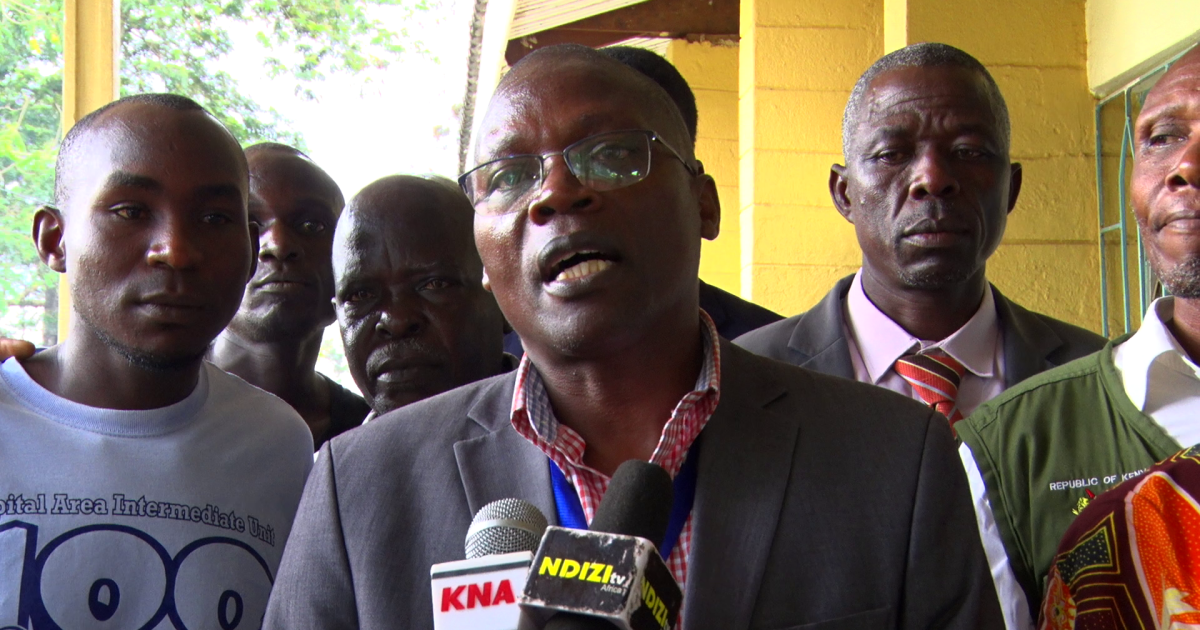
Speaking during the National Policy on Ethnic Minorities and Marginalised Communities and the Minority and Marginalised Communities Draft Bill, 2025; public participation at Migori Teacher’s Training College (TTC), participants comprising Nubi, Luhya (Maragoli), Somali, Kuria, Kisii and Kuria urged the task force to implement all the recommendations proposed to address minorities matters effectively.
Michael Okumu, from the Suba tribe, said that the 2010 Constitution talks about affirmative action, marginalised and minority groups, yet the legal framework guiding this process has never been operationalised.
Okumu said that the time has come for both the National and County governments to integrate marginalised and minority groups in employment, tender processes and business opportunities to achieve inclusivity in all regions so as to create harmony and peaceful coexistence.
Migori County is one of the cosmopolitan counties in Kenya comprising mostly Luos, Kuria and Kisii and other small communities including Luhyas, Nubi, Suba and Somali.
Omolo Junior, a Gender Activist representative, said that the National Policy on Ethnic Minorities and Marginalised Communities and the proposed Draft Bill will provide a roadmap for recognition, inclusion and participation of ethnic minorities and marginalised communities by giving them a voice in national agendas.
The Deputy Director in Charge of Policy and Legislation Draft Bill (The Ethnic Minority and Marginalised Communities Bill, 2025), Charles Nandain, said that all the resolutions passed during the participation stage will be considered to ensure a true reflection of what people feel at the grassroots level.
Some of the resolutions passed include integrating minority and marginalised groups in elective positions (if not elected to be nominated), ensuring job appointments at county and national levels, preservation and respect of cultural and linguistic values (with the most affected being the Suba, whose language has been lost through Luo assimilation).
Nandain, however, acknowledged that there is nothing wrong with being the minority; the problem arises when individuals use your numbers to discriminate against you in the political, economic and social realm.
He also added that women are the majority gender in the country but they have been marginalised, excluding them from power, business and the decision-making process, and that is why we have gender rules to protect their interests.
The official explained that the Draft Bill will help to solve the problem of how to identify minority groups or marginalised communities and fully operationalise the provisions of the 2010 Constitution.
By Awuor Andyclay and Makokha Khaoya