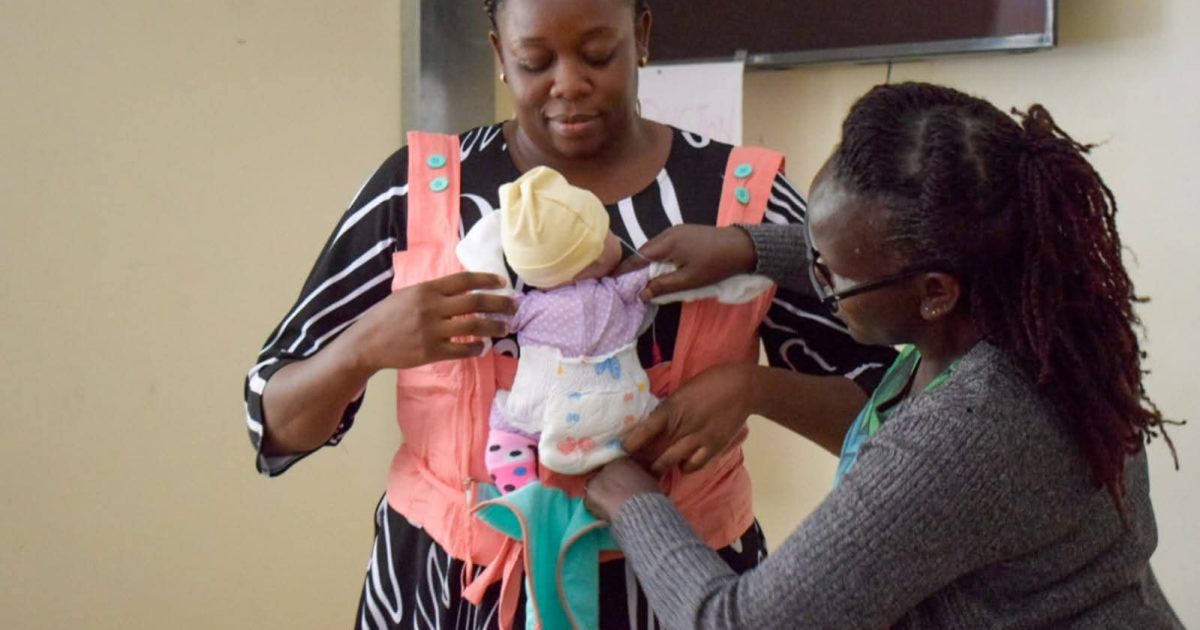
The County Government of Nakuru has launched a comprehensive training programme for healthcare workers ahead of the full implementation of Kangaroo Mother Care (KMC) across all public health facilities.
The initiative, which is expected to transform the management of preterm and low birth weight infants, targets more than 100 health workers drawn from Level 2, 3, 4, and 5 hospitals across the county. The training aims to equip them with the skills and knowledge necessary to adopt KMC in line with World Health Organization (WHO) guidelines.

County Executive Committee Member (CECM) for Health Services Ms. Roselyne Mungai said the sensitization programme is designed to strengthen newborn care and improve survival outcomes for vulnerable infants.
Unlike conventional neonatal care where preterm babies are first stabilized in incubators before being placed on their mothers’ chests, Kangaroo Mother Care promotes early, continuous and prolonged skin-to-skin contact between the infant and a caregiver, preferably the mother.
Ms. Mungai noted that immediate skin-to-skin contact has been scientifically proven to reduce neonatal mortality, lower the risk of hypothermia and infections, promote exclusive breastfeeding and enhance maternal confidence in caring for fragile newborns.
“KMC significantly reduces the risk of infections and complications, supports faster weight gain and healthy development, shortens hospital stays and lowers newborn morbidity and mortality. It is an essential newborn care practice, particularly in resource-limited settings,” she said.
The CECM added that global research shows KMC can reduce newborn mortality by up to 40 per cent. Recent studies conducted in countries such as Malawi, Tanzania, Nigeria, Ghana and India indicate that even babies weighing as little as 1,000 grams or below 800 grams benefit significantly when stabilization occurs during continuous skin-to-skin contact.
The training also emphasizes strict adherence to Infection Prevention and Control (IPC) protocols as recommended by WHO. Participants are being sensitized on cleaning, disinfection and sterilization procedures to minimize hospital-acquired infections, especially in maternity and newborn units.
Ms. Mungai said the county is prioritizing IPC measures to protect patients, healthcare workers and visitors from preventable infections that can complicate newborn care.
Official statistics show that approximately 134,000 babies are born prematurely in Kenya each year. A significant number succumb to complications related to prematurity, while others face lifelong disabilities including learning challenges, visual impairment and hearing problems.
The CECM attributed preterm births to several risk factors, including poor maternal nutrition before and during pregnancy, smoking and alcohol consumption, infections such as urinary tract and amniotic membrane infections and a history of premature birth in previous pregnancies. Other contributing factors include extremes of maternal age and uterine malformations.
She reaffirmed that Kangaroo Mother Care is an affordable, evidence-based intervention widely endorsed for improving survival and health outcomes among preterm and low birth weight infants, particularly in resource-constrained health systems.
According to WHO, more than one in 10 infants worldwide are born preterm, many with life-threatening complications. Nearly one million children die each year due to complications of prematurity, making it the leading cause of death among children under five globally.
In November 2022, a WHO Guideline Development Group released updated recommendations for the care of preterm or low birth weight infants—defined as those weighing less than 2,500 grams—in all settings. The guidelines emphasize early initiation of KMC once the newborn is clinically stable.
The WHO recommendations also call for exclusive breastfeeding for the first six months, the use of caffeine therapy to manage episodes of apnea in preterm infants and the application of continuous positive airway pressure (CPAP) to treat respiratory distress.
WHO further recommends Kangaroo Mother Care as routine practice for newborns weighing 2,000 grams or less at birth, with initiation in health facilities as soon as the baby is clinically stable.
With the rollout of KMC across its facilities, Nakuru County aims to significantly reduce neonatal mortality rates and improve the quality of life for its youngest and most vulnerable residents.
By Jane Ngugi