Nakuru County Government intends to partner with an American company to promote investments in technologies that transform solid waste into energy and fuel.
The initiative plans to convert approximately 300 metric tons of garbage generated daily into market-ready eco-friendly construction materials and decorative home goods such as bricks, tiles and artworks, among others.
County Executive Committee Member (CECM) for Water, Environment, Climate Change, Energy, and Natural Resources, Dr Nelson Maara said they were collaborating with various strategic partners in exploiting the power of innovation and transformation through the conversion of waste disposal sites, mostly with plastic materials, into centres of sustainable innovation.
Dr Maara reveals that the County Government’s vision to woo local and foreign investors into garbage recycling projects is twofold that is to restore environmental dignity and to create sustainable jobs, especially for the increasing number of unemployed youths in Kenya.
The CECM spoke after holding deliberations with local representatives of Coalesce Company, a New York-based firm specializing in sustainable waste management solutions and a provider of waste, industrial, and environmental services.
“This is not just another clean-up campaign. It’s a strategic shift, an environmental and economic revolution. We are redefining waste and turning it into opportunities, particularly for our young people,” Dr Maara stated.
The CECM pointed out that through such partnerships Governor Susan Kihika’s administration was actively embracing technology-driven solutions to transform waste into economic and environmental opportunities.
“By investing in modern solid waste disposal, wastewater treatment, responsible waste management policies, and circular economy initiatives, we are firmly on the path to creating a more sustainable future that benefits both people and the planet,” he said.
Dr Maara added “Through such initiatives we are committed to guaranteeing proper waste management which curbs pollution, conserves resources and improves public health by reducing exposure to hazardous materials. Beyond environmental conservation, proper wastewater management plays a crucial role in economic growth. It prevents pollution in rivers, lakes, and oceans, safeguarding aquatic ecosystems,”
He detailed the devolved unit’s milestones in managing waste, including the formulation of waste management policies, zoning the County for waste collection efficiency and engaging 93 private waste collectors under the Public-Private Partnership (PPP) model guided by the National Treasury.
Dr Maara said that generation of power from waste has the potential of reducing environmental degradation and increasing employment opportunities.
He observed that rapid urbanization, improved economic situation and industrialization had transformed solid waste management into one of the greatest challenges facing major urban centres in Kenya.
“This calls for Nakuru County to reduce, reuse and recycle waste. Proper sanitation programmes, including adequate landfill sites, can help our devolved unit to improve the current state of solid waste management and save money. We must urgently exploit the energy potential stored in waste through major available waste-to-energy technologies and also strategic action plan for the implementation of these technologies,” said the CECM.
Several investors, both local and international, have in the past approached the county government seeking to convert the waste into a profitable venture but most of them eventually go quiet.
The devolved unit has already embarked on the rehabilitation of the 30-acre Giotto dumpsite and an earth embankment and buffer greenery foliage have been put up to prevent spillage of garbage into the Nakuru-Kabarak road during the rainy seasons.
The Environment department has also demarcated the dumpsite into portions where recyclable and biodegradable garbage is dumped separately.
Dr Maara stated that they are reaching out to business people and residents to continue practicing 3 Rs – by reusing, recycling, and recovering what is useful from waste disposals and transforming it into wealth.
He stated, “We need innovative technologies and approaches that change the way we think about, use and treat solid, liquid, domestic, industrial and commercial waste. Lack of adequate waste management has resulted in excessive air, soil and water pollution, threatening public health, ecosystems and biodiversity, as well as accumulating immense quantities of waste in Nakuru’s Lakes and Rivers.
Dr Maara added that from innovating waste management through the 3Rs, Nakuru can resolve not only the challenge, but also create employment, promote economic growth, improve health and ecosystems, which in turn contributes to a happier, greener and healthier county – and can create enormous savings for the devolved unit.
“Sustainable waste management will contribute towards checking climate change. It can reduce greenhouse gas emissions by 20 percent. Waste can also be turned into useful raw materials that can make stationery, fabrics and other value-added products,” he said.
Nakuru’s growing population has put a strain on its waste management infrastructure, with only about 48 percent waste generated daily being collected.
The remainder often accumulates in open spaces, clogs drainage systems and contaminates local water sources.
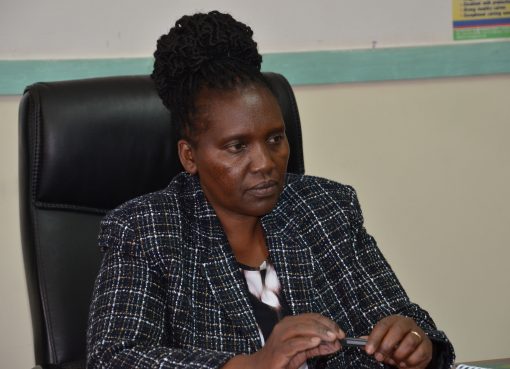
County Director for Environment and Climate Change Ms Grace Karanja, said the devolved unit is actively embracing a circular waste economy, shifting away from the traditional linear model of extraction, production, consumption, and disposal also referred to as “take-make-dispose”.
The transition, Ms Karanja explained, involves citizens actively participating in waste management by segregating waste at the source, using designated bins for different waste types and recognizing the value in discarded materials.
The Director disclosed that the County Government has acquired a 25-acre parcel of land in Gilgil, earmarked for promoting a circular waste economy—a key component in the County’s strategy to transition towards sustainable environmental practices.
“I urge the investor to consider utilizing the legacy waste already deposited at the Giotto Dumpsite since 1976. This waste holds immense potential as a resource and could also extend the site’s lifespan by creating additional tipping space through its removal and processing,” she suggested.
While observing that Nakuru is actively working to implement policies and practices that encourage the reduction, reuse, and recycling of materials, ultimately minimizing waste and maximizing resource utilization, Ms Karanja indicated that businesses benefit from cost savings, innovation, and a strengthened brand image by embracing circular economy principles.
“Companies that will embrace circular economy principles will reduce their environmental impact, lower their operating costs, and improve their reputation among consumers who prioritize sustainability. Additionally, by reducing their reliance on finite resources, they can future-proof their business against resource scarcity and price volatility,” added the Director
She noted that while the transition to a circular economy is not without its own challenges, it requires a committed shift in mindset, increased deliberate effort as well as collaboration across industries, supply chains, and stakeholders.
Ms Karanja said the county’s population was growing at a rate of between 7 to 10 percent per year, which translated into increased solid waste.
She said the county has facilitated the formation of solid waste management associations, which comprise private waste service actors to manage waste at the Giotto site.
She noted that the county stands to increase its revenue base and create more jobs besides improving health and sanitation to millions of residents if the dumpsite is upgraded.
Coalesce Company spokesperson Mr Joseph Moenga, who represented the company highlighted the firm’s interest in deploying innovative waste-to-energy technologies in Nakuru and emphasized that, beyond environmental benefits, recycling could have far-reaching effects on the economy, especially if the county positions itself as a model sustainable town.
“There’s potential for carbon credit earnings, reduced health costs, and job creation. The environmental dividends are significant,” he noted.
Mr Moenga hailed Nakuru for enacting the Waste Management Act based on the idea of a circular economy and aligned regulation of the Ministry of Environment.
The shift from linear to circular economy approach to waste management, he observed, will lead to the restoration of the lost glory of Kenyan cities, major towns and urban centres.
By Anne Mwale