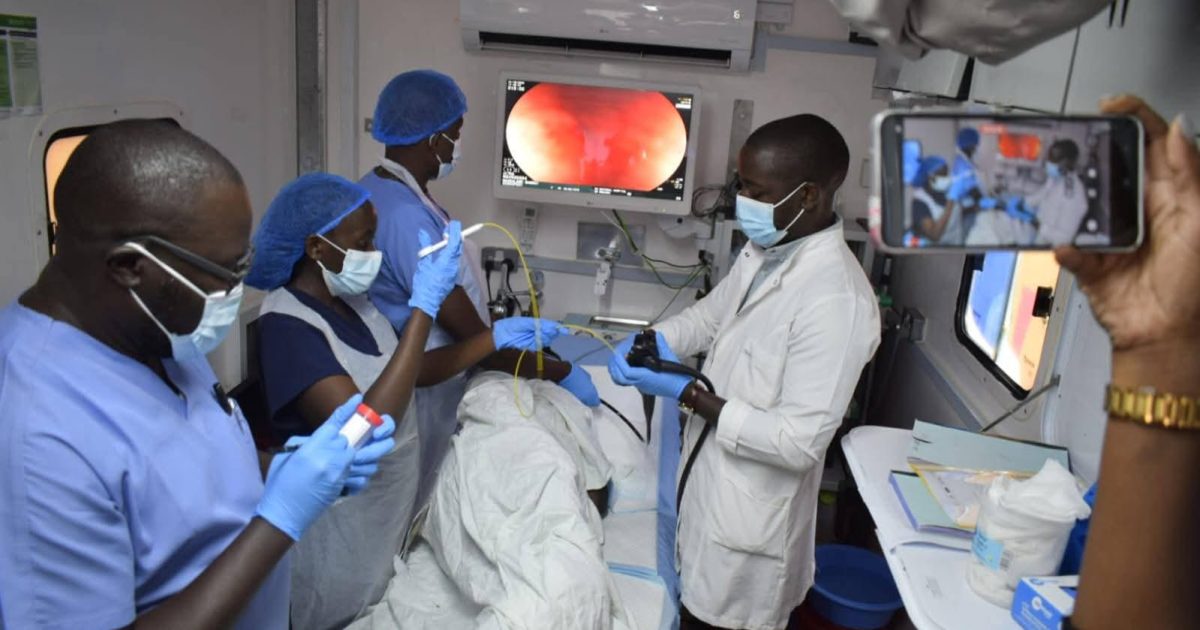
Nakuru residents will enjoy free oesophageal cancer screening for the next 30 days after the County Department of Health partnered with the Kenyatta University Teaching Referral and Research Hospital (KUTRRH) and the Ministry of Health to deliver a mobile endoscopy tower truck.
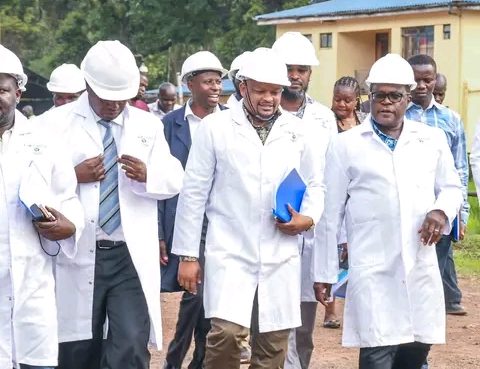
The truck, which was flagged off on Thursday by the County Director for Health Administration and Planning Dr Joy Mugambi is equipped with an endoscopy machine and cancer specialists who will be conducting the diagnostic procedure on the residents.
As part of the rollout and sustainability, Dr Mugambi indicated that oncologists had held a sensitisation forum for clinical teams in Nakuru, where about 80 multidisciplinary health workers were trained on the detection, management, and referral pathways for oesophageal cancer.
The effort, she stated, aims to strengthen local capacity and ensure timely diagnosis and care for patients across the county, adding that the team will be visiting all the 11 sub-counties in the next thirty days giving residents a chance to access free screening and awareness services.
“The campaign, supported by the NIHR Global Health Research Programme, features a mobile endoscopy unit—a fully equipped facility that brings screening and diagnostic services closer to the people. If you know someone who has difficulty swallowing with or without pain, persistent cough, or unexplained weight loss, please refer them for screening,” she advised.
KUTRRH has been holding free oesophageal cancer screening projects across Kenya as part of a cancer study it is undertaking jointly with the University of Manchester, the Christie NHS Foundation Trust, National Cancer Institute and Kenya Medical Research Institute.
Dr Mugambi noted that successful implementation of the initiative will provide the basis for new approaches in the management of the disease. She also said that the researchers will also use the time to raise awareness on the importance of early detection and diagnosis in realising better treatment outcomes for cancer patients.
“We are looking at raising awareness among the members of the community about the disease and the importance of early interception and treatment. We are also building the capacity of health workers, both specialists at the facility and frontline workers at the health centres, dispensaries and Community Health Promoters to make sure that the awareness at the community level is effective,” she stated.
A report by the Global Burden of Disease (GBD) Cancer Collaborators, published in 2024 indicates that esophageal cancer remains one of the leading causes of cancer-related deaths in Kenya.
It reveals that oesophageal cancer accounted for 14.8 percent of all cancer deaths in 2023. The figure over the same period was higher than the mortality rates for breast cancer (13.3 percent), cervical cancer (10.5 percent), stomach cancer (9.3 percent), and prostate cancer (7.1 percent).
The mobile endoscopy tower truck will traverse Nakuru Town East, Njoro, Subukia, Rongai, Naivasha, Molo, Bahati, Nakuru Town West, Kuresoi South, Gilgil and Kuresoi North Sub-Counties and will be stationed at the Level III and Level IV facilities.
It will offer free screening to the residents thus saving them the hustle of having to travel to Nakuru County Referral and Teaching Hospital (NCRTH) – the only facility with an endoscopy machine for cancer screening.
Dr Mugambi lauded the partnership noting that the mobile clinic will accelerate the devolved unit’s efforts in early diagnosis for its residents. She also noted that the initiative will facilitate the County Department of Health updating its data on cancer prevalence and inform decision-making in providing cancer treatment options.
The National Cancer Institute of Kenya indicates that Kenya has one of the highest incidence rates of esophageal cancer in Africa, with an age-standardized rate of approximately 17.6 cases per 100,000 people.
A significant challenge, according to the National Cancer Institute of Kenya, is that 70 per cent of cancer cases, including oesophageal cancer, are diagnosed in advanced stages when curative treatment is difficult.
Dr Mugambi decried the poor response by men in seeking health services as the weak link in tackling the disease. He however urged residents to take advantage of the free screening in order to reduce the burden of seeking treatment after cancer had progressed to an advanced stage.
“This is a game changer for us because cancer cases in this county are often diagnosed at advanced stages due to the lack of routine screening and we end up losing many of these patients. But with the mobile clinic being around for the next month, we will ensure that as many residents as possible, especially men within the sub-counties, turn up and get screened,” assured the Director.
Cancer is the third leading cause of death in Kenya after infectious and cardiovascular diseases, and according to data released by the Ministry of Health, the annual cancer incidence rate has risen to nearly 42,116 cases with 15,566 (male) and 26,550 (female) new cases.
The data lists the top three cancers in men as prostate cancer with a prevalence of 21.9 per cent, followed by oesophageal at 8.7 per cent and colorectal cancer at 8.3 per cent.
According to the Ministry of Health the three most common cancers in women are breast, cervical and esophageal cancers, with 25.6, 19.7 and 6.1 percent prevalences, respectively.
Medics now say they are noticing a younger demographic also testing positive for cancer, not only in Kenya but globally.
By Jane Ngugi