The State has announced that the Ethnic Minorities and Marginalized Community Bill 2025 and the Draft Policy on Minorities will establish a legal framework guaranteeing the protection of rights of minority and marginalized groups, as enshrined in the Constitution of Kenya.
Director of Governance within the Minorities and Marginalized Affairs Unit (MMAU) in the Office of the President, Mr Abdi Kahiya, said although Article 56 of the Constitution recognises these groups, there is currently no guiding legislation or policy to implement these constitutional provisions.
“Despite efforts by various lobbies and advocacy groups at national and county levels, the absence of a structured framework remains a major setback for fair treatment and inclusion,” said Mr Kahiya.
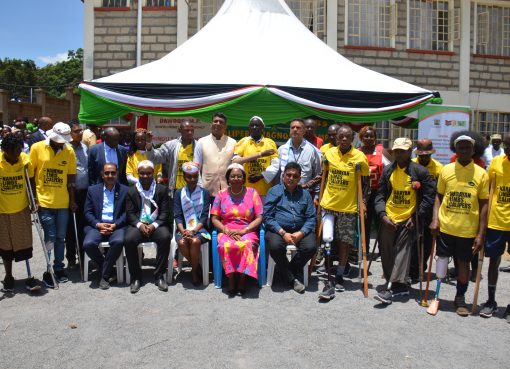
Speaking during a public participation exercise at the Narok County Commissioner’s office, where institutions and organisations submitted comments on the two documents, Kahiya emphasised the Kenya Kwanza administration’s commitment to advancing the rights and welfare of special interest groups.
He said strengthening legal and policy structures is crucial to ensuring equity, inclusion, and social justice for all Kenyans.
Mr Kahiya expressed confidence that the public participation forums would generate actionable recommendations to guide legislative reforms and policy interventions aimed at safeguarding marginalized communities’ rights nationwide.
The Office of the Chief of Staff and Head of Public Service, through MMAU and a Technical Working Committee, developed the Draft Policy and Bill on ethnic minorities. Mr Kahiya said these documents seek to shift Kenya’s development trajectory from historical exclusion to equitable inclusion, recognising that sustainable growth and national cohesion depend on the full participation of all communities.
He noted that, although Kenya has made progress in some areas, serious challenges persist, especially in land ownership and resource distribution, issues the new Bill and Policy aim to address if approved.
“It is our sincere hope that the new policy and legal framework for full implementation of Article 56 of our Constitution will be ready by December. This will change how public entities handle minority and marginalized community issues,” said the Director.
Head of the Minorities and Marginalized Affairs Unit in the Office of the President, Mr Josephat Lowoi Lodoyi, said a clear legal and policy framework is needed to implement constitutional provisions for these groups.
He admitted that, although Articles 56 and 260 of the Constitution recognise minorities and marginalized groups, progress has stalled due to the absence of guiding policy.
Mr Lodoyi praised President William Ruto’s administration for preparing the first-ever draft policy and legislation to address longstanding challenges facing these communities, pledging completion by the end of the year.
“We are determined to have a policy and law governing minority and marginalized community issues before the end of this year. This will enable every State department to understand how to handle their concerns, and both national and county governments will be better able to engage and plan for these communities,” he said.
He affirmed that the new framework will provide a structured approach to tackling challenges related to access to resources, representation, and socio-economic inclusion.
Mr Lodoyi also reiterated the government’s commitment to cultural inclusion, explaining that the proposed statute will preserve and promote the cultural values, languages, and practices of these communities.
The Bill and Policy will also ensure reasonable access to essential services such as water, healthcare, and infrastructure, while addressing historical issues like land dispossession and inequalities that have contributed to marginalisation.
Once approved, the documents will provide county governments with a clear pathway for engaging marginalized groups.
Narok County Commissioner, Mr Kipkech Lotiatia, said the two documents will foster synergy between county and national governments in achieving inclusivity goals.
He explained that the new structures will ensure minorities and marginalized communities have unhindered access to essential services such as education, healthcare, water, and infrastructure.
“This will break down barriers, empower individuals, and create a more representative and cohesive society,” he said.
Reverend Fred Lemama, spokesman for the Ogiek Community in Narok County, said the group has long struggled for fair treatment and inclusion in governance, a challenge they continue to face.
He expressed confidence that the approval of the Bill and Policy will compel both levels of government to make deliberate efforts toward inclusivity.
By Emily Kadzo and Simon Malowa