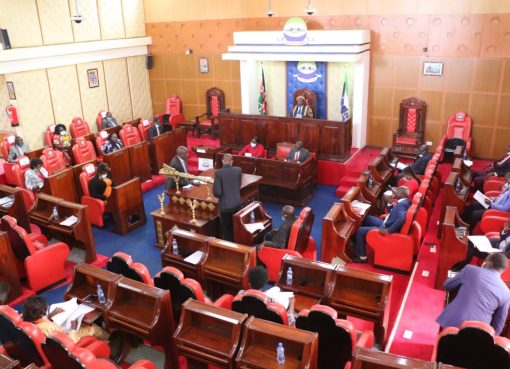
The Energy, Petroleum Regulatory Authority (EPRA) has conducted a two days training for stakeholders in the North Rift region to sensitize them as part of the Kaa Safe Mtaani campaign aimed at raising awareness on safety and regulatory standards around use of LPG, electricity and petroleum products.
The Deputy Director Public Education and Advocacy in the North Rift region, Ann Kiprotich, underscored that the campaign comes against the backdrop of increasing accidents and incidents in the sector like petroleum tankers rolling over on the road and Kenyans running to scoop the fuel oblivious of the danger that doing so can do to their lives.
Interviewed by the press during the training held in Eldoret, Uasin Gishu County, Kiprotich noted that Kaa Safe Mtaani is a national multi stakeholder campaign which brings on board various stakeholders, industry experts, consumers and members of the public, youth led groups, women groups and others because safety is a very critical pillar.
Following the launch of Kaa Safe Mtaani in April, the Authority has already conducted the campaign in other regions like in Machakos, Nyeri to cover the central and Isiolo for the upper eastern region.
Noting that EPRA is mandated to conduct economic and technical regulation of the sector which include issues of electricity, petroleum and LPG, the Deputy Director Public Education and Advocacy pointed out that the key message is to enhance safety in the use of electricity, petroleum and LPG products.
She hinted that the government through the National LPG Growth Strategy, is aiming to increase consumption and expand LPG uptake as a form of clean cooking at the household and even the institution level.
Additionally, the strategy which is at its initial stages, also advocates to transitioning learning institutions to using LPG as a clean form of cooking as opposed to firewood and a number of about 11000 institutions have been piloted.
“We want to use this campaign to inform all Kenyans to adopt LPG as a clean and safe form of cooking, some people don’t even know the basic safety measures to use LPG,” said the Deputy Director.
The members of the public were urged to pay attention to some safety measures when going to buy LPG cylinders like they should buy from licensed dealers, who weighs for them to ensure it is within the maximum recommended weight, and also insist to be given a receipt which helps in tracking and tracing when there is an issue with the cylinder that they can go back to the dealer for help.
Kiprotich raised concern that sometimes dealers do not give receipts to customers, a clear indication that those cylinders were illegally refilled and no way of tracing who sold the cylinder to the member of the public in case of an incident or accident.
The campaign also involves building awareness around how to use LPG cylinders like the need to replace the hose after 3 years to reduce the chances of leakage which leads to accidents. The other aspect people were taken through is to ensure they are able to communicate to other people on how to adopt energy efficient practices even at their household level.
“Energy efficiency in terms of the appliances they are using at home like fridges, LED lights which do not consume electricity so much that their bills become manageable,” noted Kiprotich.
Members of the public were urged to report any incidents and accidents associated with LPG, Petroleum and electricity through 0709336000 or email at info@epra.go.ke as a way to strengthen compliance.
She recalled that the Authority in 2024 shut down 49 non-compliant LPG plants with over 20 percent of LPG sold illegally refilled- a major explosion risk.
According to reports by EPRA, Kenya faces persistent risks in its energy sector driven by illegal practices and weak compliance like the Embakasi explosion which claimed 7 lives leaving more than 300 others injured.
In 2023, EPRA flagged more than 70 petroleum stations as unsafe and only 40 percent undergo regular inspection
In terms of electricity, the sector recorded 153 deaths by June 2024 up from 116 the previous year with poor safety culture, faulty power lines and substandard wiring being the top causes.
“As we empower our community champions who would be speaking on safety, we also want to ensure that we strengthen issues of compliance to the regulatory requirements that we put in place by collaboration with stakeholders to report any complains or any malpractices they will be spotting especially any uptake that is not within the law,” explained the Deputy Director Public Education and Advocacy.
Kiprotich emphasized that Safety is no longer a choice but rather a deliberate commitment that all Kenyans ought to demonstrate.
By Ekuwam Sylvester