At least 4,800 families in Nyeri County are set to received Sh9 million under the Cash Transfer for Orphans and Vulnerable Children (CT-OVC) program.
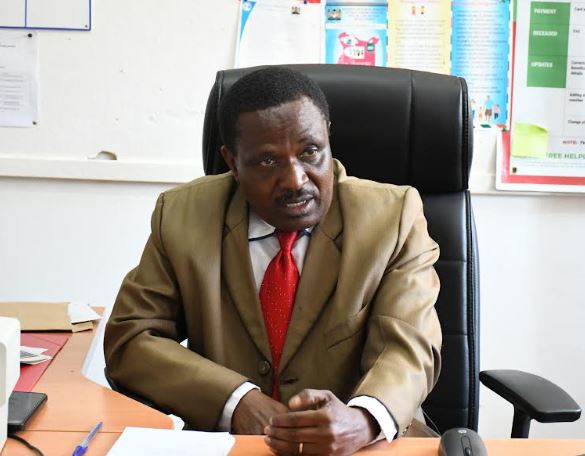
Nyeri County Children Services Coordinator Joseph Mburu told KNA the Sh2,000 stipends per beneficiary have already been deposited in respective accounts. The stipends are for August.
The officer also clarified that the money can be accessed through the e-citizen platform and can be withdrawn at any Mpesa agent at no cost.
He advised caregivers to use the money prudently and for the intended purpose and warned that any misuse can lead to change of names of the caregiver.
“The monthly stipend for Cash Transfer for Orphans and Vulnerable Children for the month of August was released yesterday. Individual caregivers can therefore visit any Mpesa agent and withdraw the cash at their convenient time. As the caregivers withdraw the money we are advising them to utilize the cash for the welfare of the beneficiaries and not to divert to less important expenses. When used properly can go a long way in improving the welfare of the entire family including coming up with small scale income earning ventures such as roadside green groceries,” he said.
The development comes after the Ministry of Gender, Culture and Children Services recently announced the release of Sh 881 million under the CT-OVC program.
In a statement availed to the press, the Ministry said the money would be disbursed to some 440,537 households under the Inua Jamii initiative and the money would be processed through the eCitizen.
Cash Transfer for Orphans and Vulnerable Children (CT-OVC), Cash Transfer for Persons with Severe Disabilities (CT-PWSDs), and Cash Transfer for Older Persons (OP-CT), Cash Transfer for Persons with Severe Disabilities (CT-PWSDs) program was established in September 2013 to uplift the lives of the most vulnerable members in the society to enable them meet their most basic needs.
As of August 2023, there were 1,215,343 beneficiaries under the OPCT program, 428,421 under the CT-OVC and 59,637 persons under the PWSD-CT.
Upon assuming office, President Dr William Ruto directed the number of beneficiaries to be scaled up to around 2.5 million to help cushion as many needy persons as possible under the three cash transfer program.
On eligibility to the funding, Mburu said for a child to qualify for the fund, he or she must be an orphan hailing from a needy family background.
He said vetting is often carried out through chiefs’ barazas where the members of the public are invited to give their views on families who should benefit from the fund.
“Children who are considered for this money must first be an orphan and live in families which earn less than Sh 2000 a month. We also consider children whose caretakers are living with chronic illnesses since such guardians may be unable to take care of such children always especially when they are down health wise. Once identified the Government maps the child after which they continue receiving financial help until they attain the age of 23 years,” he added.
The officer however said in the event the family is taking care of other orphans under the age of 18 years; they can be considered for the funding as long as they meet the laid down requirements.
In addition, beneficiaries will from now benefit from free medical cover from the State courtesy of the Social Health Authority.
Mburu further stated that the cover will also be extended to children in the 28 Children Charitable Institutions (CCIs) in Nyeri County.
He allayed fears that the Government was planning to shut down CCIs and clarified that the children would only be moved into community care homes or integrated back into homes under the Care Reform Strategy for Kenya 2022-2032.
“We are not closing down the Children Charitable Institutions. What we are doing is to shift to the Care Reform Strategy. We want to do what we were doing previously but in another way. Research has shown that children grow well in the family because this is where they will be taught morals and how they will live with people including how to share with others.
When a child is in a CCI he or she benefits alone. So what we want is for these children to transition into families and Community Based Care and let CCI managers one day use their premises in another way,” he stressed.
By last year a total of 12 foster care families from Nyeri had undergone training under the Governments Care Reform Strategy for Kenya 2022-2032 children reintegration program.
The decade-long process aims to among others relieve the burden of taking care of vulnerable children from CCIs and reintegrate them back into families and the community.
The program which is anchored under the Children Act of 2022 also hopes to turn the former CCIs into community facilities where former rescued children can be visiting to get guidance and counselling services and afterward go back to their homes.
In October 2023 former CS for Labour and Social Protection Florence Bore announced plans by the government to abolish all privately owned orphanages and children’s homes within the next eight years.
Bore said only government-owned homes operating under the Child Welfare Society of Kenya will be allowed to operate in order to weed out private homes that had been turned into cells for child trafficking.
She said the children would be placed in family and community care, which offered a better environment for them.
“The reason why we are closing them down is because we have been given directions under the children’s Act that the private homes should be closed. They have also been routes for child trafficking, so the government wants us to retain the institutions that we have under the child welfare society of Kenya,” stated Bore.
“In the next eight years those private homes will not exist. We need to prepare in order to absorb those children that will come from private homes.”
But even as the Government implements the program, some stakeholders operating CCIs want the process taken with caution to avoid running into headwinds.
They also want the State to reconsider the decision to abolish all privately run children’s homes and instead come up with measures that can enhance the safety and welfare of those living in unfriendly habitats
Ms Ann Wambui who runs the Neema Children Rescue Center in Nyeri said while the government proposal might rid the country of bogus and illegal facilities masquerading as children havens, it may also end up leaving hundreds of rescued children with nowhere to call home.
“It is good (to abolish children’s homes) because the children will be boarding back to their relatives. But can you look on the other side. We rescue these children because they are abused by their relatives. Now you have taken them back to their strangers where they were being abused. What will be the consequences,” she posed.
Wambui similarly said the planned transiting may hit a snag owing to the fact that many of the children rescued are babies with health complications and need a safe haven where they can be given specialized care.
She therefore argues that were such homes and orphanages to be closed down, ailing children will be disadvantaged since few families or individuals will be willing to take up the burden of looking after them.
“I don’t think this is the best decision the government should have taken as some of these children in rescue homes were collected from diverse places after having been dumped by their parents. If we close down the very places they come to identify as home, where do they go from there,” she questioned.
“I think the government should undertake an assessment and find if such homes are fine for the task they registered for. If not, they should show the administration how to go about it.”
Data from the Social Protection department shows that there were close to 50,000 children living in about 855 private CCIs and others living in government-run institutions as of November 2022.
A 2017 UN children’s agency report estimated that 40,000 children lived in 811 registered institutions in Kenya.
According to the Children Act of 2022 placing children without families in alternative care such as guardianship, foster care placement and adoption will curb abuse and trafficking of children.
In 2017, a non-governmental organization, Stahili Foundation, said that some orphanages and children’s homes in Kenya convince families to give away their children before using them to solicit donations.
By Samuel Maina and Diana Odipo